

Patient consent is a barrier to training junior doctors on the job – a rule change is needed
- Written by: Ben Gray, Associate Professor of Primary Health Care and General Practice, University of Otago
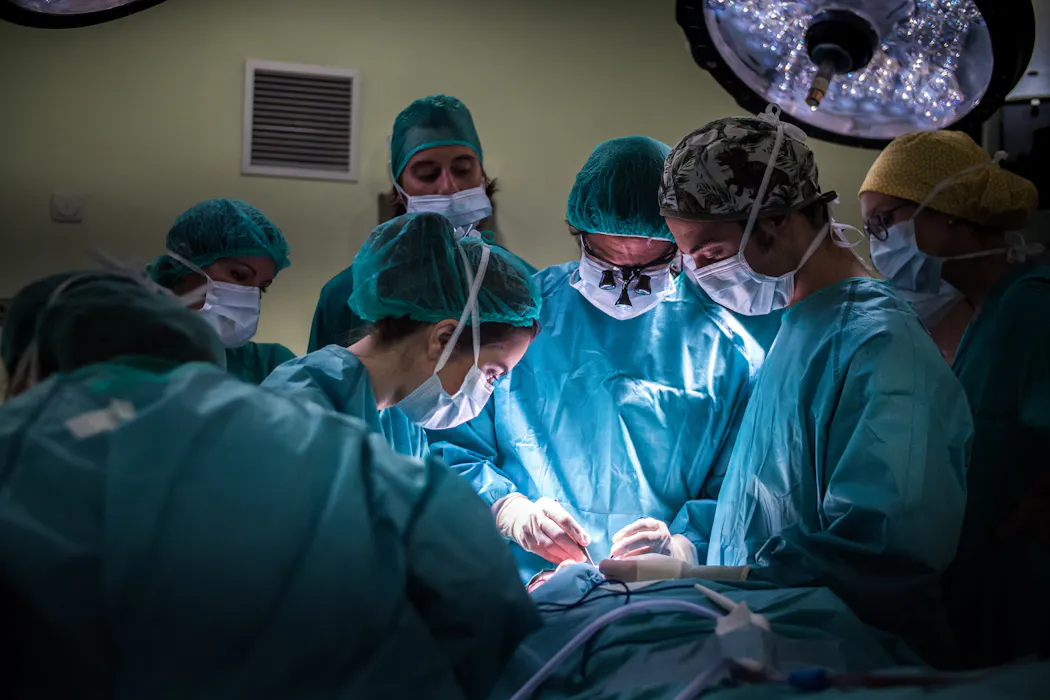
New Zealand is facing a critical shortage of doctors, both in hospitals and general practice.
In my recent research, I argue a strict requirement for patient consent to train junior doctors is one of a number of impediments to medical training.
New Zealand is an outlier in requiring patient consent for medical students or junior doctors to be present during treatment or surgery as part of their ongoing training.
Internationally, there is consensus around patient consent for medical treatment and research, but wide divergence on consent for teaching.
Australia requires the same level of consent only for medical students but not graduate doctors. The UK mentions consent for teaching but without definition or enforcement.
The US and Ireland emphasise that patients benefit from student involvement in care but provide an option to refuse involvement in teaching.
Consent for teaching is not mentioned at all in Singapore and Malaysia.
In New Zealand, the requirement for informed consent for teaching is part of the code of patient rights introduced by the Health and Disability Commission in 1996.
It is defined broadly but has been interpreted as including graduate doctors and learning in all settings. If a patient lacks capacity to give consent, teaching requires consent from their guardian or it must be in the best interests of the patient.
For example, all doctors train to perform cardiopulmonary resuscitation (CPR) on simulation manikins. But learning to manage the emotional impact on the student of performing CPR can only happen while performing it on a patient.
The medical student code prohibits students performing CPR unless there is no other person available. However, as the Health and Disability Commission’s code of patient rights applies to all doctors, a trainee doctor couldn’t perform it either.
If the commission’s code were implemented to the letter, no doctor could learn CPR on a patient and there would be almost no learning in the care of babies, people with dementia or with the third of patients in a medical ward who lack capacity to consent.
Teaching hospitals perform better
Requiring consent for teaching implies that teaching might be harmful.
While this may be true for complex surgery, care is usually provided by a team, and a team that includes trainees is demonstrably superior to one without them.
Teaching compels teachers to learn as much as their students and outcomes have been shown to be better in teaching hospitals compared to non-teaching hospitals.
The most prestigious medical institutions are teaching hospitals.
Medicine is different to other trades and professions. A client cannot refuse to have the apprentice builder, plumber, law clerk or junior accountant involved in their work.
The apprenticeship model achieves a good outcome not by consent but by the principal professional guaranteeing the work and adequately supervising juniors.
Other barriers to training enough doctors
Apart from the requirement for teaching consent, insufficient support for apprenticeship learning represents another barrier to medical training.
New Zealand has been training more doctors, with medical student numbers increasing by 100 per year since 2024. The new Waikato medical school will add 120 by 2028.
Medical schools do half the training of doctors. The other half is done “on the job” as apprentice junior doctors.
Ten years ago, a study of general practitioners showed medical student placements were already at capacity. With even more medical students and junior doctors requiring placements, there are not enough positions available, despite the government’s NZ$23 million investment in new primary care placements for post-graduate doctors announced in last year’s budget.
Surgical training of junior doctors is further impaired because private hospitals now perform two thirds of elective surgery and offer almost no training.
Junior doctors’ exposure to elective accident care (such as repair of ruptured knee ligaments), private procedures (varicose veins) and procedures contracted out from public hospitals (cataract surgery) is significantly diminished.
Another issue is that New Zealand has long relied on international medical graduates. Last year, of the 1,827 newly registered doctors, 70% had graduated elsewhere.
Of all New Zealand doctors, 45% are international graduates. But their retention is poor – after ten years, 73% of New Zealand graduates remain in the country but only 23% of international graduates.
What to do
I argue the patient code of rights should be amended to define teaching narrowly for situations where there is only teaching and no care provision.
We need a culture change where patients expect to be involved in the teaching of new doctors. If everyone refused consent, we would have no doctors.
Teaching should be integrated into all medical practice. We have too few supervisors and need more doctors willing to teach. The Medical Council could require involvement in teaching for all doctors.
More emphasis and time needs to be provided for supervision by seniors. Health institutions should be seen as places that provide both care and training.
More funding needs to go into the teaching role of hospitals and general practices. An important reason for the lack of placements with general practitioners is that the fees paid for taking a student result in a net loss to the practice.
In the short term, New Zealand needs to increase the retention of internationally trained doctors. In the long term, it needs to train more doctors and provide them with adequate opportunities to learn on the job.
Authors: Ben Gray, Associate Professor of Primary Health Care and General Practice, University of Otago


















