

Changing climate law to prevent civil cases removes a key protection for NZ citizens
- Written by Bjørn-Oliver Magsig, Senior Lecturer in Law, Te Herenga Waka — Victoria University of Wellington
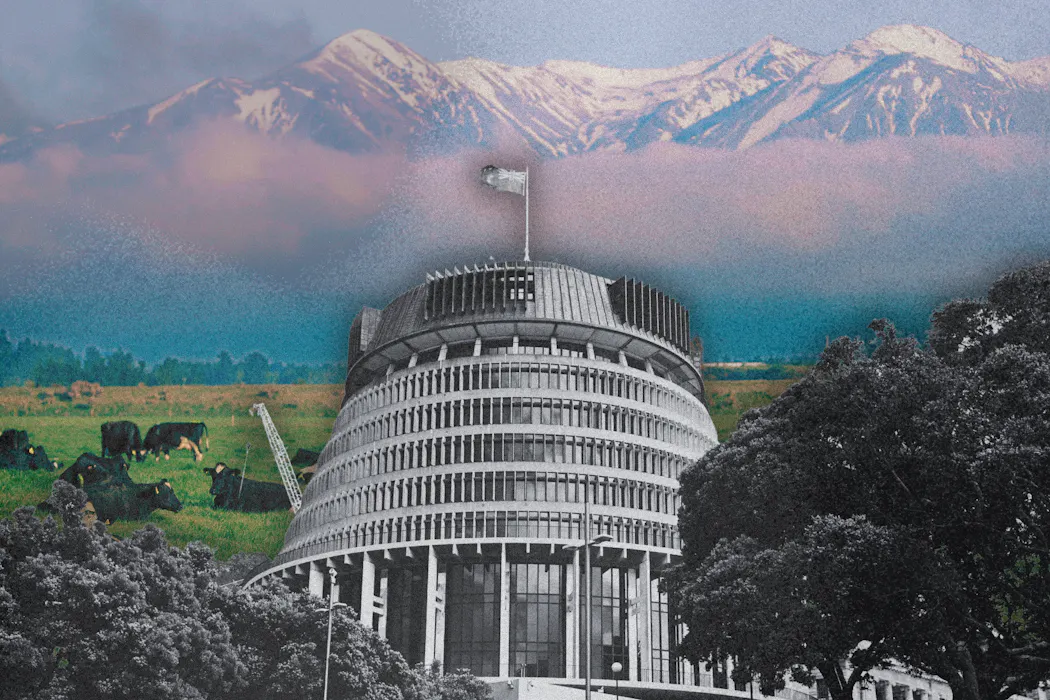
The government’s plan to change the law to bar claims for harms from greenhouse gas emissions shuts down New Zealand’s most important climate tort case, meaning it will never be decided on its merits.
The move overrides a unanimous Supreme Court decision that Smith v Fonterra, a case against some of New Zealand’s major corporate emitters, should go to trial.
It also guts the future capacity of tort law – a branch of civil law allowing people to seek damages for harm caused by wrongful actions by others – to curb climate harms.
Justice Minister Paul Goldsmith justified it by saying climate change is best managed by the government at a national level, not through torts claims, and that shutting down these cases will “provide businesses with certainty around their obligations”.
As we explain, this argument is questionable on a number of fronts.
What the courts do that politics can’t
In New Zealand and elsewhere, tort law is being used to hold greenhouse gas emitters to account.
Tort claimants are also targeting governments for not doing enough to protect current and future generations. Leaving climate change regulation entirely to the government, then, is a little like putting the fox in charge of the hen house.
The minister is right to say the fight against climate change needs robust government action. But removing the role of the courts is the wrong way to go about it.
Courts do things governments cannot. They cannot be lobbied. They decide on evidence and law. They name specific actors and test their conduct against legal standards.
No one denies the complexities of fighting climate change. But tort law has always confronted new challenges.
It has been part of the fight against factory pollution, defective products, unsafe workplaces and corporate fraud. In the past year, tort law helped in the fight against online harm. Climate change is next in that sequence.
Courts overseas are already doing this work. In 2021, a Dutch court ordered a multinational company to align its activities with the Paris Agreement, the main international treaty combating climate change. However, this decision was appealed in 2024.
Last year, a German court held that major emitters can be liable for climate harm, even when the harm occurs abroad.
In Australia, torts claimants have attempted to hold the government to account for inadequate climate regulation. Some claims have been rejected, but one is ongoing.
The courts confirmed the climate science and increased public awareness. With the Smith v Fonterra case, we were about to see how New Zealand tort law can contribute to these efforts.
Why the government’s argument is wrong
We also call the government’s “certainty for business” argument into question.
Uncertainty is not effectively managed by extinguishing risks. Investors need risks to be priced. Legislating away tort liability does not eliminate the cost – it transfers it to others, just as lax regulation of flood risk has imposed severe costs on councils, insurers and households.
Under the government’s law change proposal, those who profit most from lax climate policy would be insulated from paying their share.
There is already a big gap in New Zealand’s current climate regulations. They do not allocate responsibility for damage. Tort law would do this.
The point the Supreme Court was making in its decision to allow Smith v Fonterra to go to trial was that even though there is regulation in an area, tort claims also have an important role.
Rule of law concerns
New Zealand’s parliament can legislate retrospectively, but the question is whether it should.
The traditions of the rule of law say it should not, unless there is compelling justification otherwise. The justification offered here is thin.
The government points to certainty for business investment and the integrity of its legislative regime. Neither comes close to a sufficient reason to bar an entire field of tort claims.
But the proposal fits a broader pattern. It follows a weakened methane target despite the Climate Change Commission’s recommendation it should have been strengthened, the return of offshore fossil fuel exploration, and the decoupling of New Zealand’s Emissions Trading Scheme from its commitments under the Paris Agreement.
Against that backdrop, preventing climate-focused tort claims is not an outlier. We argue it is the next layer of a deliberate dismantling of a system of climate accountability.
This conflicts with constitutional and international legal recognition that governments have a duty to protect citizens from climate change.
Last year, the International Court of Justice issued an advisory opinion which unanimously affirmed that states have legal obligations to protect the climate system, and that failing to prevent significant harm creates responsibility under international law.
The German Federal Constitutional Court also said Germany’s constitution requires the government to safeguard future generations from worsening impacts of climate change.
New Zealand’s current political process is not holding major emitters to account, and the regulatory framework is straining. The courts were the one part of the system still doing the work – until now.
Authors: Bjørn-Oliver Magsig, Senior Lecturer in Law, Te Herenga Waka — Victoria University of Wellington

















