

Coronavirus reminds us how liveable neighbourhoods matter for our well-being
- Written by: Melanie Davern, Senior Research Fellow, Director Australian Urban Observatory, Co-Director Healthy Liveable Cities Group, Centre for Urban Research, RMIT University
We are witnessing changes in the ways we use our cities in response to the COVID-19 pandemic. The liveability of our local neighbourhoods has never been more important.
Right now, we are working together to flatten the curve by staying home to control the spread of COVID-19 and reduce demand on health services. This means spending a lot more time at home and in our local neighbourhoods. We are all finding out about the strengths and weaknesses in the liveability of our neighbourhoods.
This experience can teach us some lessons about how to live and plan our communities in the future. A liveable neighbourhood promotes good health and social cohesion, both now and after this pandemic passes.
Read more: How do we create liveable cities? First, we must work out the key ingredients
Heavy use of local open space
Anybody who has left their home in the past few weeks will have noticed more people are using local streets and public open spaces. Parks and other public spaces are more popular than ever. Some are becoming too crowded for comfort.
Accessible public space is a key ingredient of healthy and liveable places. Public green spaces provide multiple benefits for mental and physical health, urban cooling, biodiversity, air pollution and stormwater runoff as identified in a previous review for the Heart Foundation.
Access to local public open spaces has become even more important as the current need to stay home adds to the impacts of increased density in the form of smaller houses, lot sizes and apartment living. Yet not everyone has access to local parks.
Read more: Higher-density cities need greening to stay healthy and liveable
We looked at neighbourhood access to public open space using our liveability indicators included in the Australian Urban Observatory. Not all neighbourhoods have access to public open space within 400 metres. We see this in neighbourhoods just north of the beach in North Bondi, Sydney, as the liveability map below shows.
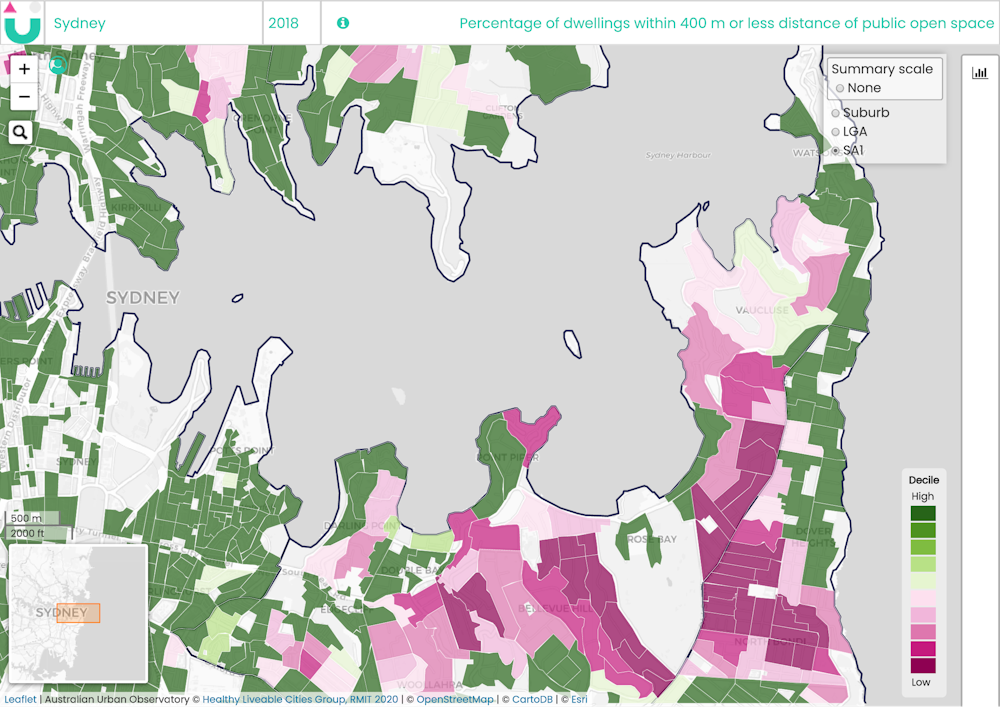 Residents of neighbourhoods north of Bondi Beach in Sydney lack good access to nearby public open space.
Australian Urban Observatory, Author provided
Residents of neighbourhoods north of Bondi Beach in Sydney lack good access to nearby public open space.
Australian Urban Observatory, Author provided
We found a similar pattern in neighbourhoods of St Kilda East in Melbourne. It’s a pattern repeated in many neighbourhoods across cities in Australia.
Private green spaces and backyards are also being appreciated more than ever. Many people are rushing to plant fruits and vegetables at home.
The private green spaces and biodiversity found in backyards are important influences on subjective well-being. Connecting with nature in the garden is a great way to support mental health.
Read more: 3 ways nature in the city can do you good, even in self-isolation
Dogs are also enjoying more time with their owners in local green spaces and pet ownership is increasing. Office video conferences often feature furry friends at home. Let’s hope the increase in pet adoptions helps people cope with social distancing but also provides the animals with good long-term homes.
Fewer cars, more cycling and walking
 Reduced car traffic is making local streets safer and more usable for residents.
Tony Bowler/Shutterstock
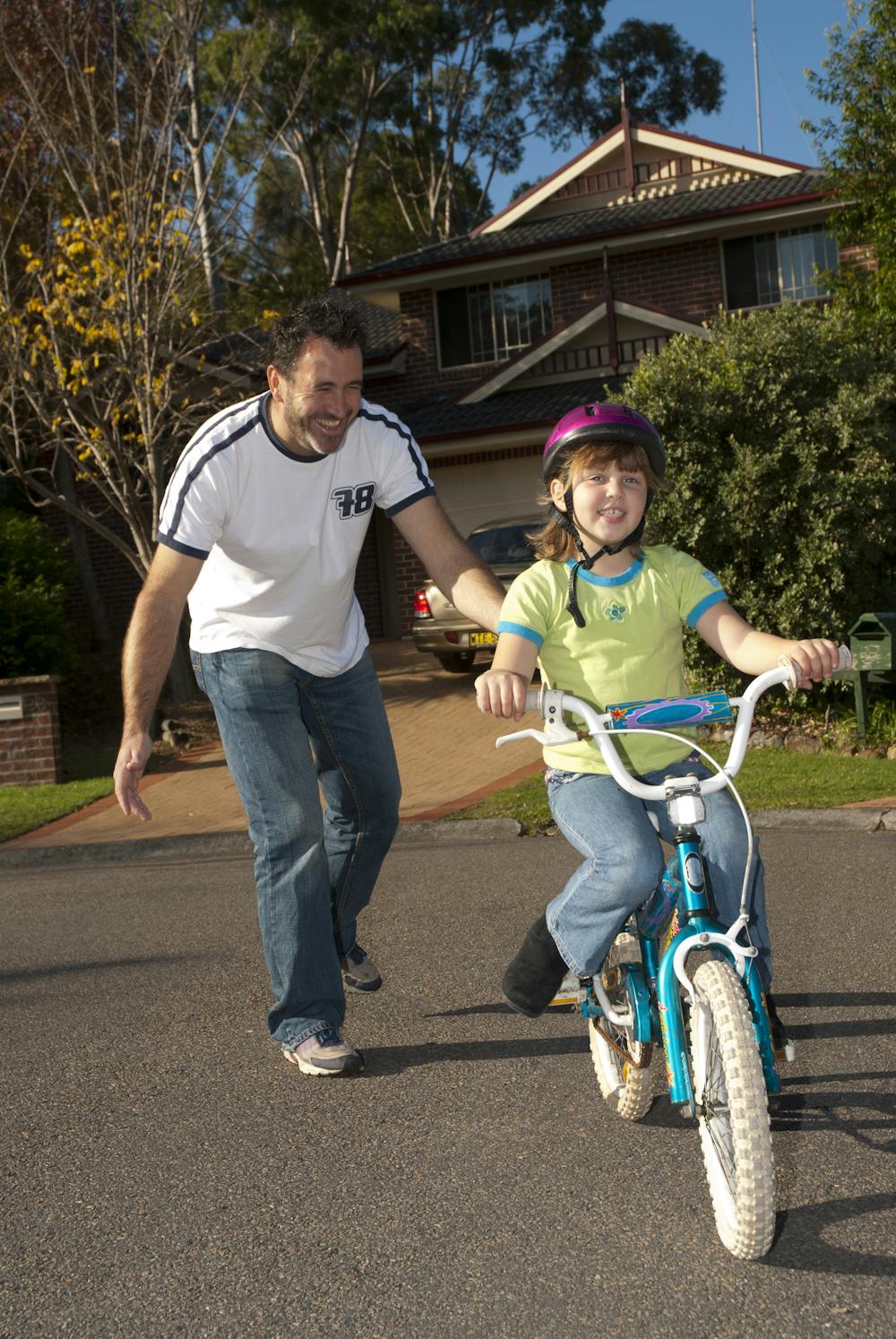
Reduced car traffic is making local streets safer and more usable for residents.
Tony Bowler/Shutterstock
One of the noticeable differences in our cities right now is the reduced car traffic in typically busy neighbourhoods where more people (including children) are out on bicycles and walking. Walkable environments with paths and cycleways are providing supportive and safe spaces for both recreational physical activity and for getting to places such as local shops and supermarkets and offices without unnecessary exposure to other people.
The benefits are greatest for people living in high-amenity walkable areas with access to such places within 800 metres. Having services and facilities close by has been shown to support walking for transport to shops and services, promote health and reduce non-communicable diseases such as heart attacks and strokes.
However, our new lives during this pandemic also highlight inequities in local access to health, community and social services. Research shows access to these services is poorer in the low-density outer suburbs that are common across Australian cities.
Better air quality
Reduced car traffic and industrial emissions are undoubtedly improving air quality in our cities. In 2018, the World Health Organisation declared air quality was the “new smoking” as it increases respiratory problems and cardiovascular disease. The transport sector also contributes about 25% of global carbon dioxide emissions .
Homes, schools and care facilities located within 300 metres of major roads are more exposed to air pollution and risk of disease. Those risks are likely to have decreased during the COVID-19 crisis.
At the moment, many of us are living and shopping locally and enjoying the co-benefits of the “slow walkable city”: less traffic, more active modes of transport, better air quality and less noise.
Read more: Transport access is good for new housing, but beware the pollution
Valuing social cohesion
Loneliness is a serious public health problem. It causes premature deaths on a scale similar to that of smoking or obesity.
Pre-pandemic lifestyles involved time-poor people travelling widely to destinations for employment, education, recreation, socialising and extracurricular activities. The suburbs were places of much social isolation.
 Neighbourhoods have joined in a mass ‘bear hunt’ to entertain children during the coronavirus lockdown.
Michael Dodge/AAP
Neighbourhoods have joined in a mass ‘bear hunt’ to entertain children during the coronavirus lockdown.
Michael Dodge/AAP
With these activities now reined in, are we are seeing a rise in neighbourhood social connections due to people staying at home? Anecdotally, yes. It’s emerging through new or reinvigorated conversations with neighbours, support and sharing of goods (toilet paper anyone?), and coordinated neighbourhood support systems, such as WhatsApp groups and neighbourhood happy hours. Across the world, we can see this sense of neighbourhood belonging in the form of bear hunts and rainbow chalk drawings.
It is well documented that feeling part of the community is good for your mental health. Local support networks become even more important and valued during crises such as COVID-19.
These are just some of the more obvious reflections about the liveability of our neighbourhoods as we stay home to help contain the spread of COVID-19. No doubt there will be many more lessons to come that we need to remember and act on after the pandemic passes.
Authors: Melanie Davern, Senior Research Fellow, Director Australian Urban Observatory, Co-Director Healthy Liveable Cities Group, Centre for Urban Research, RMIT University


















