

Councils often ignore residents on social media. How can digital platforms ensure they have a say in planning?
- Written by Bhavna Middha, Research Fellow, Centre for Urban Research, RMIT University
Local governments across Australia are mandated to consult their residents on urban development issues. They are increasingly using digital platforms to do this.
Early findings from our international research project, Democratic Urban Development in the Digital Age, are that the use of digital technologies for community consultation mirrors patterns of offline engagement. So, for example, we see tightly designed questions and a prescribed process. Councils often disregard social media feedback such as Facebook accounts run by residents’ groups.
Digital engagement hasn’t replaced traditional consultation and participation processes. Council Facebook pages and web-based consultation portals sit alongside resident surveys, town hall meetings and citizen juries. However, the COVID-19 pandemic has increased reliance on these technologies.
Read more: City calls on jury of its citizens to deliberate on Melbourne's future
Little research has been done on whether e-participation overcomes some of the problems of traditional participatory governance, which is often seen as favouring the articulate and powerful. Digital engagement might even be creating new barriers, such as digital exclusion or distrust in the handling of data.
Issues of public consultation especially matter for urban development projects. Local councils typically regulate these projects. Poor development can harm local amenity and residents’ well-being, while irreversibly changing urban forms.
Read more: In your backyard: why people need a say on planning that affects their local community
How can we enhance digital participation?
How can the digital become a part of everyday governance, including community engagement? More frequent, higher-quality engagement would be required for a start. And citizen participation would then have to be channelled into policy.
Digital platforms are often limited to simply collecting information. Genuine participation is more challenging.
Participation by diverse populations is a particular challenge. Some councils pay specific attention to this issue. An example is the City of Melbourne’s digital place-making initiative.
Melbourne City Council’s approach to digital place-making considers how to engage all members of a diverse community.However, as online and offline boundaries blur, digital technologies may help overcome barriers to participation.
Barcelona and Jackson, Mississippi, are two cities that have customised digital participation. It’s part of their design and implementation of community engagement, whether on social media or on dedicated digital platforms.
The City of Brimbank, in outer Melbourne, designed a digital engagement project as a game. Council staff took to the streets with iPads. The game was also available in shops, train stations and community centres.
Real-time data analysis enabled the council to adjust locations and boost the diversity of participants. Co-ordinating online and offline approaches was the key to achieving broad participation.
It is important to understand if and how digital engagement perpetuates inequities. The methods and platforms used for participation might be a factor in this.
Digital engagement is often limited to surveys. This could be due to a lack of council time and resources to analyse any other qualitative data that might be generated. Providing those resources would signal the data generated through digital engagement, and the process itself, are being taken seriously.
Read more: Boaty McBoatface poll shows how not to do community consultation
What role can social media play?
The feedback from community social media accounts can be rich and candid. But analysing this sort of data involves greater effort on the part of councils. This makes closing the feedback loop difficult.
Councils prefer bespoke web-based digital platforms. They’re easier to manage, both in deciding which issues are open for consultation, and in organising data for analysis.
These platforms are increasingly popular with councils. Yet sole reliance on them may favour digitally savvy citizens who are already engaged and familiar with planning processes.
Resident activists have effectively used social media to mobilise a wider audience. A recent campaign to overturn the proposed lease of public land in inner-west Melbourne to a national sporting club is a good example.
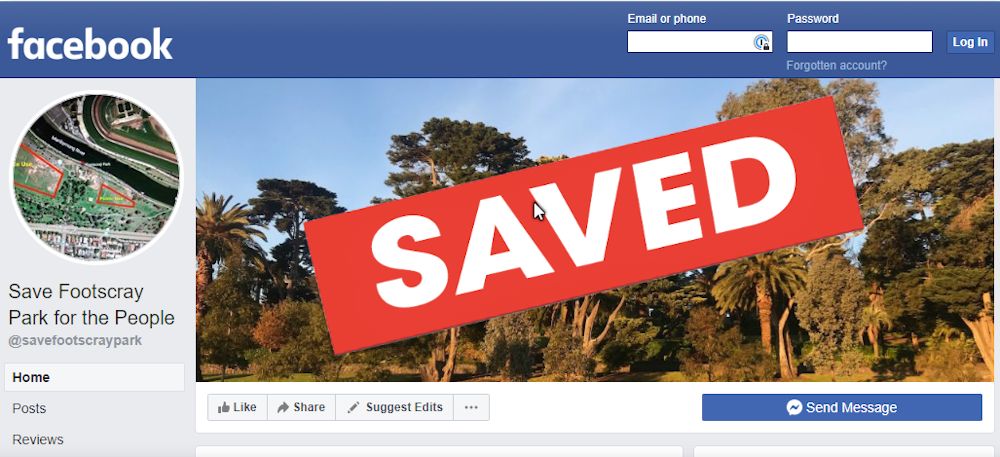 While many councils ignore residents’ group Facebook pages, they can effectively mobilise communities for campaigns.
Save Footscray Park/Facebook
While many councils ignore residents’ group Facebook pages, they can effectively mobilise communities for campaigns.
Save Footscray Park/Facebook
Read more: How do we turn a drain into valued green space? First, ask the residents
Real engagement supports better development
It’s an open question whether the politically engaged and digitally literate dominate such campaigns. But they do remind us urban development is an arena of political contest. It’s more than just a topic for consultation, whether online or offline.
Important strategies in community engagement include:
working with all stakeholders, both formally and informally
paying attention to the purpose and variety of digital methods available
helping with access, whether digital or offline.
Ensuring robust community engagement in these ways supports better urban development.
If you are a city official, a representative of business, non-government or civic organisations, a community member or a politician in an inner Melbourne council and would like to contribute your experience to the project Democratic Urban Development in the Digital Age, please participate in the 10-12 minute survey here.
Authors: Bhavna Middha, Research Fellow, Centre for Urban Research, RMIT University

















