

Unless we improve the law, history shows rushing shovel-ready projects comes with real risk
- Written by: Alexander Gillespie, Professor of Law, University of Waikato
If the road to hell is paved with good intentions, so too is the road to economic recovery if we don’t get it right.
The COVID-19 Recovery (Fast Track Consenting) Bill, currently rushing through the parliamentary process, certainly has noble aims. In simple terms, the new law is designed to green light a number of projects that would normally take much longer to be approved under the Resource Management Act.
In the process, its architects argue, it will boost employment and kickstart economic recovery.
The trick will be balancing those aims with the law’s other lofty ambition “to promote the sustainable management of natural and physical resources”. History shows this is not always the way it goes.
The past should guide us
Governments often pass laws with vast powers during emergencies to drive economic recovery. The law of unintended consequences can take a lot longer to repeal.
During the great depression in the 1930s, new laws to deal with mass unemployment were often degrading in practice. Unemployed people were sent far and wide from their homes to perform sometimes useless tasks.
Read more: Rich and poor don't recover equally from epidemics. Rebuilding fairly will be a global challenge
In the late 1970s, the National government of Robert Muldoon tried to reduce the country’s dependence on imports with so-called “Think Big” projects. Special laws were passed to circumvent normal planning mechanisms and we are still dealing with their economic and environmental consequences.
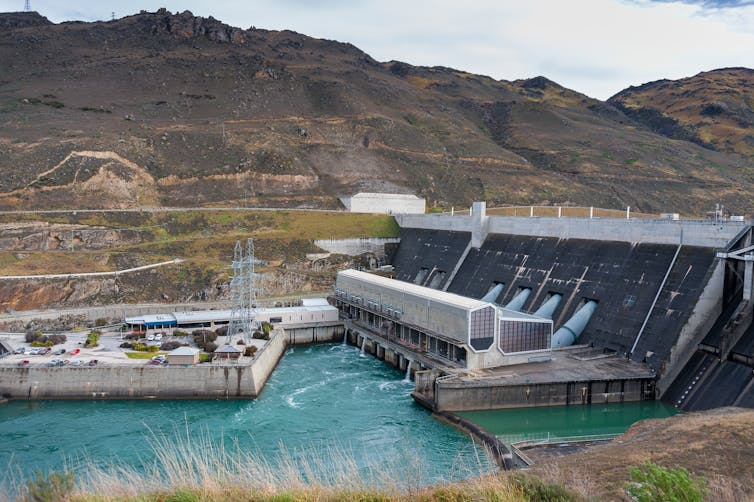 The Clyde Dam, fast-tracked as part of the Think Big policy in the 1970s but with long-lasting problems.
www.shutterstock.com
The Clyde Dam, fast-tracked as part of the Think Big policy in the 1970s but with long-lasting problems.
www.shutterstock.com
More recently, the Christchurch and Kaikoura earthquakes have pushed dozens of laws to one side. This resulted in citizens and communities struggling to be heard, be treated fairly and have their rights protected under the emergency recovery process.
We are now inviting the same risks with the proposed fast-track consenting law. It will be the most radical shake-up of environmental regulation in a generation.
Moreover, although the law has a two-year lifespan, there is a risk it could become permanent if a sympathetic government is elected. There is the additional risk it will give the green light to projects that in normal times would never proceed.
Pace versus public protections
The core of the proposed legislation is speed. This will be achieved by by-passing usual consenting process steps, including public consultation, hearing processes, and appeals to the Environment Court. Judicial review is still possible, but it’s not clear how far this will go.
Once passed, critical decisions on large-scale projects will be made by “expert consenting panels”. This is a radical proposition. Public participation sits at the heart of our democracy. To shrink from this rather than strengthen it at this time in our history is very risky.
Read more: Past pandemics show how coronavirus budgets can drive faster economic recovery
If environmentally sustainable development is to have any real meaning, people and participation are key to making better decisions that take into account all relevant community interests.
But for the next two years our biggest environmental decisions will be made by panels consisting of a current or retired Environment Court judge (or person with similar experience), someone from the local authority and one other nominated by the relevant iwi authority in the project area.
Given what is at stake, however, there should also be an independent voice for the environment, separate from the others, the government and its agencies.
The Parliamentary Commissioner for the Environment would be ideal. While this may require some legislative rejigging, without an independent voice tasked only with speaking to environmental protection there is a risk of imbalance in the system.
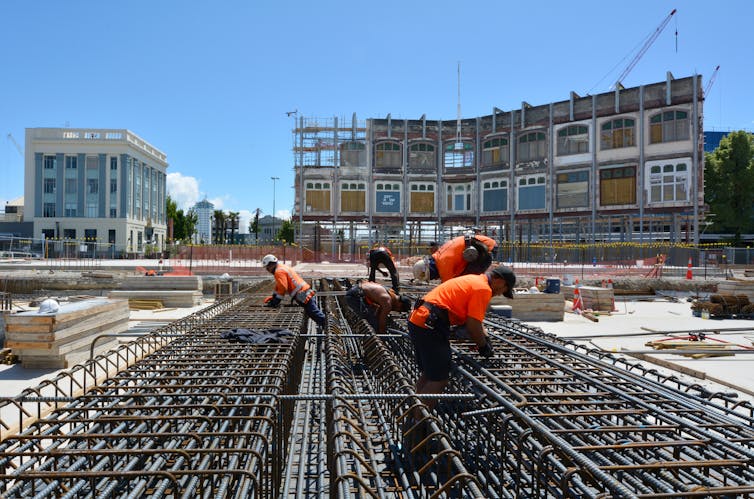 Public representation was a victim of emergency rebuild laws after the 2011 Christchurch earthquake.
www.shutterstock.com
Public representation was a victim of emergency rebuild laws after the 2011 Christchurch earthquake.
www.shutterstock.com
Five ways to improve the law
According to the new legislation, these expert panels must “apply” the high level purpose and principles of the Resource Management Act and “act consistently” with the principles of the Treaty of Waitangi (and associated settlements). They must also “have regard” to relevant plans and to regional and national policy statements.
Cultural impact assessments will be mandatory and the law also requires the “actual and potential” environmental effects of a project should be assessed.
All of this is good, but it would be improved with five over-riding principles.
First, the decision makers should act in a precautionary manner. If there is significant uncertainty about a project’s environmental impact it should not proceed.
Second, while replacing damaged or destroyed ecosystems is an excellent principle, there should be clear “red lines” around certain irreplaceable places, landscapes, endangered species and ecosystems.
Third, the law should go beyond simply calling for the examination of environmental effects to requiring actual environmental impact assessments. This would mean wider questions – such as whether there are alternatives to a given project – can be addressed.
Fourth, the right to compensation should be entrenched for citizens or communities directly affected by any proposed development.
Finally, if public participation is to be suspended, the ability to witness and have access to all panel deliberations should be underlined. When we are largely excluded from such important decisions, full transparency is the least we should expect in return.
Authors: Alexander Gillespie, Professor of Law, University of Waikato


















