

how Australian gymnastics needs to reform in wake of damning report
- Written by Georgia Cervin, Honorary Research Fellow, The University of Western Australia
The Australian Human Rights Commission (AHRC) has released its report on the culture and practice of gymnastics in Australia. Titled Changing the Routine, the report was commissioned by Gymnastics Australia in August 2020, after athletes shared stories online and in the media of the harms they had suffered in gymnastics.
The AHRC found evidence of bullying, harassment, abuse, neglect, racism, sexism and ableism across the sport, which has been going on for decades.
Its five key findings were:
current authoritarian coaching practices risk harm to athletes, and there is little coach accountability or regulation
there is inadequate understanding and prevention of the many behaviours that constitute child abuse and neglect in gymnastics
a win-at-all-costs culture that accepts negative and abusive coaching behaviours has resulted in the silencing of athlete voices and an increased risk of abuse
the focus on the “ideal body”, especially for young female athletes, combined with harmful weight-management and body-shaming practices can result in long-term eating disorders
gymnastics hasn’t appropriately addressed complaints of abuse and harm due to lack of expertise, resource and complicated governance.
A toxic and dehumanising culture
The report did not investigate individual allegations of abuse. But it is damning in its analysis of gymnastics culture in Australia and the treatment of its athletes. Peppered throughout are harrowing quotes from 57 interviewees and 138 written submissions, detailing physical, psychological and sexual abuse.
The recurring theme is the dehumanising experiences of the gymnasts: voiceless, dismissed, and discarded if they failed to achieve athletic victories. The gymnasts repeatedly describe a “toxic” culture of control, which included being forced to train with injuries, being isolated and alone, and suffering long-lasting physical and emotional damage.
These stories echo what has been seen in the research for some time now.
One gymnast said:
Over time, I was conditioned to accept being yelled at, be berated, humiliated, submissive, follow orders, not laugh, be emotionless and, worst of all, condition[ed] to accept that the coach[‘s] behaviour was normal, acceptable.
Another explained the long-lasting impacts it had on her:
We were trained to be really obedient […] without any kind of personality or any kind of individual traits […] always doing what was expected of us so we didn’t get punished. I think that’s had a huge impact on my life as an adult far beyond the years when I was doing gym and I think it’s really problematic […] I think it makes us ripe for abusive relationships.
It’s also clear these negative experiences cause a lot of emotional turmoil for the athletes, whose “first love” became a source of abuse. One submission reads:
I loved gymnastics; I hate the culture. I use past tense because the abusive and inhumane treatment I experienced ultimately [led] to my hatred of the sport. I might currently hate gymnastics, but I longed for it. I needed it. I could not live without [it]. I did not know who I was without it; it defined me.
The commission concluded a “win at all costs” culture across the sport underpinned both authoritarian coaching and the dehumanising of athletes.
The goal of winning medals was prioritised over any concern for athlete welfare. And when gymnasts did win medals, this was seen to justify unacceptable behaviours. One submission explained:
The importance of winning medals takes precedence over everything else.
And this ethos wasn’t limited to high performance – it was seen in clubs and recreational gymnastics too.
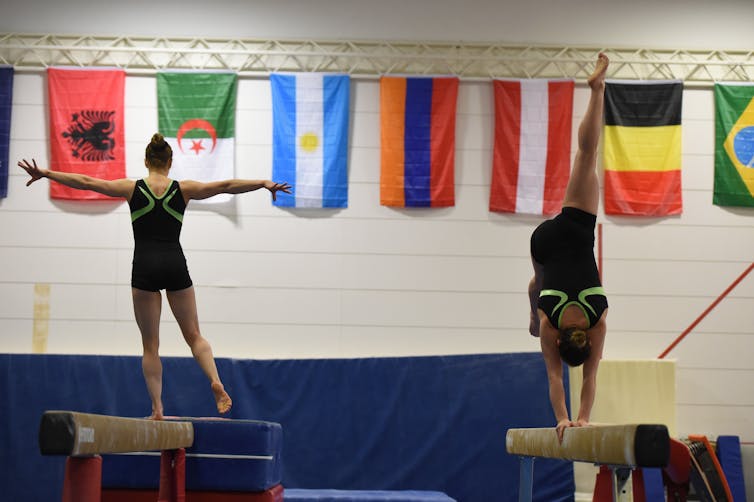 The report found a ‘win at all costs’ ethos caused enormous damage to its young athletes, even years after they left the sport.
Dean Lewins/AAP
The report found a ‘win at all costs’ ethos caused enormous damage to its young athletes, even years after they left the sport.
Dean Lewins/AAP
Abuse in gymnastics is a gendered issue
The AHRC noted that a key risk factor in the culture is not only the power imbalance between coach and athlete, which is seen in many sports, but also in the gendered nature of gymnastics.
Not only does it have a high proportion of female participants, those athletes are also subjected to negative stereotypes, ideals and expectations around gender. This is essential to understanding the risk of abuse in gymnastics, and the AHRC’s observation is well supported by the research.
The research on women’s artistic gymnastics shows the sport was designed to showcase stereotypical femininity. This expectation wasn’t limited to bodily movement. It included the way female gymnasts were expected to behave: obedient, passive and docile.
In my book, I argue these gendered expectations of gymnasts, coupled with the age (often gymnasts begin training seriously from five and traditionally peaked around 16) and perceived expertise difference between the child athletes and adult coaches, is a compounding power imbalance that makes female gymnasts more vulnerable to abuse.
Read more: Girls no more: why elite gymnastics competition for women should start at 18
Where to now?
Gymnastics Australia described the report as “confronting”. It acknowledged the systemic issues that had negatively affected athlete well-being, and expressed “deep concern” over the gymnasts’ experiences described in the report. It apologised unreservedly to the athletes and their families, and committed itself to oversee the response to the report.
While this apology is an important first step, gymnasts are yet to see any organisation take responsibility for the harms gymnasts suffered under their watch. The culture cannot change without this essential component of accountability.
Read more: Survival of the fittest: the changing shapes and sizes of Olympic athletes
With the framework provided by this review, clubs and state institutions and organisations might undertake investigations into their own roles in athlete harm. Then they can begin the process of acknowledging institutional failures and the damage done to young gymnasts, and issue genuine apologies for their acts.
This kind of accountability is where cultural change begins. It’s also part of the redress process that athletes are seeking.
What better way to address the silencing of athlete voices than to listen to them?
Authors: Georgia Cervin, Honorary Research Fellow, The University of Western Australia

















