

Refugee students struggle with displacement and trauma. Here are 3 ways schools can help them belong
- Written by Scott Imig, Associate professor, Educational Leadership and Management, University of Newcastle
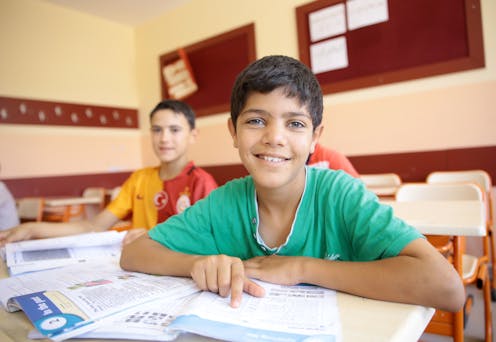
As the United States withdrawal from Afghanistan culminated in tragic scenes at Kabul airport in recent months, Australians saw a glimpse of the lives of people trying to escape dangerous situations to find safety for their families.
Many Afghans were brought to Australia, some having to tragically leave behind families.
Australia is anticipated to issue about 3,000 humanitarian visas to Afghan refugees this year. That number could grow to 20,000 in the next few years. About half of the refugee population resettled to Australia are children.
Overall, there are more than 11,000 students from refugee backgrounds attending government schools in New South Wales and about 1,800 new refugee students enter the state school system each year.
Principals and teachers are among Australia’s most important front-line workers. Over the past two years, they have helped communities deal with fires, floods and COVID-19 lockdowns.
Read more: A familiar place among the chaos: how schools can help students cope after the bushfires
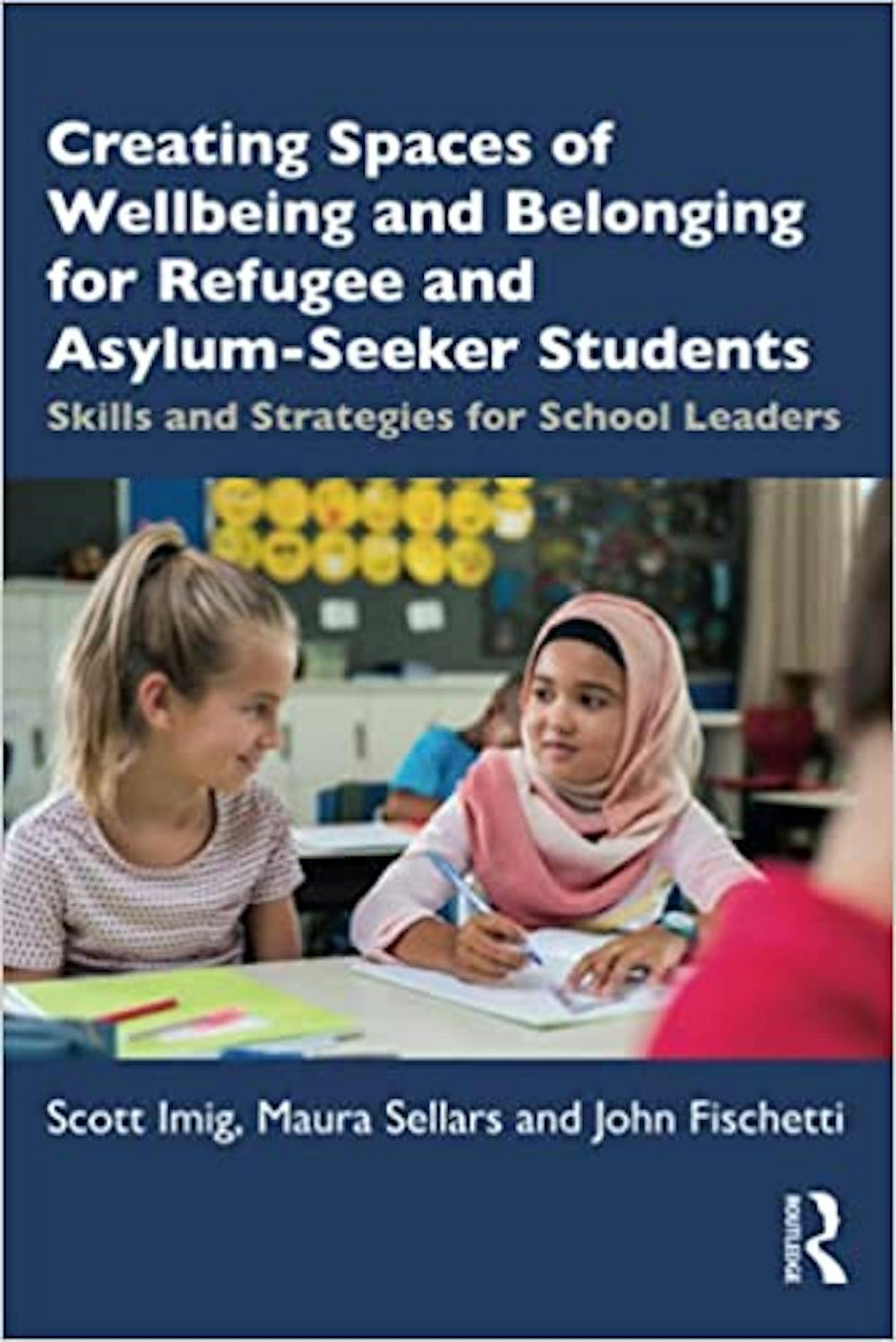
In our recently published book Creating Spaces of Wellbeing and Belonging for Refugee and Asylum-Seeker Students we provide strategies for school leaders to help care for young people dealing with trauma and forced migration, and to help them integrate into their new communities.
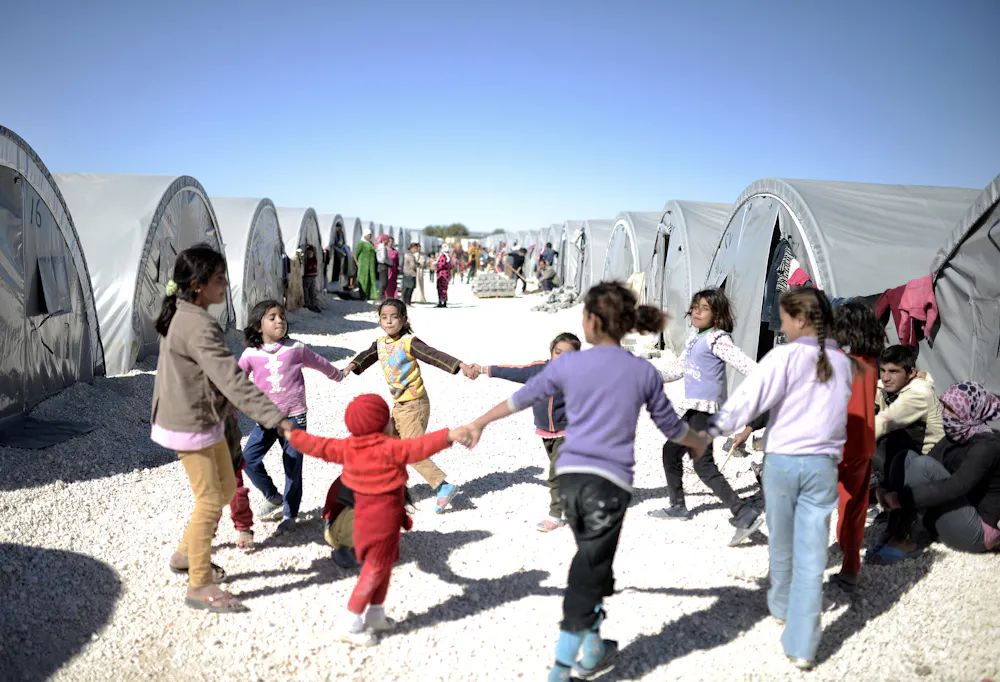 Refugee children have often missed school as a result of their displacement, and may be further behind than their peers.
Shutterstock
Another principal told of girls who refused to swim in the same pool with boys and mothers who didn’t feel comfortable attending parent-teacher meetings with other men.
Our participants offered insights for addressing these challenges and creating welcoming schools for children with refugee backgrounds. We’ve grouped these into three main themes.
1. Welcoming new arrivals
At the first contact with refugee and asylum-seeker families, the entire school staff must be available, friendly and committed to the process of integrating these families. School materials need to be in the appropriate language and interpreters must be present.
Schools should provide families with many of their needs at the initial meeting. This can include culturally appropriate uniforms and supplies (such as stationery) so students can feel a sense of belonging.
A primary principal in England told us how she developed a buddy system in which newly arrived children were paired with same-age peers, proficient in English, who also shared similar language backgrounds.
An Australian principal created a weekly coffee club for newly arrived parents that he staffs with interpreters. He said:
At those coffee clubs they discuss different topics: they looked at how to buy furniture, how to make a healthy meal on a budget, where do you have to go if you have to see a doctor. Because they don’t have access to those things.
A high school principal in New Zealand provided all families who volunteered to cook for a cultural evening with funds for the ingredients they needed to make their dishes. This gave an ideal opportunity for newcomers to share food from their home countries with the broader school community.
For each of these principals, community building is a purposeful, consistent and time-intensive endeavour.
2. Help staff to understand trauma
Children who have been forcibly displaced from their homes, who have experienced loss of family members and who have arrived in a new land, with a new language and new expectations are experiencing trauma. Trauma can manifest in delayed learning, erratic emotions, and unexpected behaviours.
Principals should educate themselves and their staff on ways to help students deal with trauma.
Read more:
Why every teacher needs to know about childhood trauma
One Australian primary principal told us he hired a teacher to engage students in art therapy. He said:
There was one boy who drew mountain tops and explained to us the strategies that the Taliban use. It’s this way that they were able to draw it and express it and to get it out. It has a therapeutic nature which allows them to have some self-expression. That allowed them a voice, when they didn’t necessarily have the English.
3. Learn about new students and families
Principals should encourage their staff to learn about new students and their families. This includes learning about their culture and traditions, as well as listening carefully as students tell their stories in class.
One principals told us:
Kids will tell you about their parents, who are still missing in the country that they left, or how the house has been bombed three times by the Americans […] These are all the stories that come out but listening to the kids and you can see the healing that happens as a result of that.
Another primary principal encourages engaging with the refugees’ cultural communities: “Go and visit the local mosque, go and ask some questions”.
Successfully integrating new families into our school communities benefits not only the newcomers, it also creates hope for all Australian families.
Building a diverse society starts with caring and promoting the well-being of all children, particularly newcomers who have been through so much to become part of our communities.
Authors: Scott Imig, Associate professor, Educational Leadership and Management, University of Newcastle
Refugee children have often missed school as a result of their displacement, and may be further behind than their peers.
Shutterstock
Another principal told of girls who refused to swim in the same pool with boys and mothers who didn’t feel comfortable attending parent-teacher meetings with other men.
Our participants offered insights for addressing these challenges and creating welcoming schools for children with refugee backgrounds. We’ve grouped these into three main themes.
1. Welcoming new arrivals
At the first contact with refugee and asylum-seeker families, the entire school staff must be available, friendly and committed to the process of integrating these families. School materials need to be in the appropriate language and interpreters must be present.
Schools should provide families with many of their needs at the initial meeting. This can include culturally appropriate uniforms and supplies (such as stationery) so students can feel a sense of belonging.
A primary principal in England told us how she developed a buddy system in which newly arrived children were paired with same-age peers, proficient in English, who also shared similar language backgrounds.
An Australian principal created a weekly coffee club for newly arrived parents that he staffs with interpreters. He said:
At those coffee clubs they discuss different topics: they looked at how to buy furniture, how to make a healthy meal on a budget, where do you have to go if you have to see a doctor. Because they don’t have access to those things.
A high school principal in New Zealand provided all families who volunteered to cook for a cultural evening with funds for the ingredients they needed to make their dishes. This gave an ideal opportunity for newcomers to share food from their home countries with the broader school community.
For each of these principals, community building is a purposeful, consistent and time-intensive endeavour.
2. Help staff to understand trauma
Children who have been forcibly displaced from their homes, who have experienced loss of family members and who have arrived in a new land, with a new language and new expectations are experiencing trauma. Trauma can manifest in delayed learning, erratic emotions, and unexpected behaviours.
Principals should educate themselves and their staff on ways to help students deal with trauma.
Read more:
Why every teacher needs to know about childhood trauma
One Australian primary principal told us he hired a teacher to engage students in art therapy. He said:
There was one boy who drew mountain tops and explained to us the strategies that the Taliban use. It’s this way that they were able to draw it and express it and to get it out. It has a therapeutic nature which allows them to have some self-expression. That allowed them a voice, when they didn’t necessarily have the English.
3. Learn about new students and families
Principals should encourage their staff to learn about new students and their families. This includes learning about their culture and traditions, as well as listening carefully as students tell their stories in class.
One principals told us:
Kids will tell you about their parents, who are still missing in the country that they left, or how the house has been bombed three times by the Americans […] These are all the stories that come out but listening to the kids and you can see the healing that happens as a result of that.
Another primary principal encourages engaging with the refugees’ cultural communities: “Go and visit the local mosque, go and ask some questions”.
Successfully integrating new families into our school communities benefits not only the newcomers, it also creates hope for all Australian families.
Building a diverse society starts with caring and promoting the well-being of all children, particularly newcomers who have been through so much to become part of our communities.
Authors: Scott Imig, Associate professor, Educational Leadership and Management, University of Newcastle 
















