

Why do we love the great outdoors? New research shows part of the answer is in our genes
- Written by Richard Fuller, Professor in Biodiversity and Conservation, The University of Queensland
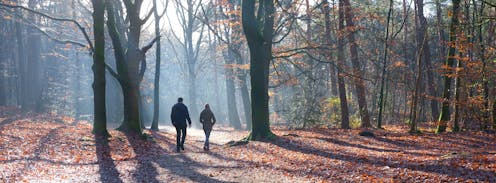
Do you love spending time in nature? Or are you a city slicker, happier in the concrete jungle than the great outdoors? Back in 1986, the US biologist EO Wilson proposed that humans have an innate connection with the natural world, an idea known as biophilia.
Almost every aspect of our lives depends on nature, from food and shelter to fuel and clothing. Yet some of us are much more “into” spending time in nature than others.
To try to understand why, we studied more than 1,100 pairs of twins to find out how much of our connection to nature might depend on our DNA. We found almost half the variation in people’s connection to nature can be put down to genetics.
Nature is good for you
There is strong evidence even a wander in the local park can be beneficial for our mental and physical health. Yet with work and family responsibilities and packed social schedules, most of us do not regularly spend time in nature.
We wondered why some people spend more time in nature than others, and what underpins the fact some of us feel more strongly connected to nature.
Read more: Why daily doses of nature in the city matter for people and the planet
Perhaps our affinity for nature is inherited. Or perhaps we get it from environmental factors – such as beautiful forests – in the places we live. Or again it might come from our cultural milieu such as the books we read or the TV programs we watch.
Finding answers to these questions might help us work out how to get some nature back into people’s lives.
Studying twins
We studied more than 1,100 pairs of twins to understand the origin of affinity for nature, and report the results in a study published today in PLoS Biology. It turns out identical twins are much more similar to each other in the strength of their connection to nature than non-identical twins.
Statistical analysis of the results showed 46% of the variation in connection to nature, as measured on a psychological scale, can be explained by genetic factors. Even the amount of time we spend in our own backyards and visiting local parks seems to have a strong genetic basis.
Why the strong genetic influence on our love for nature? Well, one can imagine a strong affinity with nature conferring a significant survival advantage for early humans. This might have led to the formation of complex networks of genes that govern how we relate to nature, and how we behave in it.
Despite the clear role of genetics, our results show other factors actually shape most of our affinity to nature. These might include childhood holiday destinations, the examples set by our parents, friends and other family members, educational experiences, and whether we live in a biodiverse area.
This is good news, because many of these things are under our own control.
Nature and health
Nature–based health interventions such as green gyms or environmental volunteering can improve physical, mental and social health and well-being. Nature-play initiatives such as the Green Passport for Queensland kids can give children powerful experiences of nature that could benefit their health over the long term.
Read more: Being in nature is good for learning, here's how to get kids off screens and outside
A deeper question, and one we don’t yet have a clear answer to, is whether spending time in nature fosters our sense of environmental concern, and in turn, support for nature conservation.
The US ecologist James Miller has argued interactions with nature are crucial in sparking support for protecting nature. Yet an Australian study led by environmentalist Jessica Pinder showed conservation concern among Australian undergraduates was more strongly associated with social and cultural experiences in childhood than with the amount of time a person spends in nature. Clearly, there is much more to learn in this area.
Ultimately, we now know despite a genetic basis for our affinity to nature, much of it also depends on other factors that are decidedly under our own control. So make a resolution today to rekindle your connection to the great outdoors!
Authors: Richard Fuller, Professor in Biodiversity and Conservation, The University of Queensland

















