

Australia could get to net zero emissions much quicker than 2050 – if our politics was a force for change. Here's how
- Written by: Anna Malos, Australia - Country Lead, ClimateWorks Australia
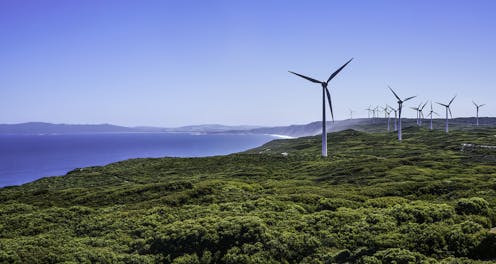
Let’s imagine Australia was able to use politics to work on the single largest threat facing us: climate change.
Our current goal is net zero by 2050. But we could do it much faster. Our modelling shows we could get there by 2035. That’s just 13 years away.
Just think of last week’s audacious bid by tech billionaire Mike Cannon-Brookes to take over our largest emitting company, AGL, and rapidly retire its fossil fuel assets.
You might look at the latest climate news and think it’s too late. This is simply not true. There’s a better future just ahead, if we can seize it.
Getting on with the job of decarbonising
Within 13 years (2035), we could have a near zero emission power grid of firmed renewables powering our society. That same year, houses and apartments could hit near zero emissions, courtesy of new all-electric buildings and retrofits. And agriculture, too, could see significant emissions reductions.
Real progress could come even earlier. Within eight years, electric vehicles could make up 75% of new car sales, with public transport electrified too. Industry – often seen as hard to decarbonise – could halve its emissions by 2030. And Australia could be on the way to becoming a green superpower, courtesy of our wealth of minerals needed for the transition and ability to make green hydrogen.
Read more: Climate change: how economists underestimated benefits of action for decades

Electricity: near zero within 13 years
The way we generate electricity is changing the fastest. Over the last decade, we have tripled the share of renewables in Australia’s generation mix to over 20%.
We have more than enough sun and wind to make the renewable share as high as 80% by 2030, and almost 100% by 2035. We can manage that even though electricity demand is expected to double by 2050.
We even have the renewable resources to produce more electricity than we use, and export the surplus. Tasmania, for example, has legislated a 200% renewable energy target by 2040 – meaning they can export the excess power.
We have the technologies we need for this kind of scale. All we have to do is plan the transition properly, so the wave of cheap renewable power arrives as coal and gas exit. Done right, we’ll all benefit from cheaper power. State governments and operators of the energy market have shown how this can be done.
There will still be mining jobs, as the world demands our green tech minerals such as lithium, cobalt and copper. And we have huge opportunities to benefit from our ever-cheaper renewables through nation-building megaprojects where Australian renewables are sent under the sea to Asia, or converted to green hydrogen and shipped in place of fossil gas exports.
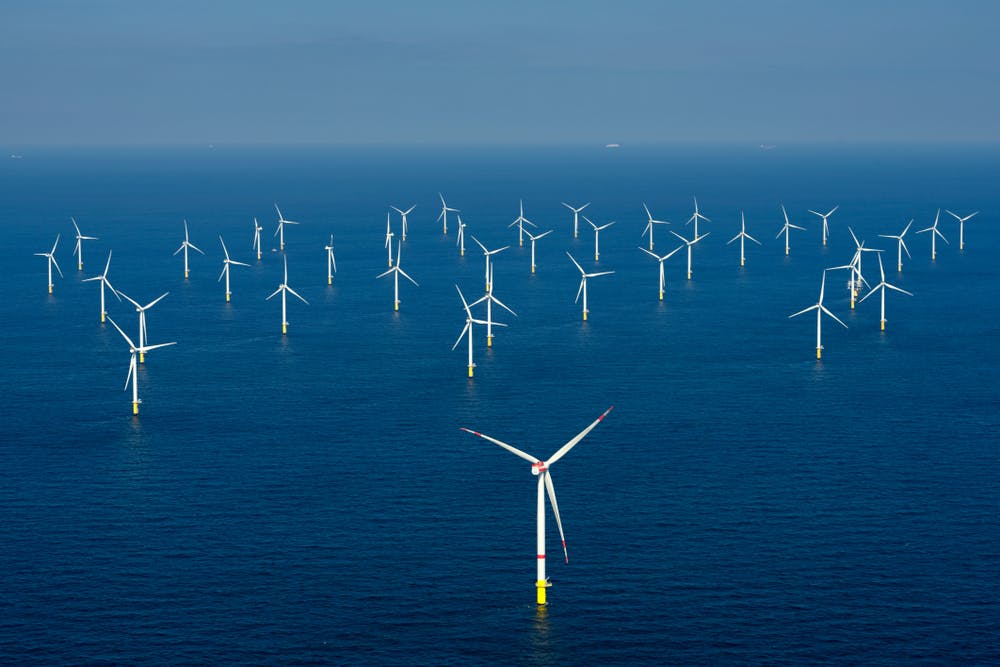 We’re rich in renewables.
Shutterstock
We’re rich in renewables.
Shutterstock
Buildings: near zero within 13 years, with a boost to comfortable living
As we shift to clean electricity, we unlock emissions reductions across the economy. We’ll see this most clearly in our homes and commercial buildings.
How? Look at the all-electric, 7-star new buildings under construction by some of Australia’s largest property developers. For those of us in older houses, large-scale retrofitting would enable us to reach near zero emissions by 2035 at lowest cost.
The benefit? Lower energy bills and more comfortable living, as we fix the well-known issues with insulation and air leakage. The energy use per Australian household could be halved by 2030 if available technologies are rolled out in Australian markets.
Transport: 75% of new cars electric within eight years
Most technology needed to electrify Australia’s cars, utes and vans is ready to hit the road. If more electric vehicle models became available and we get on a similar timeline to the EU and US, price parity could be reached within four years.
When electric vehicles are price competitive with internal combustion engine models, people will switch. With the right policy and market settings, three in four new cars could be electric by the end of the decade.
In public transport, we could see rapid change. Sydney’s bus fleet will be electrified and the metro rail system powered by renewables this decade. Melbourne’s trams are renewably powered, with electric buses coming too. If taken up across the country, Australia’s public transport network could be transformed by 2030.
Decarbonising the way we transport freight and move long distances will take more work. But zero emissions container ships and battery-powered trains are in the works.
Read more: Why green hydrogen — but not grey — could help solve climate change
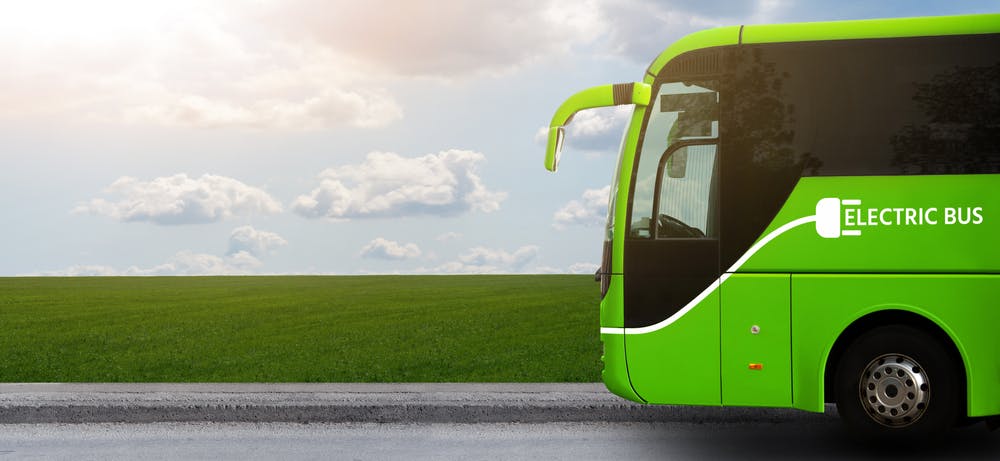 Electric buses are coming.
Shutterstock
Electric buses are coming.
Shutterstock
Industry: emissions halved within eight years
While industry is often seen as a hard nut to crack, it’s possible to achieve major emissions reductions using known technologies. Our modelling shows industry emissions could be halved by 2030.
How? By rapidly switching to existing technologies to improve material and energy efficiency, while solutions are developed for more difficult emission sources.
A vital first step is to create industrial precincts powered by renewables. It’s already happening in Western Australia and New South Wales.
Australia’s significant competitive advantages in mineral resources and renewable energy mean we could lead the world in establishing green industries.
Green hydrogen prices could drop to A$2/kg by the early 2030s, allowing Australia to become a significant exporter while using hydrogen domestically to power other low emissions export industries like green steel.
Agriculture: net zero is possible by 2035
Livestock accounts for around 70% of all agricultural emissions. Deployment of solutions like anti-methane technologies and plant-based proteins will create meaningful emissions reductions by 2030.
Research breakthroughs are occurring all the time in this area, and there is a real desire for progress in the industry.
Meat and Livestock Australia is aiming for carbon neutrality by 2030 for Australia’s beef, lamb and goat production. With the right policy signals, this transformation would be within reach.
Read more: How can Australia get cracking on emissions? The know-how we need is in our universities
Natural resources: carbon sinks will get us to net zero
Even with these actions, most sectors of the Australian economy will still have residual emissions in 2035. That’s where our vast land area and enviable natural resources can help get us to net zero.
Even now, Australia’s land use, land use change and forestry (LULUCF) sector stores more carbon than it produces.
We can use this sector to “soak up” any residual emissions, through forestry plantations, growing more trees on farms (which also improves productivity) and other carbon farming techniques.
Restoring and preserving wilderness in national parks, mangroves, wetlands, and other landscapes offer further opportunity for carbon sequestration.
Importantly, land isn’t an “easy fix” replacing the need to slash emissions and quickly. We can’t store endless carbon in these natural sinks.
 Wetlands, forests and mangroves store residual emissions.
Shutterstock
Wetlands, forests and mangroves store residual emissions.
Shutterstock
More ready than you think
It is entirely possible for Australia to hit net zero emissions within 13 short years.
It’s a big job. But we can get there, and we’ll reap huge benefits from the switch.
But we need a united front – with businesses, organisations, individuals – and, yes, governments – agreeing to get on with it. Let’s get cracking.
Authors: Anna Malos, Australia - Country Lead, ClimateWorks Australia


















