

Toxic shock syndrome is rare. Be vigilant but not alarmed
- Written by: Deborah Bateson, Clinical Associate Professor, Discipline of Obstetrics, Gynaecology and Neonatology, University of Sydney
The tragic case of US model Lauren Wasser who has now lost both legs as a result of toxic shock syndrome while using tampons has shone a spotlight on this rare but potentially fatal condition. So just what is toxic shock syndrome (TSS) and how likely is it if we use tampons?
What is TSS?
TSS occurs when the body responds to toxins produced by Staphylococcus aureus (Staph), or, more rarely, Group A Streptococci (Strep). Staph is a common bacteria that lives on skin, in the nose and respiratory tract, and is usually harmless. Strep is found in the throat and on the skin.
In certain circumstances, these bacteria can overgrow, producing large amounts of the TSS toxin that sets off an uncontrolled inflammatory response, resulting in a sunburn-like rash, redness of the eyes, tongue and throat, and peeling of the skin on the palms and soles. Dangerously low blood pressure and multi-organ failure can make it life-threatening in a matter of hours.
Read more: Tampon versus pad: why more women still choose the latter to manage periods
The disease was first detected in children in 1978, but gained notoriety in the 1980s and 90s when it was found to be associated with tampon use in menstruating women, especially young women.
But it should be stressed that anyone with a Staph or Strep infection can potentially develop TSS, including children, older women and men. It can for instance result from cuts or burns on the skin, recent surgery, viral infections or recreational intravenous drug use. Very rarely, it has been associated with use of the contraceptive diaphragm during menstruation and the menstrual cup.
Tampons and TSS
“Do it yourself” tampons have been around ever since ancient Egyptian women started packing papyrus into the vagina to absorb menstrual blood, but the first modern tampon was not developed until 1929. Following the marketing success of Tampax, a cotton device with a cardboard telescopic applicator, a raft of products flooded onto the scene, including Rely, a tampon released in 1978 and made of super-absorbent synthetic materials.
Rely was promoted heavily, with free samples given to millions of women. In May 1980, the Centres for Disease Control and Prevention (CDC) reported a spike of 55 cases of TSS among menstruating women, mostly as a result of Staphylococcus aureus infection.
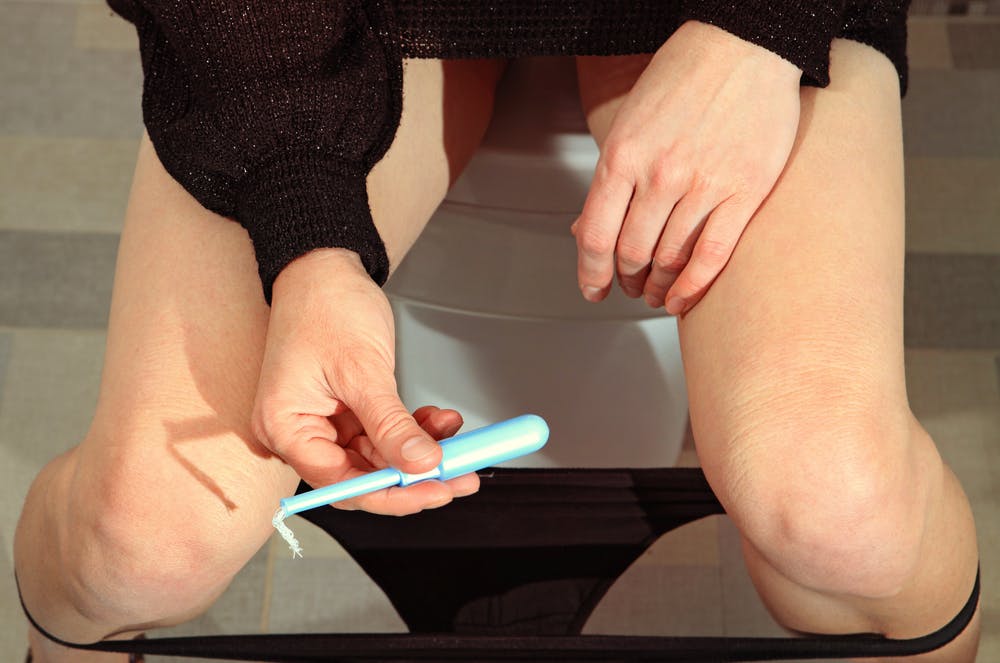 Wash your hands thoroughly before insertion, and unwrap the tampon immediately before use and no sooner.
from www.shutterstock.com
Wash your hands thoroughly before insertion, and unwrap the tampon immediately before use and no sooner.
from www.shutterstock.com
Read more: Cups, lingerie and home-made pads: what are the reusable options for managing your period?
Rely’s polyester foam infused with carboxymethylcellulose gel (also used in toothpaste and ice-cream), together with the change in vaginal pH during menstruation, provided an ideal environment for these bacteria to grow and release their dangerous toxins.
The syndrome soon assumed epidemic proportions, with 890 cases reported in 1980, of which 812 were associated with menstruation. As soon as the tampon was recalled, TSS rates began to fall. While Rely tampons were never sold in Australia, other high absorbency brands were also implicated.
How common is TSS?
Exact rates of TSS are not known in Australia as it’s not a “notifiable” disease (meaning the health department doesn’t have to be notified each time there’s a case), but they are likely to be similar to those of the US and UK. In the US, where TSS is notifiable, the 2004–2014 average annual incidence varied from 0.3 to 0.5 per million people.
In the UK, where notification is voluntary, the 2008-2012 average annual incidence was 0.7 per million, with a greater proportion of cases not associated with menstruation.
In a nutshell, TSS occurs in fewer than one in a million people. Professor Peter Collingnon, an Infectious Diseases physician and microbiologist at The Canberra Hospital who I consulted when writing this article, says tampon-related TSS has significantly declined as a result of changes in the manufacture of tampons and greater public awareness of safe tampon use.
Read more: Explainer: why do women menstruate?
Practical advice about tampon use
All tampons sold in Australia are regulated by the Therapeutic Goods Administration (TGA) to ensure they’re manufactured in a way that minimises recognised health risks, including TSS. Safe tampon use includes not unwrapping the tampon until immediately before use, thorough handwashing before insertion, and using the lowest absorbency tampons possible.
The US Food and Drugs Administration (FDA) encourages manufacturers to recommend wear time limits of maximum eight hours, but most health care professionals advise a change between four and eight hours. The FDA also advises against overnight use.
The key is to ensure the tampon is replaced before the eight hours is up - setting a phone reminder is a useful approach. As a doctor I frequently have to retrieve forgotten tampons, sometimes after a second or even third one has been accidentally inserted.
While TSS is rare, it is potentially life-threatening. Anyone who thinks they may have the above symptoms of TSS should call a doctor or ambulance immediately, and if a tampon is being used it should be removed straight away. If TSS is detected early, as was tragically not the case with Lauren Wasser, it can be treated - with antibiotics, fluids given through a drip to increase blood pressure, and medical treatment for complications.
Authors: Deborah Bateson, Clinical Associate Professor, Discipline of Obstetrics, Gynaecology and Neonatology, University of Sydney
Read more http://theconversation.com/toxic-shock-syndrome-is-rare-be-vigilant-but-not-alarmed-90302


















