A forgotten and neglected ecosystem covers a third of Earth's coastlines, with a collective value of $500 billion
- Written by Aaron Eger, Postdoctoral research fellow, UNSW Sydney
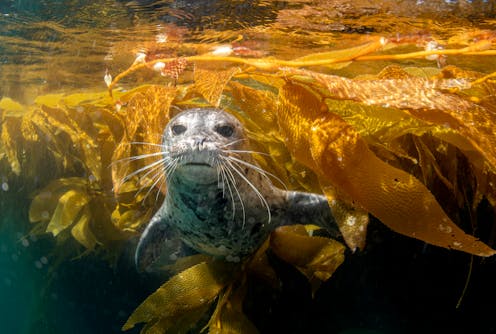
Underwater forests known as kelp have been sustaining people and cultures for millennia. However, most of us are only vaguely aware of the vibrant masses of seaweed hugging the ocean shores around Earth. Furthermore, we don’t realise how valuable and necessary they really are.
In a new study published today in Nature Communications, we have produced the first global estimate of the economic value of kelp forests – revealing they provide hundreds of billions of dollars in value to humans across the world.
A human history of kelp
Along the Pacific, kelp harvest has long played an important role in Asian societies. In Japan, seaweed was among the marine products people could use to pay taxes, according to a law code from the year 701.
In Medieval Europe, kelp was used to fertilise soil and increase crop yields, to treat goitre, and was used to fortify building materials for centuries. In the 21st century kelp forests have become the main source for alginate, a common food and medical additive.
And throughout this time, kelps have supported teeming ecosystems and important fisheries of abalone, lobsters and many different types of fishes. Through their prolific productivity, kelp forests draw carbon from the atmosphere, exude oxygen, and help reduce nutrient pollution in our oceans.
A marine marvel, hidden kelp forests spread across almost one third of our world’s coastlines and lie within 50km of 740 million people. If you live in London, Tokyo, New York, Vancouver, Santiago, Cape Town, Los Angeles or Lisbon, you have one of these ecosystems on your doorstep.
Yet they tend to be forgotten or misunderstood. People often aren’t even aware of a kelp forest, and if they are, they might be most familiar with a pile of decomposing seaweed on the beach after a storm.
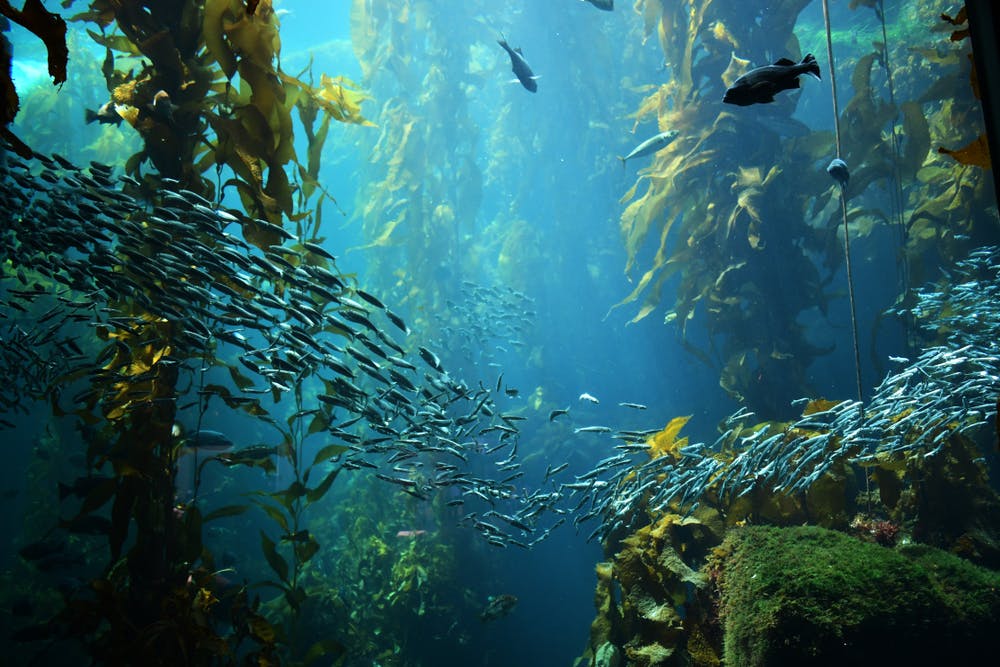
This disconnect has real-world implications. Despite sitting next to some of the biggest research centres on the planet and likely covering more seafloor than any other biotic habitat, research and conservation of kelp forests is terribly behind other ecosystems.
This knowledge gap impedes desperately needed action and conservation. Kelp populations in northern California, Tasmania, and the Salish Sea have all but disappeared in living memory. Elsewhere, kelp populations have been continually declining over the last 50 years.
What we value and how we value it is actually quite a complicated process. And despite the fact we make value judgements over and over each day, we have a really poor understanding of something’s value if it doesn’t have a price tag on it.
Our natural world is perhaps the ultimate value provider – everything we do in our societies is ultimately tied to nature, ecosystems, and a healthy planet. But because these processes and benefits happen with or without humans, they are often taken for granted.
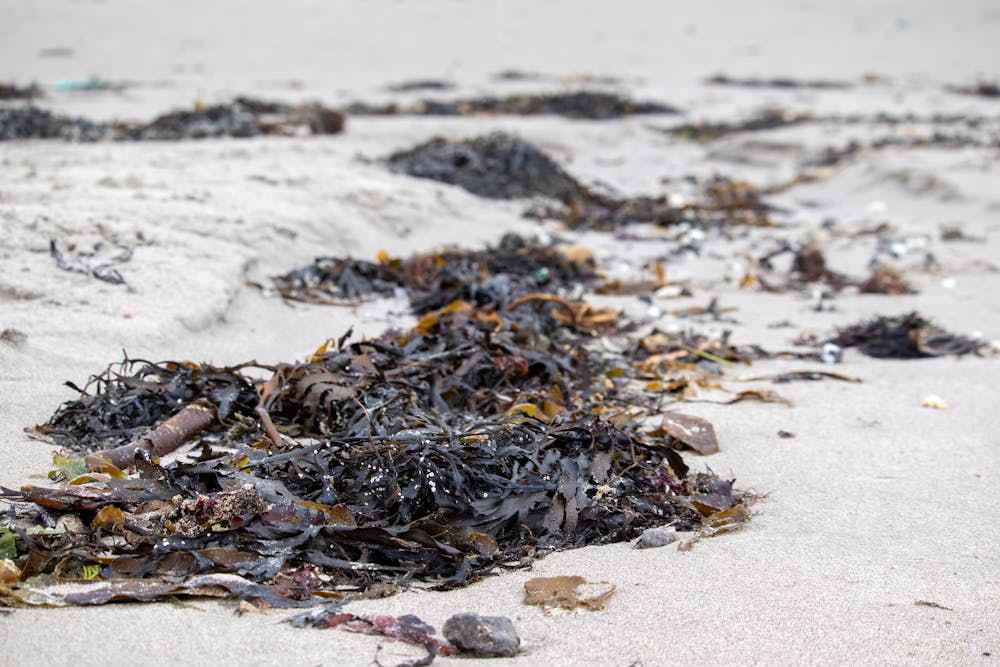 The seaweed we step over on our beaches is just a small fraction of the vibrant kelp ecosystems beneath the waves.
Andrew Dawes/Unsplash
The seaweed we step over on our beaches is just a small fraction of the vibrant kelp ecosystems beneath the waves.
Andrew Dawes/Unsplash
So, what is the ‘value’ of a kelp forest?
Our research has brought together data from all across our oceans to produce a global estimate of the economic value of kelp forest ecosystems. Looking at six key genera of kelp – Macrocystis, Nereocystis, Laminaria, Saccharina, Ecklonia, and Lessonia – and the potential economic value of the fisheries they support, the carbon they pull from the atmosphere, and the nutrient pollution they remove from the water, we found that kelp forests are valued at US$500 billion per year.
The highest of these values was the removal of excess nitrogen from the water, which can trigger blooms of algae, reduced water quality, and ultimately oxygen-depleted dead zones.
A close second was the fisheries values – kelp forests support some of our most iconic fisheries, including lobster and abalone.
Lastly, despite finding the carbon sequestration of kelp forests was comparable to other terrestrial and marine ecosystems, the economic value was much lower, as society has yet to place a high price on carbon. This finding suggests that carbon credits may not be an economic driver of kelp conservation, but kelp forests still play an important role in the blue carbon cycle.
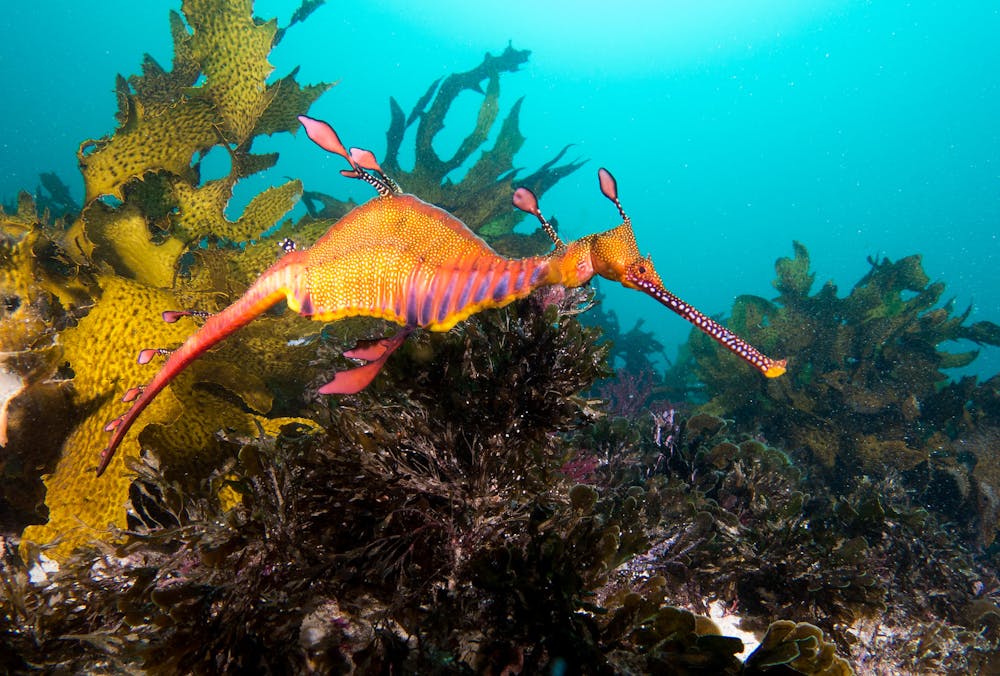 Weedy seadragons are just one of many fishes living in kelp forests.
John Turnbull/Flickr, CC BY-NC-SA
Weedy seadragons are just one of many fishes living in kelp forests.
John Turnbull/Flickr, CC BY-NC-SA
The future of kelp
When nature is treated as a freebie, where we can take what we want and not pay for the damages, this attitude has direct consequences; people and the environment suffer.
First, it can mean that people and government don’t see the value in protecting and restoring ecosystems. Second, development projects are able to destroy nature without compensating for those damages.
Lastly, it leads to poor management. How can we manage something if we cannot quantify it? Imagine if you didn’t know where your bank account was, or how much money was in it.
The battle to save our kelp forests is just getting started, and we need greater action to protect these intrinsically and economically valuable marine ecosystems.
That is why researchers like me have started the not-for-profit Kelp Forest Alliance, and have now launched the Kelp Forest Challenge, a global call to protect and restore 4 million hectares of kelp forest by 2040. This is a call for governments to meet their commitments to the Kunming-Montreal Global Biodiversity Framework and act now to save these ecosystems and #HelpTheKelp.
Read more: Whether you're a snorkeller or CEO, you can help save our vital kelp forests
Authors: Aaron Eger, Postdoctoral research fellow, UNSW Sydney