a (condensed) history of soup, from cave to can
- Written by Garritt C Van Dyk, Lecturer, University of Newcastle

Hot soup on a cold day brings warmth and comfort so simple that we don’t think too much about its origins. But its long history runs from the Stone Age and antiquity through to modernity, encompassing the birth of the restaurant, advances in chemistry, and a famous pop art icon.
The basic nature of soup has a fundamental appeal that feels primordial – because it is.
Archaeologists speculate the first soup might have been made by Neanderthals, boiling animal bones to extract fat essential for their diet and drinking the broth. Without the fats, their high intake of lean animal meats could have led to protein poisoning, so stone age soup was an important complement to primeval nutrition.
The fundamental benefit of these bone broths is confirmed by archaeological discoveries around the world, ranging from a gelatin broth in Egypt’s Giza plateau, to Shaanxi Province in China.
The widespread distribution of archaeological finds is a reminder soup not only has a long history, but is also a global food.
Today, our idea of soup is more refined, but the classic combination of stock and bread is embedded in the Latin root of the verb suppāre, meaning “to soak”.
As a noun, suppa became soupe in Old French, meaning bread soaked in broth, and sowpes in Middle English. This pairing was also an economical way of reclaiming stale bread and thickening a thin broth. Wealthier households might have toasted fresh bread for the dish, but less prosperous diners used up stale bread that was too hard to chew unless softened in the hot liquid.
From rustic to creamy
New ideas about science and digestion in 17th century France promoted natural flavours and thick, rustic preparations gave way to the creamy and velvety smooth soups we know today.
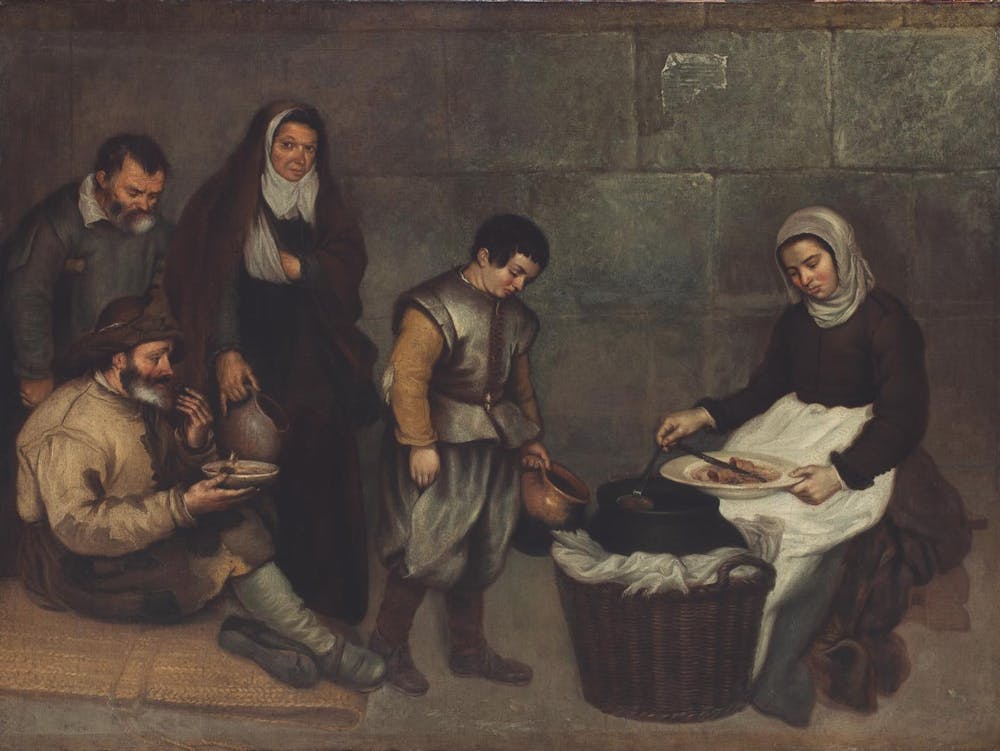
New versions of the liquid food were developed by early modern European chefs, such as the seafood bisque, extracting flavour from the shells of crustaceans.
The first restaurant as we understand them today opened in Paris in 1765, and was immortalised for a simple broth, a clear soup made from bone broth and fresh herbs.
Mathurin Roze de Chantoiseau, the original French restaurateur, created a new type of public space where weary diners could regain their lost appetites and soothe their delicate nerves at all hours.
It may appear to be a contradiction that the first restaurant specifically catered to clients who had lost their appetites, yet it seems perfectly natural soup was the cure.
Read more: Revolutionary broth: the birth of the restaurant and the invention of French gastronomy
Easy and affordable
Soup was not destined to be limited to fancy restaurants or the long simmering stock pots of peasants. Modern science made it convenient and less expensive for home cooks.
In 1897, a chemist at the Campbell soup company, John Dorrance, developed a condensed canned soup that dramatically reduced the water content. The new method halved the cost of shipping and made canned soup an affordable meal anyone could prepare.
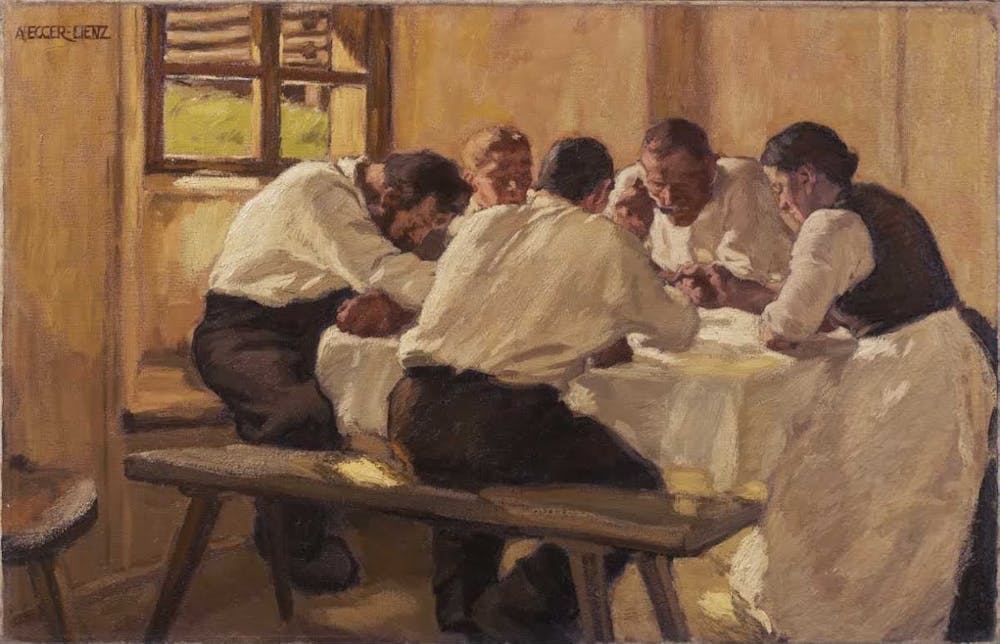 Lunch (The Soup, Version II), Albin Egger-Lienz, 1910.
Leopold Museum, Vienna
Lunch (The Soup, Version II), Albin Egger-Lienz, 1910.
Leopold Museum, Vienna
This revolutionary achievement was recognised at the 1900 Paris Exposition, winning an award for product excellence. Winning the prize was an achievement considering the competition at the world fair. The other technological advances exhibited at the turn of the century included the diesel engine, “talking” films, dry cell batteries and the Paris Metro.
The bronze medallion from 1900 still appears on the iconic red and white label, made famous by pop artist Andy Warhol’s 32 Campbell Soup Cans (1962).
In his work, Warhol appropriated images from consumer culture and the media ordinary people would instantly recognise, from Coca-Cola bottles to Marilyn Monroe. In his famous soup painting, 32 canvases – one for each flavour of soup – are lined up like cans on a supermarket shelf.
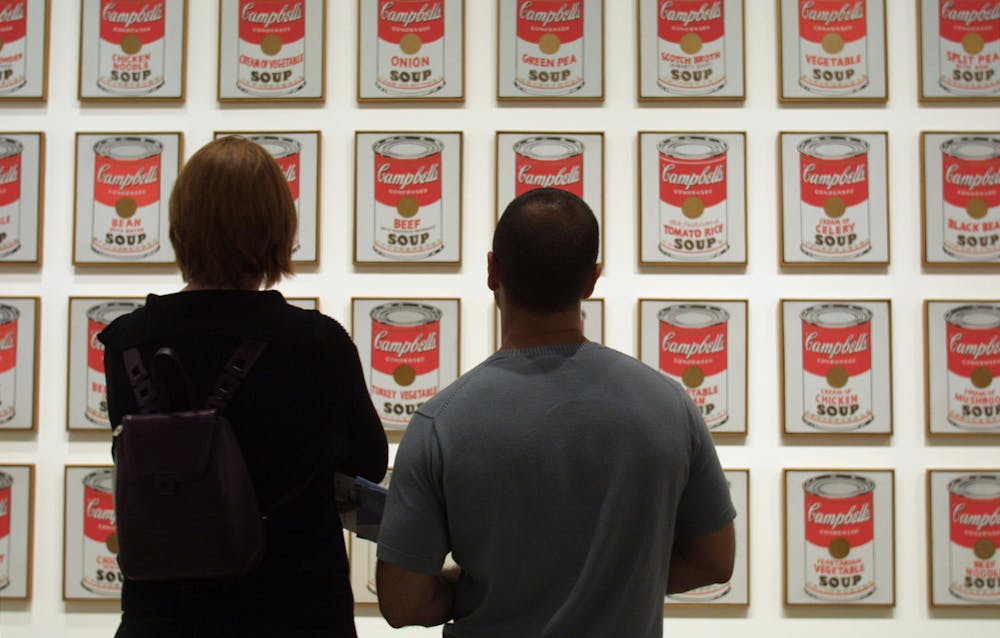 Gallery visitors look at Andy Warhol’s Campbell’s Soup.
AP Photo/Diane Bondareff
Gallery visitors look at Andy Warhol’s Campbell’s Soup.
AP Photo/Diane Bondareff
Some interpretations consider this a commentary on the link between art and consumerism, emphasising the ordinary quality of the everyday object. The artist may also have been influenced by his personal eating habits – he claimed he had soup for lunch every day for 20 years.
‘One of the prime ingredients of good living’
A steady diet of soup is not guaranteed to inspire famous art, but its appeal is universal. Soup can be humble or fancy, cutting across cultures and classes.
Deceptively simple, the warmth and comfort of soup provide a temporary refuge from the winter chill, comforting the diner from the inside.
The French chef Auguste Escoffier, famous for enshrining the five basic “mother sauces” in French cuisine, raised soups to perfection in the early 20th century, developing refined preparations that remain classics today.
Escoffier, known as “the king of chefs and the chef of kings”, had very high standards for soup, claiming “of all the items on the menu, soup is that which exacts the most delicate perfection”.
An Austrian apprentice of Escoffier, Louis P. De Gouy, was chef at the Waldorf Astoria for 30 years and wrote 13 cookbooks.
He summed up the appeal of soup in a volume dedicated to the dish with over 700 recipes:
Good soup is one of the prime ingredients of good living. For soup can do more to lift the spirits and stimulate the appetite than any other one dish.
From Neanderthal broth to pop art icon, this humble pantry staple has a rich and vibrant history, giving us both nourishment and food for thought.
Authors: Garritt C Van Dyk, Lecturer, University of Newcastle