Help, bees have colonised the walls of my house! Why are they there and what should I do?
- Written by Tanya Latty, Associate professor, University of Sydney
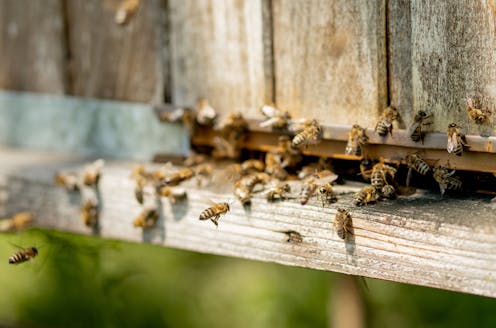
Have you spotted a swarm of flying insects emerging from a wall? Or noticed a buzzing noise coming from inside the house?
If this sounds familiar, a colony of European honeybees (Apis mellifera) may be making their home in your walls.
Why does this happen, and what should you do?
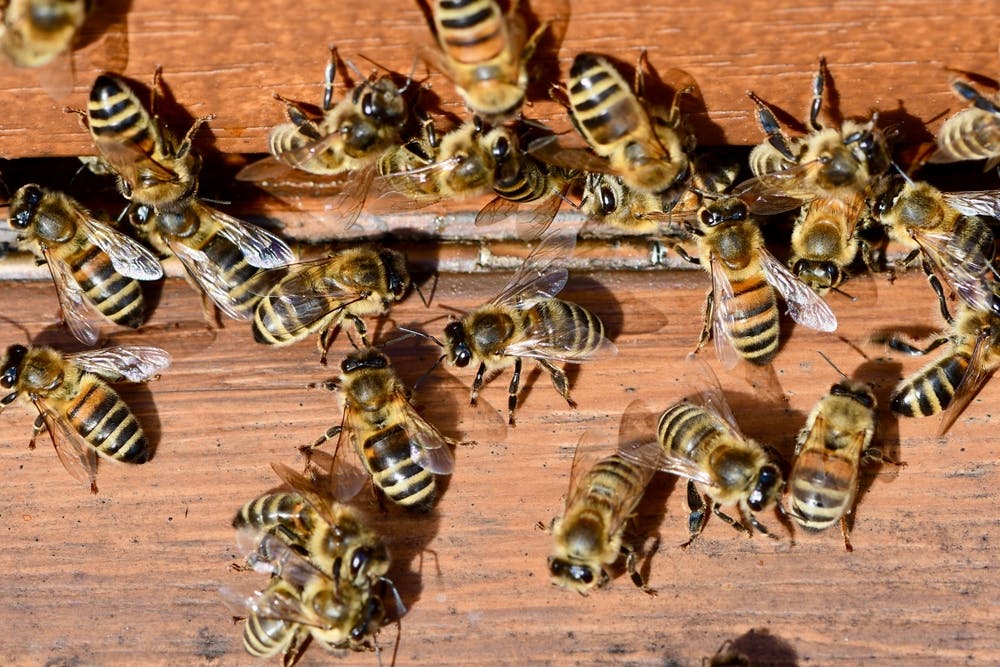
Are they honeybees?
First, work out who these house guests really are. Honeybees are often the culprits, but European wasps (Vespula germanica) also occasionally build their nests inside human-made structures. Their nests have a papery appearance and are made from chewed-up plant fibres.
European wasps are a more dramatic yellow and black, and have narrower waists. Honeybees have less slender waists, appear furrier, and are a duller orange-brown colour.
If they are inside homes or high-traffic areas, both honeybees and European wasps will usually need to be removed by a professional.
Depending on where you live, other social bees such as stingless bees and bumblebees may occasionally build colonies in human-built structures, but they rarely cause any serious problems.
Solitary native bees such as carpenter bees, blue banded bees and teddy bear bees do not live in colonies. However, they sometimes build their individual nests close to one another. These insects are rarely aggressive and can often be left alone.
 Once inside, bees produce wax to build the hexagonal cells that make up the nest.
Shutterstock
Once inside, bees produce wax to build the hexagonal cells that make up the nest.
Shutterstock
How did they get there?
When a honeybee colony outgrows its current dwelling, the bees embark on a quest to find a new home.
In preparation, the queen bee lays eggs in special cells known as “queen cells”. The larvae in these cells are fed with royal jelly, which helps them develop into new queens.
Once the new queens emerge, the old queen leaves the hive accompanied by a substantial number of worker bees.
Now homeless, the house-hunting bees gather together in a tight cluster called a “swarm ball” on a nearby object. From this temporary base of operations, the bees send out scouts to find potential nesting sites.
When a scout discovers a suitable location, she returns to the swarm ball and performs an extraordinary routine known as a “waggle dance”.
Astonishingly, this dance communicates the location of the potential new home to other scouts, who then venture out to inspect the advertised site. If they agree with its suitability, they return to the hive and do their own waggle dance.
Once enough scouts agree on the suitability of the new home, the entire swarm soars through the air to their new home.
Unfortunately, the bees occasionally choose to settle in human-made structures. Once inside, they produce wax to build the hexagonal cells that make up the nest. Some cells are used as nurseries for larvae, while others are used to store pollen and honey.
The most obvious sign is usually a steady stream of bees flying in and out of the hive, usually from a small hole or gap in the wall.
You might also hear a buzzing sound.
What will the honeybees do to my house?
The honey and wax produced by bees can melt when the colony dies or during hot weather. This leads to stains and damage to walls, while the lingering honey may draw in rodents. The growing weight of a colony can also cause structural damage over time.
While honeybees are generally not aggressive, they will sting in self-defence, particularly near their colony.
Moving slowly and avoiding swatting can lower the chance of getting stung.
Dealing with honeybees in the home
If honeybees have taken up residence in your home, ask a professional, such as a beekeeper, to remove them.
Do not attempt to remove the bees yourself; this could be dangerous. Spraying insecticides or repellents into your walls may not kill all the bees and could trigger aggression.
Even if the insecticide does kill the colony, the dead bees, wax and honey will decay and melt, creating a bigger mess and attracting pests.
Not all beekeepers are equipped to remove bees from homes. Look for beekeepers who advertise “bee removal” or “bee rescue” services.
You can also try contacting amateur beekeeping associations, which may maintain a list of experienced bee removers. If there are no appropriate beekeepers in your area, or the colony is not easy to access, you may need to contact a pest controller.
Sometimes, colonies can be removed alive and relocated but this is not always possible. Your options will depend on the size of the colony, whether or not the beekeeper can access the colony, their level of experience and how long the colony has been there.
If you live in certain regions of New South Wales, it’s very important you report honeybee swarms or wild colonies to the Department of Primary Industries.
Wild colonies may harbour invasive Varroa mites, which are a deadly honeybee parasite. Varroa mites are currently subject to an eradication program. Varroa mite is only in NSW at the moment.
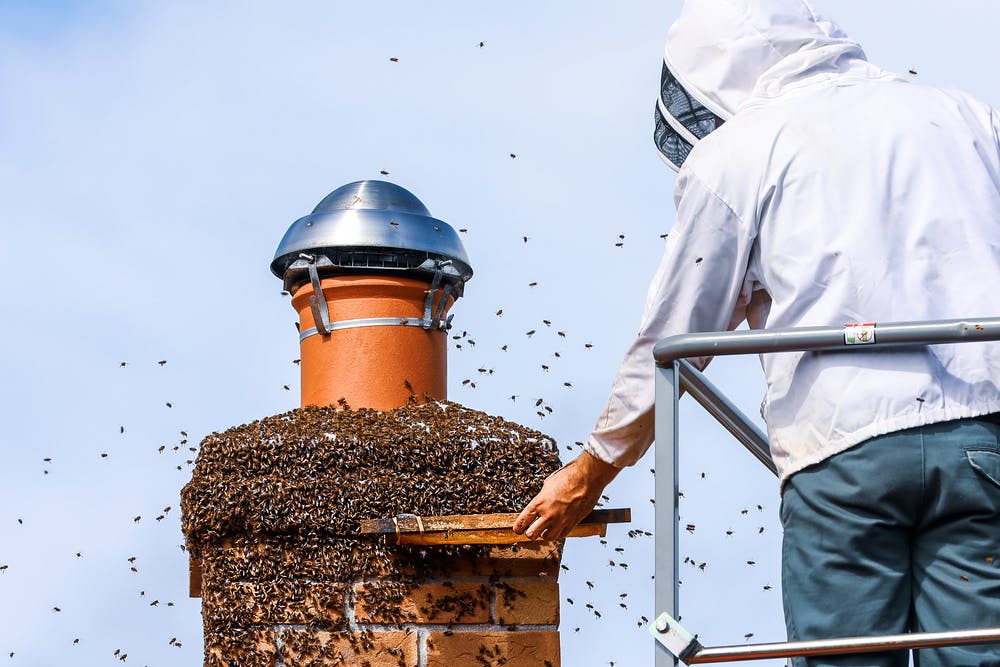 Colonies can be removed alive and relocated. However, this is not always possible.
Shutterstock
Colonies can be removed alive and relocated. However, this is not always possible.
Shutterstock
Prevention is key
Try to prevent bees getting in your house in the first place. Seal cracks or holes in exterior walls and put fly screen mesh over outdoor vents.
Beekeepers can prevent swarms happening in the first place by making sure they manage their hives appropriately. Joining a local beekeeping club is an excellent way to learn about bee care.
While honeybees are important pollinators and honey producers, they can also be a nuisance in your home.
Read more: Don’t kill the curl grubs in your garden – they could be native beetle babies
Authors: Tanya Latty, Associate professor, University of Sydney