Dutton wants Australia to join the "nuclear renaissance" – but this dream has failed before
- Written by John Quiggin, Professor, School of Economics, The University of Queensland
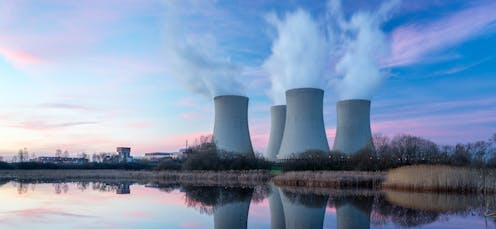
Last week, opposition leader Peter Dutton called for Australia to join what he dubbed the “international nuclear energy renaissance”.
The same phrase was used 20 years ago to describe plans for a massive expansion of nuclear. New Generation III plants would be safer and more efficient than the Generation II plants built in the 1970s and 1980s. But the supposed renaissance delivered only a trickle of new reactors – barely enough to replace retiring plants.
If there was ever going to be a nuclear renaissance, it was then. Back then, solar and wind were still expensive and batteries able to power cars or store power for the grid were in their infancy.
Even if these new smaller, modular reactors can overcome the massive cost blowouts which inevitably dog large plants, it’s too late for nuclear in Australia. As a new report points out, nuclear would be wildly uncompetitive, costing far more per megawatt hour (MWh) than it does to take energy from sun or wind.
The nuclear renaissance that wasn’t
Early in the 21st century, the outlook for nuclear energy seemed more promising than it had in years. As evidence on the dangers of global heating mounted, it became clear that the expansion of coal-fired power in the 1990s – especially in Asia – had been a mistake.
And despite the prevalence of slogans such as ‘Solar not Nuclear’, the cost of solar and wind energy was then too high to make fully renewable systems a reality.
The rise of Generation III and III+ designs promised to eliminate or at least greatly reduce the risk of accidents like those at Three Mile Island and Chernobyl.
The time seemed right for a nuclear renaissance – especially in the United States. Between 2007 and 2009, 13 companies applied for construction and operating licenses to build 31 new nuclear power reactors. But all but two of these proposals stayed on paper.
Read more: Can nuclear power secure a path to net zero?
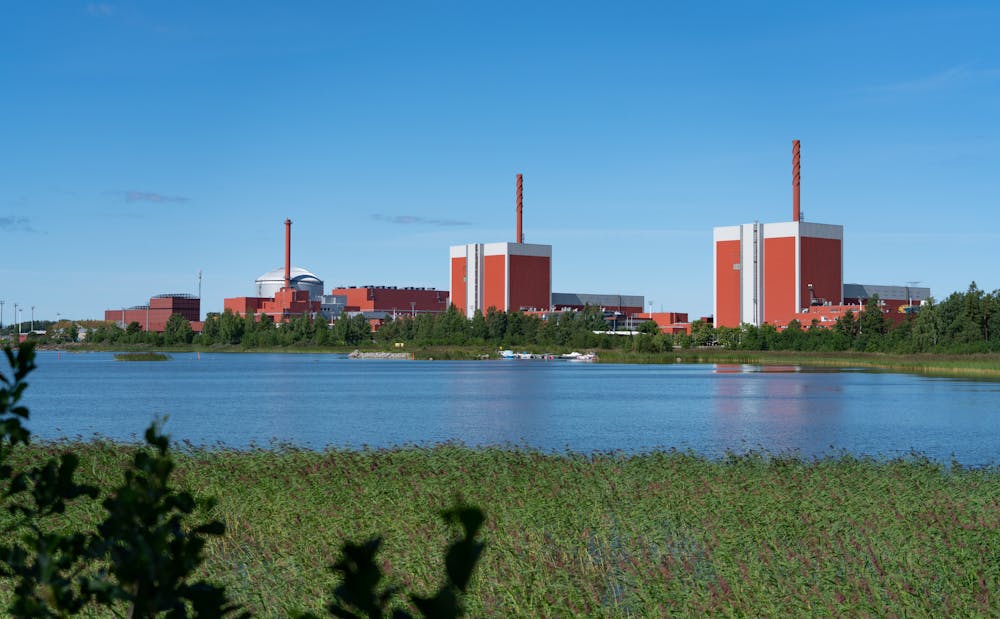
The first, in Georgia, is expected to be completed this year after running way behind schedule and way over budget. The other project in South Carolina was abandoned in 2017 after billions of dollars had already been poured into it. The same disastrous cost and time blowouts have hit new reactors in France (Flamanville, 10 years behind schedule), Finland (Olkiluoto, which opened this year after a 14 year delay) and the UK (Hinkley Point C, still under construction with cost and time blowouts).
China has built a trickle of new nuclear plants, commissioning three or four a year over the last decade. China currently has about 50 gigawatts (GW) of nuclear power capacity. This pales into insignificance compared to the nation’s extraordinary expansion of solar, with 95-120 gigawatts of additional capacity expected this year alone.
Nuclear falls short on cost, not politics
What went wrong for nuclear? Despite the claims of some nuclear advocates, the renaissance in the 2000s did not fall short because of political resistance. Far from it – the renaissance had broad political support in key markets.
And, unlike in the 1970s where intense anti-nuclear sentiment was tied to fears of nuclear war, environmentalists in the 2000s had refocused on the need to stop burning carbon-based fuels. Anti-nuclear campaigns and protest marches were almost non-existent.
What stopped the nuclear noughties was a bigger problem: economics. Governments looking at nuclear saw the cost and time over-runs and decided it wasn’t worth it.
As megaproject expert Bent Flyvbjerg has shown, cost overruns like these are typical. First of a kind nuclear plants offer an extreme example of the problem. To date, no Generation III or III+ design has been produced at scales large enough to iron out the inevitable early problems.
At the same time, other energy sources were growing in importance. The United States found ways of tapping its unconventional shale gas reserves.
All the while, solar and wind were getting cheaper and cheaper, driven by generous subsidies from European governments such as Germany and manufacturing economies of scale in China. Solar and wind production ramped up exponentially, growing around 30% a year every year since the beginning of the century.
In Australia, the writing was on the wall by 2007, when an inquiry found new nuclear power would struggle to compete with either coal or renewables. A string of subsequent inquiries have come to precisely the same conclusion.
Could it be different this time?
To make nuclear viable these days, advocates believe, means making it safe, cheap and easy to build. No more megaprojects. Instead, build small reactors en masse on factory production lines, ship them to where they are needed and install them in numbers matching the needs of the area.
Advocates hope the efficiency of factory production will offset the lower efficiency associated with smaller capacity. Ironically, off-site mass production and modular installation is the basis of the success of solar and wind.
To date, the most promising reactor design is NuScale’s VOYGR. It has yet to be produced and the US company has no firm orders. It does have preliminary agreements to build six reactors in Utah by 2030 and another four in Romania.
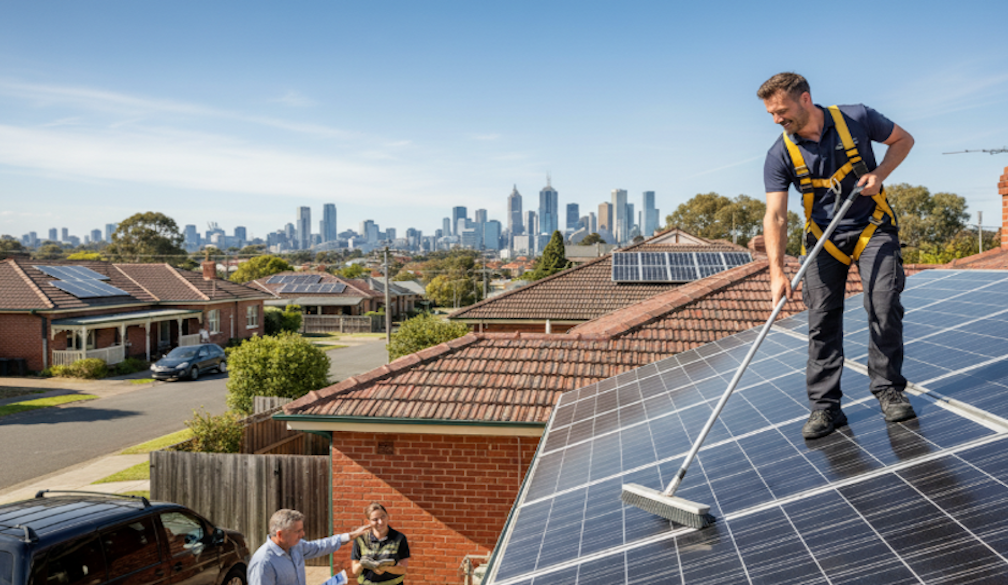
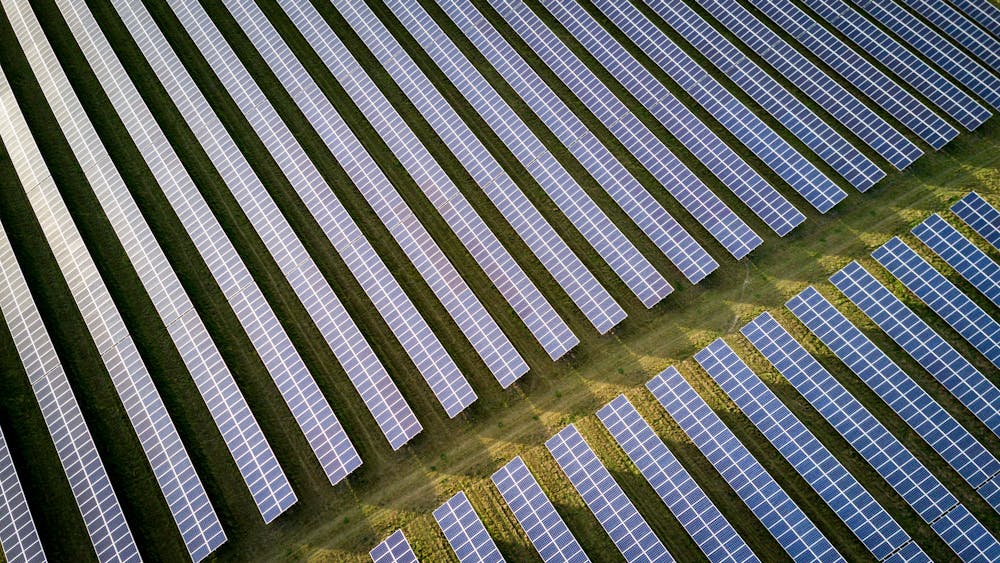 Solar and wind are modular systems, built in factories. So you can add more capacity easily.
Shutterstock
Solar and wind are modular systems, built in factories. So you can add more capacity easily.
Shutterstock
If all are built, that’s still less than the capacity of a single large Gen III plant. More strikingly, it’s about the same as the new solar capacity installed every single day (~710 MW) this year around the world.
Even with US government subsidies, NuScale estimates its power would cost A$132 per MWh. In Australia, average wholesale prices in the first quarter of 2023 ranged from $64 per MWh in Victoria to 114 per MWh in Queensland.
So why, then, is Australia’s opposition still talking about new nuclear? Dutton claims Australia’s future nuclear submarines to be built under the AUKUS deal are “essentially floating SMRs”. This is a red herring – while submarine reactors are small, they are not modular.
The simplest answer is political gain. Announcements like this yield political benefits at low cost.
The US, UK and France have decades of experience in nuclear power, even if failures outnumber successes. So yes, there is a slim chance the latest “nuclear renaissance” will succeed in these countries.
But in Australia, promises to create a nuclear power industry from scratch based on as yet unproven technologies and in competition with cheap renewables is simply delusional.
Authors: John Quiggin, Professor, School of Economics, The University of Queensland