The internet is worse than it used to be. How did we get here, and can we go back?
- Written by Marc Cheong, Senior Lecturer of Information Systems, School of Computing and Information Systems; and (Honorary) Senior Fellow, Melbourne Law School, The University of Melbourne
When it comes to our experience of the internet, “the times, they are a-changin’”, as Bob Dylan would say. You can’t quite recall how, but the internet certainly feels different these days.
To some, it is “less fun and less informative” than it used to be. To others, online searches are made up of “cookie cutter” pages that drown out useful information and are saturated with scams, spam and content generated by artificial intelligence (AI).
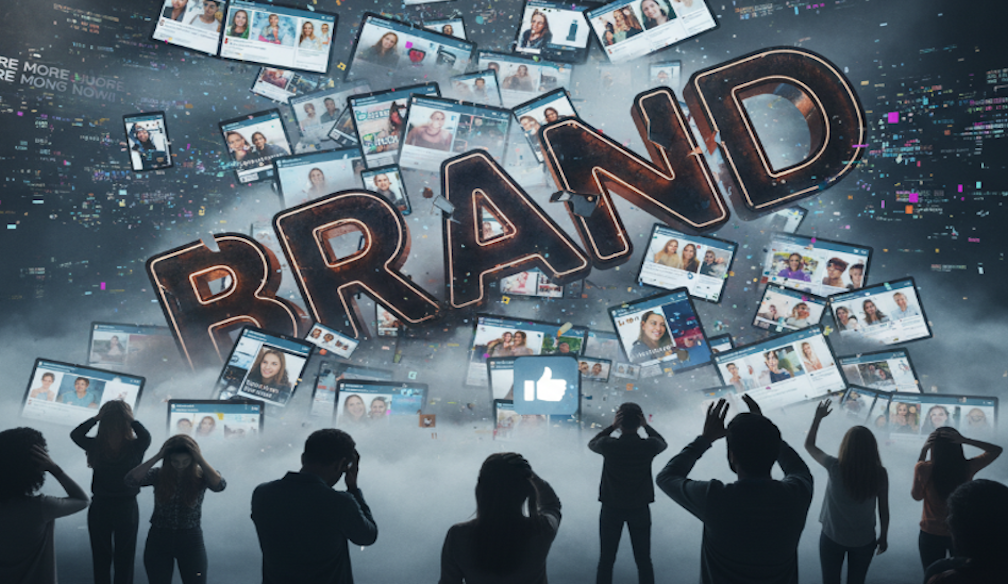
Your social media feeds are full of eye-catching, provocative, hyper-targeted, or anger-inducing content, from bizarre AI-generated imagery to robot-like comments. You’re lucky if your video feeds are not solely made up of exhortations to “subscribe”.
How did we get here? And can we claw our way back?
Commercial interests rule
One major factor contributing to the current state of the internet is its over-commercialisation: financial motives drive much of the content. This has arguably led to the prevalence of sensationalism, prioritising virality over information quality.
Covert and deceptive advertising is widespread, blurring the line between commercial and non-commercial content to attract more attention and engagement.
Another driving force is the dominance of tech giants like Google, Meta and Amazon. They reach billions worldwide and wield immense power over the content we consume.
Their platforms use advanced tracking technologies and opaque algorithms to generate hyper-targeted media content, powered by extensive user data. This creates filter bubbles, where users are exposed to limited content that reinforces their existing beliefs and biases, and echo chambers where other viewpoints are actively discredited.
Bad actors like cyber criminals and scammers have been an enduring problem online. However, evolving technology like generative AI has further empowered them, enabling them to create highly realistic fake images, deepfake videos and voice cloning.
AI’s ability to automate content creation has also flooded the internet with low-quality, misleading and harmful material at an unprecedented scale.
In sum, the accelerated commercialisation of the internet, the dominance of media tech giants and the presence of bad actors have infiltrated content on the internet. The rise of AI further intensifies this, making the internet more chaotic than ever.
Some of the ‘good’ internet remains
So, what was the “good internet” some of us long for with nostalgia?
At the outset, the internet was meant to be a free egalitarian space people were meant to “surf” and “browse”. Knowledge was meant to be shared: sites such as Wikipedia and The Internet Archive are continuing bastions of knowledge.
Before the advent of filter bubbles, the internet was a creative playground where people explored different ideas, discussed varying perspectives, and collaborated with individuals from “outgroups” – those outside their social circles who may hold opposing views.
Early social media platforms were built on the ethos of reconnecting with long-lost classmates and family members. Many of us have community groups, acquaintances and family we reach out to via the internet. The “connection” aspect of the internet remains as important as ever – as we all saw during the COVID pandemic.
What else do we want to preserve? Privacy. A New Yorker cartoon joke in 1993 stated that “on the internet, nobody knows you’re a dog”. Now everyone – especially advertisers – wants to know who you are. To quote the Office of the Australian Information Commissioner, one of the tenets of privacy is “to be able to control who can see or use information about you”.
At the very least, we want to control what big tech knows about us, especially if they could stand to profit from it.
Can we ever go back?
We can’t control “a changin’” times, but we can keep as much of the good parts as we can.
For starters, we can vote with our feet. Users can enact change and bring awareness to problems on existing platforms. In recent times, we have seen this with the exodus of users from X (formerly Twitter) to other platforms, and the platform-wide protest against Reddit for changing its third-party data access policies.
However, voting with our feet is only possible when there’s competition. In the case of X, various other platforms – from Mastodon to Threads to Bluesky – enable users to pick one that aligns with their preferences, values and social circles. Search engines have alternatives, too, such as DuckDuckGo or Ecosia.
But competition can only be created by moving to decentralised systems and removing monopolies. This actually happened in the early days of the internet during the 1990s “browser wars”, when Microsoft was eventually accused of illegally monopolising the web browser market in a landmark court case.
As users of technology, all of us must remain vigilant about threats to our privacy and knowledge. With cheap and ubiquitous generative AI, misleading content and scams are more realistic as ever.
We must exercise healthy scepticism and ensure those most at risk from online threats – such as children and older people – are educated about potential harms.
Remember, the internet is not optimised for your best interests. It’s up to you to decide how much power you give to the tech giants who are fuelling theirs.
Authors: Marc Cheong, Senior Lecturer of Information Systems, School of Computing and Information Systems; and (Honorary) Senior Fellow, Melbourne Law School, The University of Melbourne