

The promise of green iron, steel and ammonia is keeping the green hydrogen dream alive
- Written by: Changlong Wang, Research fellow in Civil and Environmental Engineering, Monash University
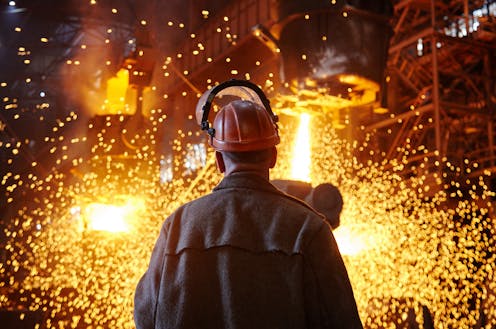
Hydrogen was once sold as a universal climate fix — a clean, green wonder fuel for cars, homes, power grids and even global export. But reality has cooled that buzz.
This week, the South Australian government shelved plans for a A$593 million hydrogen power plant, in favour of injecting that money into the $2.4 billion Whyalla steelworks rescue package. Premier Peter Malinauskas said there was “no point in producing hydrogen” without a customer: the steelworks.
It’s the latest in a series of setbacks for hydrogen. Last year, Australian mining and energy giant Fortescue pared back its green hydrogen projects as a result of increasing costs and changing financial circumstances in the United States.
Then, gas and oil heavyweight Woodside withdrew plans for two large-scale green hydrogen projects and Origin Energy dropped out of the Hunter Valley Hydrogen Hub.
Meanwhile, the Hydrogen Energy Supply Chain project in Victoria, meant to ship hydrogen to Japan, has met with delays and overruns. Earlier this month, the new Queensland government chose to halt further investment in the Central Queensland Hydrogen Project, putting plans to export hydrogen in doubt.
These setbacks show hydrogen isn’t the ultimate solution to all our energy needs, especially if we want to export it. But they don’t spell doom. Instead, they nudge us toward where hydrogen really shines: in heavy industry, right where it’s made.
Heavy industry: where hydrogen makes sense
Heavy industries such as steel manufacturing and ammonia production are where hydrogen proves its worth. These sectors are significant contributors to climate change — steel accounts for about 8% of global greenhouse gas emissions, ammonia a further 2%.
Most emissions from steelmaking come from burning coal in blast furnaces to convert ore into iron and carbon dioxide.
In a cleaner alternative, hydrogen (when produced using renewable energy) can be used to strip oxygen from the ore and make iron, with water as a byproduct. The result is green iron, ready to be turned into steel in an electric arc furnace – with a fraction of the emissions.
Ammonia is used to make fertiliser and industrial chemicals, and hydrogen is one of the main ingredients in its production. Hydrogen bonds with nitrogen from the air to form ammonia. No hydrogen, no ammonia — it’s that simple. Conventional ammonia plants get hydrogen from methane, producing CO₂ in the process. Green ammonia uses renewable energy to produce hydrogen by splitting water via electrolysis.
Our recent research crunched the numbers on producing these new green commodities. We found making green iron in Australia with hydrogen and shipping it to Europe for steel production could be 21% cheaper than exporting raw iron ore and hydrogen separately. Plus, it could cut emissions by up to 95% compared to traditional methods.
There are huge economic opportunities for Australia too. Instead of shipping low-value raw materials, Australia could export ready-to-use green iron or green steel, reshaping global supply chains while cutting costs and carbon. That’s the kind of rethink hydrogen enables.
Industry hubs: a practical fix
Transporting hydrogen long distances is costly and inefficient. The fix? Industry hubs that produce hydrogen right where it’s needed — next to steel mills, ammonia plants, desalination plants, water treatment plants or even aluminium smelters. Putting producers and consumers together slashes transport costs and unlocks efficiencies.
We’ve built tools to pinpoint places with the greatest potential to produce these new green commodities.
The Hydrogen Economic Fairways Tool maps where renewable energy, infrastructure and industrial sites align for cost-effective hydrogen production.
The Green Steel Economic Fairways Mapper zooms in on prime locations for green steel, spotlighting places such as Eyre Peninsula in SA and the Pilbara in Western Australia, among others (see below). These locations have abundant wind and solar resources alongside an existing industrial base.

Challenges remain
Green hydrogen promises to revolutionise heavy industries, but significant hurdles stand in the way of widespread domestic adoption. The biggest challenge comes from the unpredictable nature of renewable energy, which makes it hard to maintain the steady hydrogen supply industries need.
The costs remain steep, too. Splitting water into hydrogen using renewable electricity isn’t cheap, particularly when you need backup storage systems to keep production going during cloudy or windless periods.
Getting hydrogen where it needs to go poses another major challenge. As hydrogen is both bulky to transport and highly flammable, it requires special handling and infrastructure, driving up costs, especially for facilities far from production sites.
Many companies also hesitate to invest in hydrogen-compatible equipment, as retrofitting existing plants or building new ones requires substantial upfront costs without guaranteed returns.
The $2.4 billion rescue package for the Whyalla Steelworks (ABC News)Government backing: a push in the right direction
Thursday’s announcement of A$2.4 billion investment in the Whyalla steelworks along with plans for a $1 billion green iron investment fund are a bold bet on green steel. Furthermore, the landmark Future Made in Australia legislation introduces a $6.7 billion Hydrogen Production Tax Incentive, offering $2 per kilogram of renewable hydrogen produced between 2027–28 and 2039–40, alongside a 10% tax credit for critical minerals processing.
Meanwhile tax credits for green aluminium and alumina should help another heavy industry to navigate the energy transition using clean hydrogen.
These measures aim to unlock tens of billions in private investment, boost regional economies, and position Australia as a leader in clean energy manufacturing. This isn’t just about one-off projects. It’s laying the groundwork for hubs that link renewable energy and hydrogen production to industrial demand.
There’s more in the pipeline. The Hydrogen Headstart program pumps funds into hydrogen innovation, and the Future Made in Australia initiative backs clean industry with billions more. Add in policies like carbon pricing or low-interest loans, and the economics tilt even further toward green steel and ammonia. Government buying power — in the form of procurement targets for low-carbon materials — could seal the deal by guaranteeing demand.
These policies aren’t just wishful thinking — they’re practical steps that are already working elsewhere. Sweden’s HYBRIT project, which paired green steel with government-backed demand, has already led to construction starting on new industrial-scale green steel facilities. At the same time, the European Union’s hydrogen strategy leans on carbon pricing and subsidies to guide industries and suppliers through the energy transition, while Japan offers incentives for the use of green steel in their automotive industry.
Australia has the renewable energy and the industrial base to take advantage of these opportunities. With the right leadership, we can turn hydrogen’s stumbles into a global triumph for heavy industry.
Authors: Changlong Wang, Research fellow in Civil and Environmental Engineering, Monash University


















