

Putting homes in high-risk areas is asking too much of firefighters
- Written by Mark Maund, PhD Candidate, School of Architecture and Built Environment, University of Newcastle
The impacts of the bushfires that are overwhelming emergency services in New South Wales and Queensland suggest houses are being built in areas where the risks are high. We rely heavily on emergency services to protect people and property, but strategic land-use planning can improve resilience and so help reduce the risk in the first place. This would mean giving more weight to considering bushfire hazards at the earliest stages of planning housing supply.
The outstanding dedication of emergency agencies such as the NSW Rural Fire Service and Queensland Fire and Emergency Service is obvious in their efforts to save lives and properties despite the increasing intensity of fires. However, strategic land-use planning could help reduce the risks by being more responsive to such changes in hazards.
Read more: Grattan on Friday: When the firies call him out on climate change, Scott Morrison should listen
Comprehensive management of bushfire risk should include a strategic planning focus on reducing the pressures on emergency services and communities. We may have to rethink land-use planning approaches that prove inadequate to deal with the increasing intensity and unpredictability of natural hazards.
Strategic planning policies and practices provide the opportunity to be more attentive to changes in bushfire hazards in particular. Planning decisions that fail to do this may leave communities exposed and heavily reliant on emergency services during a disaster.
Planning to build resilience
The Australian government has identified land-use planning as a key step in managing natural hazards. In 2011, the Council of Australian Governments declared:
Locating new or expanding existing settlements and infrastructure in areas exposed to unreasonable risk is irresponsible.
The increasing intensity of hazards associated with climate change makes strategic planning even more relevant. Land-use planners could help greatly with building resilience by placing natural hazards at the top of their assessment criteria.
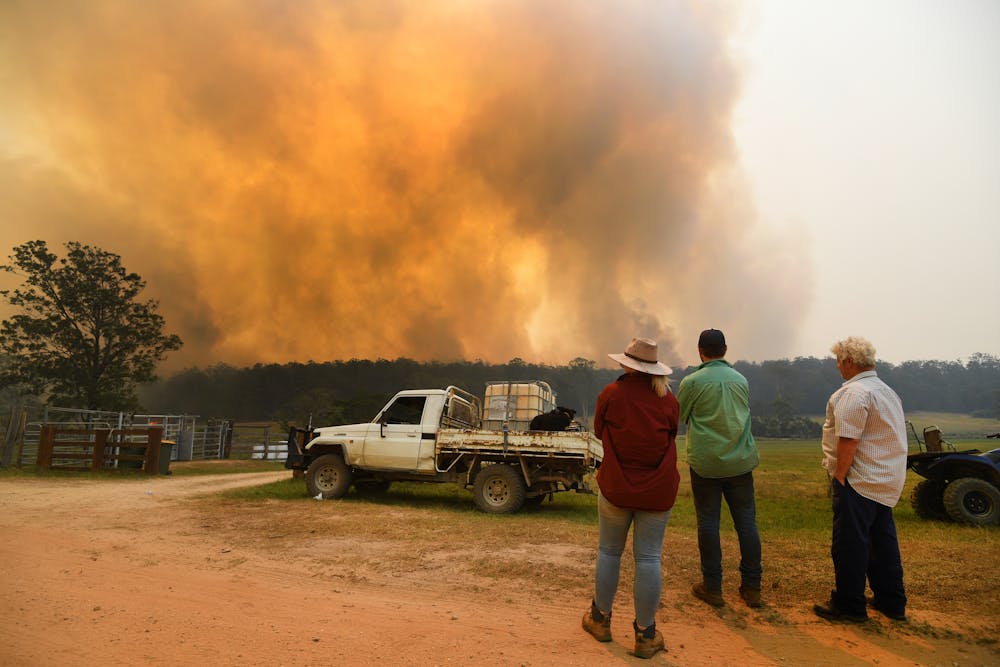 Long before bushfires loom on the horizon, strategic land-use planning can avoid putting housing in areas identified as high risk.
Dan Peled/AAP
Long before bushfires loom on the horizon, strategic land-use planning can avoid putting housing in areas identified as high risk.
Dan Peled/AAP
Read more: Drought and climate change were the kindling, and now the east coast is ablaze
Coordinating land-use planning reforms is itself a challenge. Planning in Australia involves many policies, institutions, professions and decision-makers. Policies and processes differ depending on the state or territory.
Furthermore, planners must reconcile the demand for residential land from population growth and the need to protect the environment. Deciding where to locate housing is often fraught with complexity, so the process needs expert early input from relevant scientific communities and emergency services.
Anticipate risk to reduce it
Land-use planning offers an opportunity in the earliest phase of development to manage the combined pressures of population growth, urban expansion, increasing density and risks of natural hazards.
When rezoning land for residential development, many issues have to be considered. These include environmental sustainability, demand for housing and the location of existing buildings and infrastructure, as well as natural hazards. It’s a complex and intricate process, but clearly the strategic planning stage is the first opportunity to minimise exposure to bushfire risk.
Existing policy and processes may defer the detailed review of bushfire risk and other natural hazards to development stages after land has been rezoned. There’s a case for policy to increase the importance attached to bushfire hazards at this early stage.
Ultimately, strategic planners aim to locate settlements away from risk of natural hazards. However, bushfires continue to have disastrous impacts on people and properties. Ongoing demand for housing may add pressure to build in areas exposed to risk.
Settlements are pushing into undeveloped areas that are more likely to be exposed to bushfire risk. The role of strategic land-use planning then becomes even more critical. The devastation we have seen this month shows why this risk must be given the highest priority in land-use planning, particularly when zoning land as residential.
Read more: Natural hazard risk: is it just going to get worse or can we do something about it?
Key steps to reform planning
The increasing intensity of bushfires points to a need to rethink planning processes and mitigation strategies to reduce exposure to such hazards before they arise. This will help ease the burden on emergency services of managing a disaster when it happens. We can’t ignore the opportunities to minimise the risks at the early stages of land-use planning. Key steps include:
- a policy review to mandate natural hazards, including bushfire risk, as one of the highest priorities in policy, with an objective framework for making land-use decisions
- mandatory consultation with relevant science disciplines to model natural hazard risks when land is considered for rezoning
- involve emergency services in the strategic planning phase to help minimise future risk.
Authors: Mark Maund, PhD Candidate, School of Architecture and Built Environment, University of Newcastle

















