

Australians wait 12 months for aged care – and the latest budget funding is unlikely to change that
- Written by Sabrina Lenzen, Senior Research Fellow in Health Economics, The University of Queensland
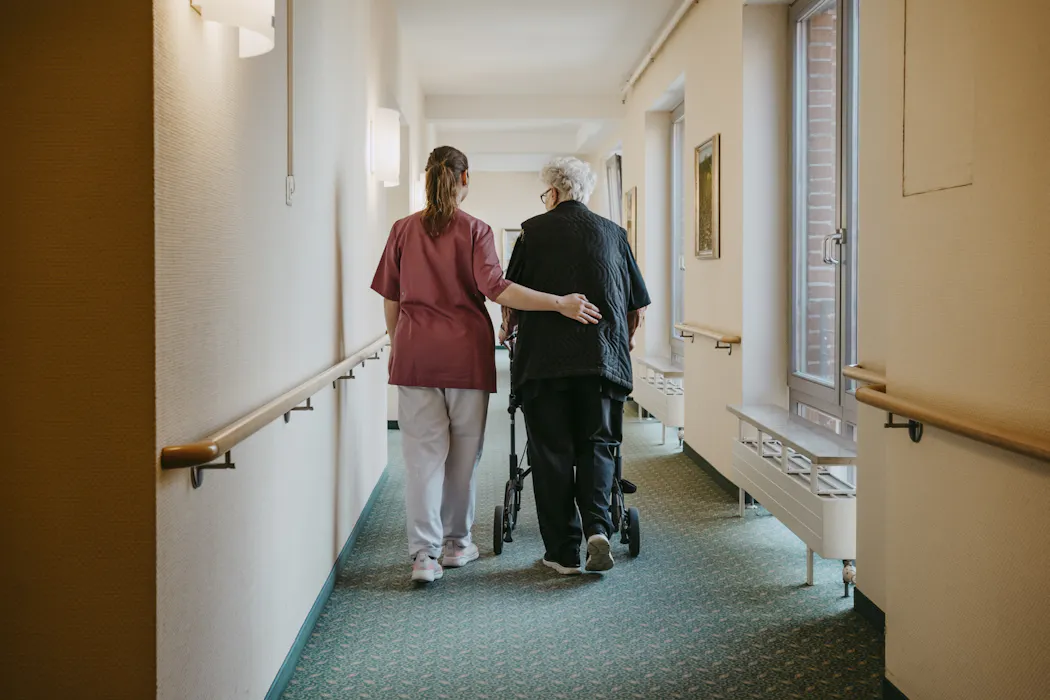
Imagine your elderly mother needs help to get out of bed, shower and manage her medications – and then waiting more than a year for that support to arrive.
According to a federal government report released this week, that is no longer a worst-case scenario. It is now the national average.
Australia, like many developed countries, is ageing rapidly. By 2063, about one in five Australians will be older than 65. And the number of people aged over 85 is expected to more than triple in that same period.
That means many more Australians will soon need help at home or in residential aged care.
So what did this report – which some critics say the government “buried” in a busy budget week – actually say?
And will extra aged care funding announced in this week’s federal budget help shorten waiting lists?
A fraught sector
In 2025, the federal government spent roughly A$40 billion on aged care services. That makes it one of the costliest items in the federal budget. And this figure is projected to keep rising in coming decades.
Despite this investment, the aged care sector is still plagued by concerns around neglect, understaffing and poor quality of care. This led the federal government to launch the Royal Commission into Aged Care Quality and Safety which, in 2021, delivered 148 recommendations for reform.
So, what’s gone wrong?
Research consistently points to two major pressures that are stretching the aged care system.
The first is workforce shortages. Aged care has struggled to attract and retain workers, particularly in regional Australia. This is because wages have historically lagged behind comparable sectors, such as nursing and disability care.
Meanwhile, many residential aged care facilities across Australia are operating close to capacity. And demand is continuing to rise, with projections showing we’ll need 10,000 new beds each year.
Read more: We have too few aged care workers to care for older Australians. Why? And what can we do about it?
The second pressure is infrastructure constraints. Research shows 80% of older people who need support would prefer to receive it at home. That’s where home care services come in. These help older people with everyday tasks such as showering, cleaning, meal preparation and medication management.
However, many Australian homes aren’t built to support older people, because they lack key features such as ramps, grab rails and walk-in showers, and equipment such as walking frames or hospital-grade beds.
These two factors are pushing more Australians into residential aged care. In 2020–21, about 11,000 people who were waiting for a home care package entered residential care, likely because their needs weren’t being met at home.
Now the government report released this week shows the average older Australian is waiting more than 12 months to get an aged care bed or at-home support.
Read more: Too many Australians are waiting for a home care package. Here’s how to fix the delays
Why wait times matter
The delays are primarily a supply problem, not an assessment problem.
On average, the home care package assessment takes around four weeks. But once people are assessed and approved, they join a queue that can stretch for many months, simply because there are not enough places to meet demand.
When older people wait this long for support, their health can rapidly deteriorate. Research suggests delayed access to home care is associated with higher rates of hospitalisation and earlier entry into residential aged care.
Longer wait times also have financial costs to government. Government data shows home care support typically costs between $10,000 and $78,000 per person per year. That’s compared with the estimated $90,000–150,000 for a residential aged care place. These high costs largely come from the need to cover accommodation, meals, staffing and facility costs.
Read more: A free shower is the least older people can expect. But aged care funding misses one key point
Will the government fix this?
This week’s federal budget announced $3.7 billion in additional funding over four years to support older Australians. Part of this will go towards delivering 5,000 additional aged care beds each year.
The government also confirmed older Australians will continue receiving fully funded personal care services, such as showering and clinical care. Those services will be delivered under the new Support at Home program. However, co-payments will apply to some non-clinical services including cleaning, transport and meal preparation.
However, research suggests this co-payment model may discourage some older Australians from getting the care they need. That’s because even modest out-of-pocket costs can deter people – particularly those on lower incomes – from using health services. And any savings made through co-payments will likely reappear elsewhere in the health system, for example to pay for increased hospital admissions.
The bottom line
The budget’s investment in 5,000 new residential aged care beds annually is an important first step, but won’t solve the waiting list crisis.
The government must also release more home care packages, and speed up the process between assessment and delivery of care. Otherwise, we risk creating an aged care sector where wait lists never end and older people are denied the care they deserve.
Authors: Sabrina Lenzen, Senior Research Fellow in Health Economics, The University of Queensland

















