

Getting back on the beers after lockdown? Here's what you should know
- Written by Brigid Clancy, PhD Candidate (Psychiatry) & Research Assistant, University of Newcastle
If you’re feeling excited about being out of lockdown, you’re not alone. Social media is buzzing with plans of big nights out to celebrate the relaxation of coronavirus restrictions in Australia and New Zealand.
But before you go on that big bender, here are some things to keep in mind so you don’t overdo it.
How has lockdown changed our drinking habits?
Several surveys have highlighted the disruption coronavirus has made to our drinking habits. First, there was a run on alcohol, with people stockpiling their favourite drinks. The Commonwealth Bank of Australia reported spending on alcohol was up more than 20% in the initial few weeks of lockdown.
Many experts were worried drinking would drastically increase, along with many of its harmful consequences. These include greater risk of mental health problems, family violence, and alcohol dependence.
Data from several sources confirmed drinking habits changed during lockdown. A survey by alcohol advocacy group Foundation for Alcohol Research and Education (FARE) found people who had been stockpiling alcohol weren’t just keeping it for a rainy day - 70% reported drinking more and 30% were worried about their own or someone else’s drinking.
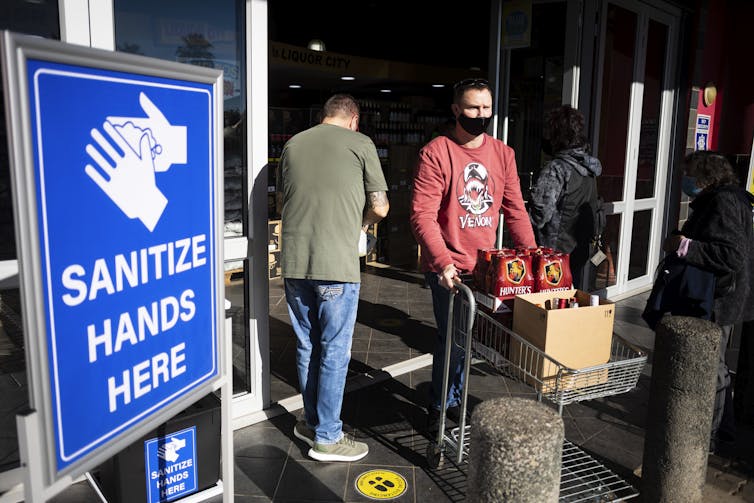 According to one survey, 70% of people who bought extra alcohol reported drinking more during coronavirus lockdown. This has researchers worried about what might happen when we return to pubs.
Kim Ludbrook/EPA
According to one survey, 70% of people who bought extra alcohol reported drinking more during coronavirus lockdown. This has researchers worried about what might happen when we return to pubs.
Kim Ludbrook/EPA
The Australian Bureau of Statistics (ABS) found, overall, 14% of Australians reported increasing their alcohol consumption, while 10% reported a reduction.
The Australian National University found, in particular, women have been drinking significantly more than pre-lockdown levels. Having child-caring responsibilities was a big predictor of increased alcohol consumption.
The ABS data also found the major increase in drinking was among women. This exacerbates a worrying trend over the past few years of women increasing their drinking.
Hello Sunday Morning, an organisation that helps people change their relationship with alcohol, also reported a significant increase in people accessing their online services.
Your alcohol tolerance may have changed
Changes in the amount you drink can affect your alcohol tolerance. How intoxicated you feel is related to your tolerance, whereas your blood alcohol concentration is more related to how much you have drunk over a certain time period.
This means if you’ve been drinking more during lockdown, your tolerance has probably increased. You would need to consume more alcohol to feel the effects you used to get from fewer drinks. If you feel less of the effects of alcohol, you might drink more without realising it.
Read more: Thinking about taking a break from alcohol? Here's how to cut back or quit
While you might not feel as drunk, your brain function is still affected and you can still be over the legal limit for driving. Take care to monitor the number of drinks you are consuming and plan how you’ll get home without driving.
Higher tolerance to alcohol means you are also at increased risk of alcohol-related harm. Higher tolerance is associated with alcohol-use disorders and is one of the first signs of dependence.
On the other hand, if you have been drinking less, your tolerance may have decreased so a smaller amount of alcohol will affect you more than normal. This means if you drink the same amount as usual you might get drunk more quickly.
Take it slowly or you might end up a lot drunker than you planned. Monitor how you feel, and if your tolerance has decreased enjoy the extra cash you’re saving on drinks!
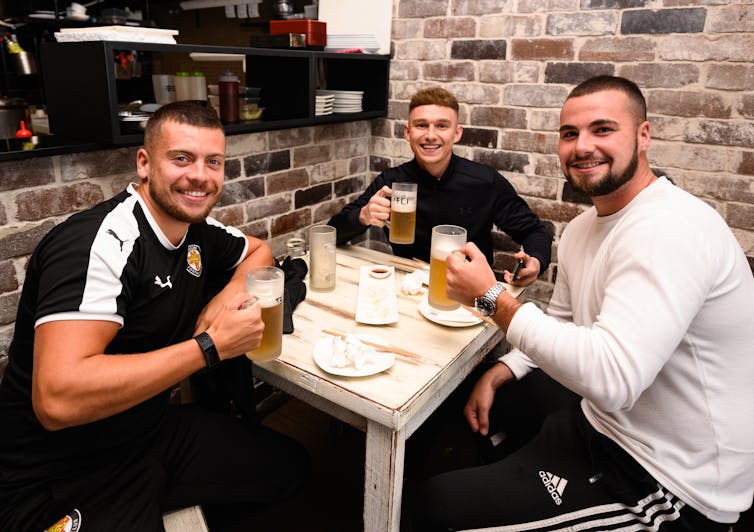 As pubs reopen across Australia, drinkers need to be cautious about ‘getting back on the beers’. Research shows changes to alcohol tolerance can mean we do increased damage to our bodies.
James Gourley/AAP
As pubs reopen across Australia, drinkers need to be cautious about ‘getting back on the beers’. Research shows changes to alcohol tolerance can mean we do increased damage to our bodies.
James Gourley/AAP
How to avoid drinking too much
To help avoid unintentionally drinking more than you planned, keep in mind these simple tips:
set limits and count your drinks. Before you start drinking, decide how much you want to drink and stick to it. The draft Australian alcohol guidelines recommend no more than ten standard drinks a week, and no more than four in a day for healthy adults. If you have an existing health problem, alcohol affects you more so you should drink even less. If you are under 18 or pregnant, you shouldn’t drink at all
alternate your drinks with water and sip slowly. Have at least one glass of water or a no sugar, non-alcoholic drink for every alcoholic drink. It will help slow you down and can also reduce the likelihood of a nasty hangover the next day. Avoid shots or buying rounds, so you can comfortably sit on your drinks and sip them slowly
eat before and during drinking. This will help slow your drinking down and also slows the absorption of alcohol. You’ll be better able to monitor how much you are drinking, so you are less likely to overindulge.
How to have a good time while distancing
While you might be itching for things to get back to normal, we are still distancing while out in public. Make sure you are aware of your state or territory’s restrictions.
Remember your favourite pubs and restaurants have to follow strict rules, so respect the staff and the new practices they have put in place to keep everyone safe. Ask before merging tables, respect capacity limits, sign in with your name and phone number when requested, and use hand sanitiser if offered on arrival.
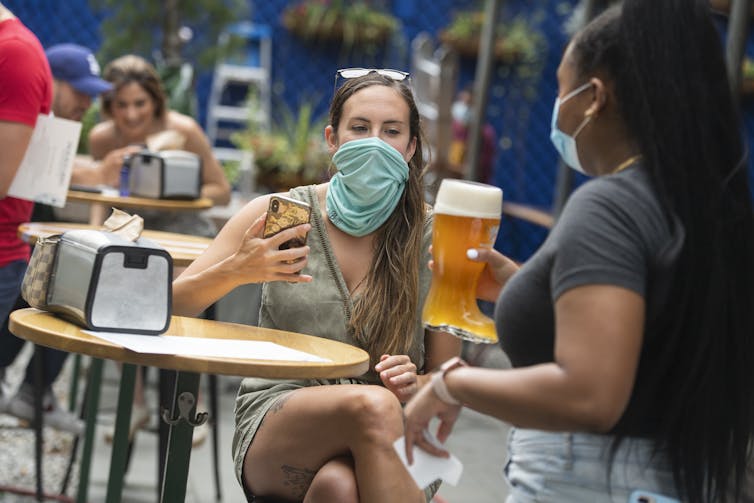 Remember: we are still in a pandemic. Make sure to maintain physical distancing and hand-washing while out drinking.
Tom Williams/CQ-Roll Call/Sipa USA
Remember: we are still in a pandemic. Make sure to maintain physical distancing and hand-washing while out drinking.
Tom Williams/CQ-Roll Call/Sipa USA
When out drinking, don’t share drinks and continue to follow COVID-related rules and guidelines such as:
keep 1.5 metres away from each other
don’t touch your eyes, nose or mouth
maintain good hygiene practices such as hand-washing
download the COVIDSafe app and have it open and running while out.
Read more: COVIDSafe tracking app reviewed: the government delivers on data security, but other issues remain
Where to get help
If you want to lower your tolerance, you can take a break from alcohol and “reset” your system.
To check your consumption, try the AUDIT screening tool online.
If you’d like to talk to someone about your drinking, call the National Alcohol and Other Drug Hotline on 1800 250 015. It’s a free call from anywhere in Australia. You can chat online with a counsellor at CounsellingOnline.
You can also talk to your GP. Many clinics are now conducting appointments via telehealth.
Read more: Coronavirus has boosted telehealth care in mental health, so let's keep it up
This article is supported by the Judith Neilson Institute for Journalism and Ideas.
Authors: Brigid Clancy, PhD Candidate (Psychiatry) & Research Assistant, University of Newcastle

















