

Modern Australian
The Times

why New Zealand's move towards greater urban density should see a rooftop revolution

  • Written by Katie Pickles, Professor of History, University of Canterbury
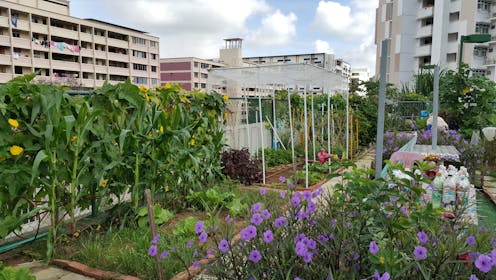
why New Zealand's move towards greater urban density should see a rooftop revolution

New Zealand has historically been a suburban land. Famously characterised as a “quarter-acre pavlova paradise”, the domestic ideal has long been a single dwelling on a full section. But that is changing fast.

With soaring house prices and homes in short supply, medium-density development is set to fill urban and suburban horizons. Combined with a growing awareness of ecological sustainability, it seems Kiwis may soon be looking up to those green spaces they once looked at through backyard windows.

So, why not a rooftop revolution? Humans have made use of roof spaces since the invention of housing. Legend has it the Hanging Gardens of Babylon that greened the ancient city were created on roofs and terraces by those yearning for nature within their urban landscape.

These days, rooftop gardens and the “green roofs” movement are trending internationally, both as domestic and commercial spaces. Once useful for solar power and collecting rainwater, roofs are now used for food production, growing mini “forests” to mitigate climate change, “wildlife gardening”, leisure and entertainment.
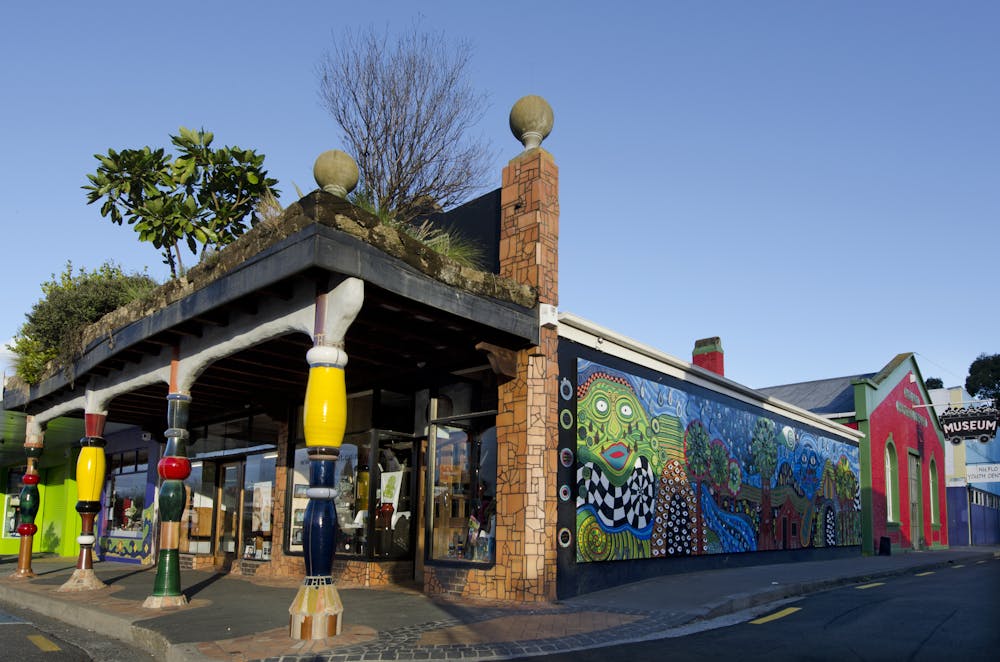
Friedensreich Hundertwasser’s famous roof garden on the restrooms in Kawakawa. Shutterstock

Rooftops of the world

Examples of rooftop regeneration are everywhere. Thailand’s Thammasat University, for instance, boasts urban farming on its rice terrace-influenced green roof, a multipurpose organic food space, public commons, water management system, energy generator and outdoor classroom.

The rooftop of the Paris Exhibition Centre is now a vegetable garden, aimed at cutting the cost of food miles and feeding locals. With its massive, architectural “supertrees”, Singapore’s Gardens by the Bay invents a lush oasis in the densely populated city-state.

Read more: Bees in the city: Designing green roofs for pollinators

Closer to home, the artist and architect Friedensreich Hundertwasser’s famous roof garden on the restrooms in Kawakawa was a precursor to his remarkable Waldspirale building in Darmstadt, Germany.

Typical of his belief in culturally diverse urban forms that co-exist with nature, the apartment complex includes a forest on its spiral roof. Even more ambitious, Whangārei’s brand-new Hundertwasser Art Centre has a forest rooftop that includes more than 4,000 plants.

Singapore’s Gardens by the Bay. Shutterstock

The green roof

Similar ideas inform the the green roof on the University of Auckland’s engineering building. The project involves six plots containing 3,600 native and succulent plants, chosen for their ability to cope with both drought and flood conditions. Pumice, clay and bark are among the soil substitutes on trial, all part of proving a model for both commercial and domestic buildings.

To the west, the Waitākere Civic Centre green roof was designed to manage rainwater runoff, increase energy efficiency and promote biodiversity. The flat 500sqm garden contains ten types of native plant, iris and sand dune coprosma. The roof provides food and habitat for native insects and birds.

Read more: Using valuable inner-city land for car parking? In a housing crisis, that just doesn’t add up

Rooftop development also offers the opportunity to decolonise cities, showcasing local culture and ecology and creating Māori spaces. Part of a renaissance in Māori architecture, Auckland International Airport’s green roof was influenced by korowai and made from flax fibre with geometric patterning.

And to the south, with part of its intention being to absorb noise pollution from the airport, Remarkables Primary School in Queenstown has a green roof that blends into the landscape and can be used as a classroom.

The Press Lounge rooftop bar in New York. Shutterstock

Drinking in the view

If there’s a pioneer of the sky-high lifestyle it’s probably the rooftop bar and restaurant. Kensington Roof Gardens in London opened in 1938, and from 1981 to 2018 was the site of Richard Branson’s appropriately named Babylon restaurant.

But the city rooftop bar is now a staple around the world. Auckland and Wellington boast multiple options, and post-earthquake Christchurch defies the loss of so much of the central city with two bars atop restored heritage buildings.

Read more: How to cut emissions from transport: ban fossil fuel cars, electrify transport and get people walking and cycling

For those old enough to remember, these rooftop playgrounds might make them nostalgic for the real versions from their childhoods.

Taking their lead from the US, magical department store rooftop playgrounds thrilled generations of Kiwi children while their mothers shopped. On the Farmer’s rooftop in Auckland they could drive model cars, happily caught up in a fairground atmosphere that featured a giant toadstool.

On the Hay’s rooftop in Christchurch there were cheap rides on spaceships and fibreglass dinosaurs to slide down. There was even a popular purpose-built crèche on top of the then new Wellington railway station between 1937 and 1941.


Shutterstock Embracing Babylon All of this suggests we might be ready for the rooftop revolution. The question is, however, is there a political and civic commitment to greening the mass of new medium-density roof spaces now being built? It will likely take a shift in mindset, supportive legislation and perhaps subsidies. In bucolic “God’s Own Country”, where our mental maps are of wide open spaces rather than vertical ones, roofscapes are going to take a bit of getting used to. Might embracing a Kiwi Babylon mitigate our nostalgia for low-density living and let us re-imagine green spaces in exciting new ways? Let’s hope so. History tells us rooftops can combine utility with pleasure and sustainability. We just need to look up. Authors: Katie Pickles, Professor of History, University of Canterbury

Read more https://theconversation.com/up-on-a-roof-why-new-zealands-move-towards-greater-urban-density-should-see-a-rooftop-revolution-172226

How Business Advisory Services Help Companies Achieve Sustainable Growth

Every business owner aims to build a profitable and sustainable organisation. While dedication, innovation, and hard work are important, achieving l...

Why Body Contouring Has Become A Popular Cosmetic Treatment

Many people maintain healthy lifestyles through regular exercise and balanced eating habits but still struggle with stubborn areas of fat that are dif...

How to Choose the Right POS Hardware for Your Business in Australia

A lot of Australian business owners spend weeks researching POS software but buy hardware almost as an afterthought. That's a mistake. The wrong har...

Why Material Handling Hose Is Critical for Industrial Efficiency

A high-performance material handling hose is an essential component in industries that transport abrasive, dry, or bulk materials on a daily basis...

How to Choose the Right Lawyer in Melbourne for Your Situation

Choosing legal support can feel difficult, especially when the stakes are personal or business-related. The right lawyer in Melbourne should underst...

Hoteliers Look to Clever Value Adds to Increase Revenue

The Australian hospitality industry is still in recovery mode after a notoriously rough patch in recent years. While there has been a post-COVID tra...

Moving to Queensland? Here’s How to Prep Your Car for the Big Move North

There’s no sign of the northern migration slowing down, with thousands of southerners fleeing from chaotic lifestyles and cooler climates for a brig...

Diesel Shortage to Impact Trades and Contractors

Strait of Hormuz blockage affecting all major parts of trades and construction Trades and construction across residential, commercial and industria...

Why Holiday Home Owners Turn to Rental Management Agents

The Allure — and the Reality — of Renting Out Your Property Owning a holiday home is a dream for many Australians. Whether it's a beachside sha...

Why Finding Reliable Doctors In Bundoora Is Important For Long-Term Health

Access to quality healthcare plays an important role in maintaining overall wellbeing and managing health concerns early. Trusted Doctors in Bundoor...

Understanding the Different Types of Car Services: Minor vs Major

When it comes to car maintenance, one of the most important things every vehicle owner should understand is the difference between a minor and a maj...

How Superannuation and TPD Insurance Work Together

Superannuation is an essential part of financial planning in Australia. It is designed to provide individuals with income during retirement, helping...

Tiny Towns funding granted for Mt Hotham and Mt Buller upgrades

Alpine Resorts Victoria (ARV) has welcomed funding support from the Victorian Government’s  Tiny Towns Fund, with both Mt Hotham and Mt Buller se...

Locksmith Services: Why Professional Security Solutions Matter More Than Ever

Security is a critical concern for homeowners, businesses, and vehicle owners alike. Whether it involves protecting a property, replacing damaged lo...

Why Tooth Fillings Are Important For Protecting Damaged Teeth

Cavities and minor tooth damage are common dental problems that can worsen if left untreated. Professional tooth fillings help restore damaged teeth, ...

The Connection Between Visibility and Driver Confidence

Operating a vehicle safely requires an immediate, uncompromised stream of visual information from the surrounding road environment. A driver's decis...

Important Things To Know Before Starting An SMSF Setup

Planning for retirement requires careful financial decisions, and many Australians are now looking for more direct control over how their superannua...

Why Retail Cleaning Plays a Key Role in Customer Experience and Business Success

Professional retail cleaning services are an essential part of maintaining a welcoming, safe, and professional environment for customers and staff...















