

How to make the perfect pavlova, according to chemistry experts
- Written by Nathan Kilah, Senior Lecturer in Chemistry, University of Tasmania
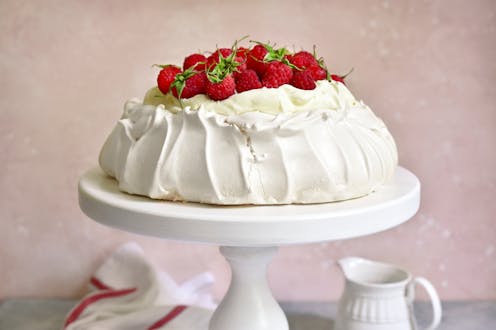
The pavlova is a summer icon; just a few simple ingredients can be transformed into a beautifully flavoured and textured dessert.
But despite its simplicity, there’s a surprising amount of chemistry involved in making a pavlova. Knowing what’s happening in each step is a sure-fire way to make yours a success.
So exactly what does it take to make the perfect pavlova? Let us break it down for you.
Egg whites
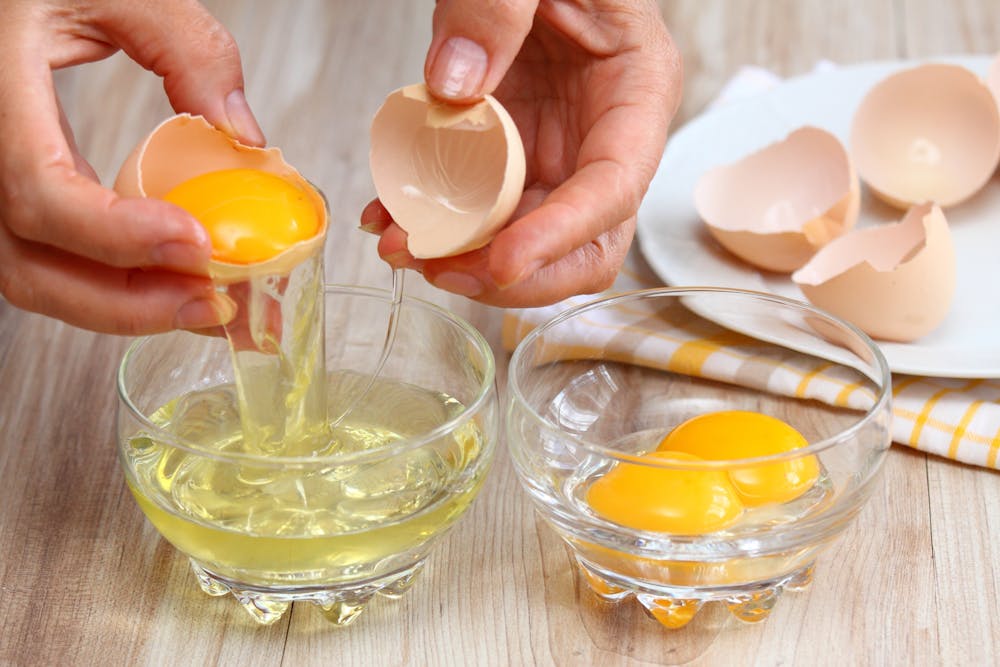
Egg white is basically a mixture of proteins in water. Two of these proteins, ovalbumin and ovomucin, are the key to forming a perfect foamy meringue mixture.
Whipping the egg whites agitates the proteins and disrupts their structure, causing them to unfold so the protein’s interior surface is exposed, in a process known as denaturing. These surfaces then join with one another to trap air bubbles and turn into a stable foam.
Egg yolk must be completely removed for this process to work. Yolk is mostly made of fat molecules, which would destabilise the protein network and pop the air bubbles. It only takes a trace amount of fat, or even just a greasy bowl, to disrupt foam formation.
You should always whip your egg whites in a clean glass or metal bowl. Plastic bowls are more likely to hold leftover grease.
Sugar
A traditional pavlova uses sugar – a lot of it – to provide texture and flavour. The ratio of sugar to egg white will differ between recipes.
The first thing to remember is that adding more sugar will give you a drier and crispier texture, whereas less sugar will lead to a softer and chewier pavlova that won’t keep as long.
The second thing is the size of the sugar crystals. The larger they are, the longer they’ll need to be whipped to dissolve, and the greater the chance you will overwork the proteins in your meringue. Powdered icing sugar (not icing mixture) is preferable to caster or granulated sugar.
If you do happen to overbeat your meringue (which may end up looking clumpy and watery) you can try to save it by adding another egg white.
Acid
Many pavlova recipes call for adding cream of tartar or vinegar. Cream of tartar is also known as potassium hydrogen tartrate, which you may have seen in the form of crystals at the bottom of a wine glass.
These acids act as a stabilising agent for the meringue by aiding in the unfolding of the egg white proteins. More isn’t always better, though. Using too much stabiliser can affect the taste and texture, so use it sparingly.
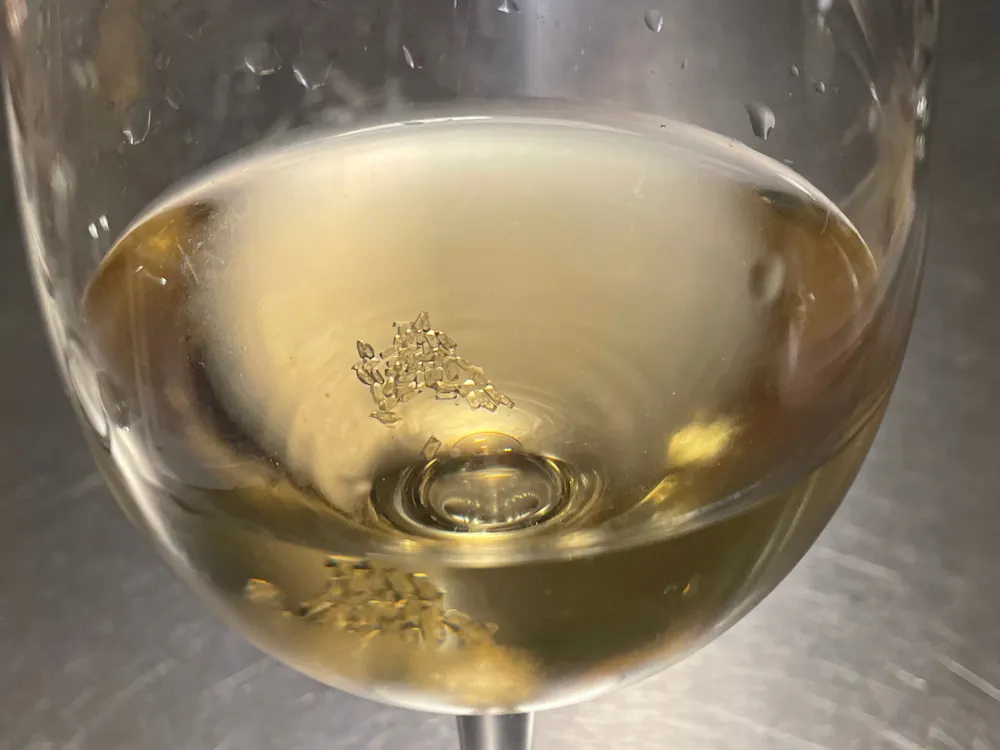 Tartaric acid is the most abundant acid in grapes, so you might sometimes see crystals of potassium hydrogen tartrate at the bottom of a wine glass.
Shutterstock
Tartaric acid is the most abundant acid in grapes, so you might sometimes see crystals of potassium hydrogen tartrate at the bottom of a wine glass.
Shutterstock
Heat
Cooking a pavlova requires a very slow oven for specific chemical reasons. Namely, egg white proteins gel at temperatures above 60℃, setting the meringue.
At higher temperatures a chemical reaction known as the Maillard reaction takes place in which proteins and sugars react to form new flavourful compounds. We can thank the Maillard reaction for many delicious foods including roasted coffee, toast and seared steak.
However, excessive Maillard reactions are undesirable for a pavlova. An oven that’s too hot will turn your meringue brown and give it a “caramelised” flavour. Recipes calling for pavlova to be left in the oven overnight may actually overcook it.
At the same time, you don’t want to accidentally undercook your pavlova – especially since uncooked eggs are often responsible for food poisoning. To kill dangerous bacteria, including salmonella, the pavlova’s spongy centre must reach temperatures above 72℃.
An alternative is to use pasteurised egg whites, which are briefly heated to a very high temperature to kill any pathogens. But this processing may also affect the egg white’s whippability.
Substitute ingredients
People love pavlova, and nobody should have to miss out. Luckily they don’t have to.
If you want to limit your sugar intake, you can make your meringue using sweeteners such as powdered erythritol or monk fruit. But, if you do, you may want to add some extra stabiliser such as cornflour, arrowroot starch, or a pinch of xanthan gum to maintain the classic texture.
Also, if you want a vegan pavlova, you can turn to the chickpea instead of the chicken! Aquafaba – the water collected from tinned or soaked beans – contains proteins and carbohydrates that give it emulsifying, foaming and even thickening properties. Egg-free pavlova recipes typically replace one egg white with about two tablespoons of aquafaba.
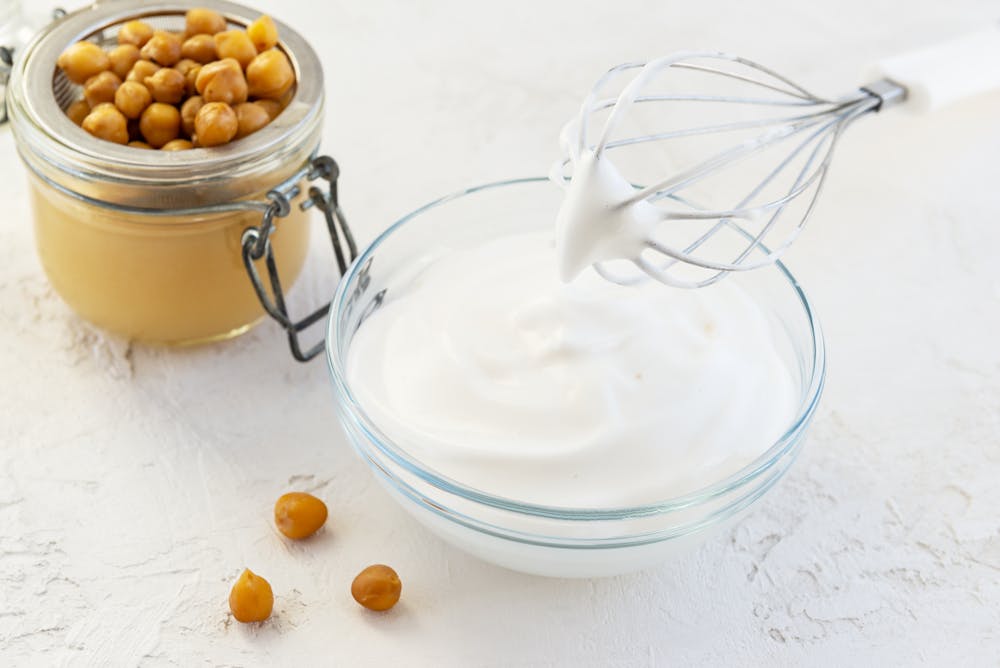 Although chickpeas may not come to mind when you picture pavlova, their aquafaba can be used to replace egg white.
Shutterstock
Although chickpeas may not come to mind when you picture pavlova, their aquafaba can be used to replace egg white.
Shutterstock
And for those of you who don’t do gluten, pavlova can easily be made gluten-free by using certain stabilising agents.
All that’s left is to get creative with your toppings and decide what to do with those leftover yolks!
Read more: Egg shortage: a nutritionist on the best egg alternatives
Authors: Nathan Kilah, Senior Lecturer in Chemistry, University of Tasmania
Read more https://theconversation.com/how-to-make-the-perfect-pavlova-according-to-chemistry-experts-196485

















