Green hydrogen funding is a step forward – but a step doesn't win the race
- Written by Kondo-Francois Aguey-Zinsou, Professor of Chemistry, University of Sydney
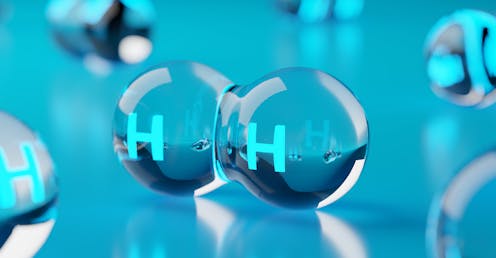
It sounds like a lot. Kickstarting green hydrogen in Australia with A$2 billion to subsidise early production and making the energy-dense gas competitive. A goal of up to a gigawatt of electrolyser capacity within seven years.
Two years ago, the hydrogen announcement in Tuesday night’s federal budget might have been more significant. But since then, Russia’s war on Ukraine has driven ever-faster moves to shore up energy security by going green. France, for instance, will invest $14.6 billion in hydrogen. The United States is offering tax credits equivalent to over $4 per kilo of green hydrogen produced.
Since Labor took office, they’ve spruiked Australia as a renewable energy superpower. On solar and wind that’s true – we’re world leaders. But solar and wind are mature technologies. Green hydrogen is not. We’re still working out the best way to do it.
That means you can’t simply allocate $2 billion and expect an entirely new industry to be created. One reason is we don’t have the pipeline of expertise yet – green hydrogen engineers or experts in the electrolysers which crack water to produce hydrogen and oxygen. It will take time and investment to develop local capabilities.

Isn’t green hydrogen steaming ahead?
On paper, yes. There are now many projects across Australia, with different levels of progress and ambition. Iron ore billionaire Andrew Forrest is betting heavily on green hydrogen with his Fortescue Future Industries company.
It could work – and work well. As coal and gas come out of our power production and cheap solar and wind rush in, we could use cheap daytime energy to crack water and produce hydrogen.
But it’s not guaranteed. It’s not like iron ore, where we have the advantage of large regions of red earth full of ore. There’s nothing special about hydrogen. You don’t have to dig it up. As long as you have access to the technology, the know-how and water, you can make it.
Across the US, Japan, Korea, China and the European Union, everyone is racing ahead. They see the long game – hydrogen will be useful, but only if it’s cheap and safe. That’s why they’re all heavily subsidising the industry.
Why are subsidies needed? Because the technology is still relatively new. Solar cells have been perfected over 40 years. While electrolysers – the key production technology – are well known, they’re currently too expensive. Storage, too, has to get better so we can safely use this flammable gas.
Labor’s $2 billion in subsidies is necessary. You can see the need clearly in the fact that, to date, these startup companies don’t have anyone to buy their product as yet. That’s one reason why South Australian Premier Peter Malinauskas is in Germany at the moment, pitching his state’s product.
4 Reasons why there’s more to it than subsidies
Subsidies are important. Many industries in their infancy rely on them. In fact, Australia’s place as the top liquefied natural gas exporter came about from early subsidies. But they’re not enough by themselves.
What we need is a high-level strategy, hashing out how to actually make this happen.
Here are some key problems we have to solve to make green hydrogen a reality in Australia:
1. Get expertise out of academia. To date, almost all hydrogen experts work in universities. Like me, they may consult to industry. But there’s still a big gap to overcome to ensure the green hydrogen industry has in-house expertise to make their product a commercial reality.
2. Build an ecosystem. Let’s say you want to install a large electrolyser. Who is able to certify that it meets Australian standards? Who is able to test it works under Australian conditions? It’s not as simple as install this machine and churn out green hydrogen at $2 a kilogram. The whole ecosystem needs to be built.
3. Create a domestic market. If we don’t have domestic buyers, it’s hard to jump to export volumes.
4. Make sure it’s safe. Storing a flammable gas is something we’re still figuring out. One answer is to convert it to ammonia for shipping and back to hydrogen at the other end. But the work is still being done. A better answer may to be start accelerating the development of solid state hydrogen storage.
Is it still worth it?
Yes. There’s a lot of scepticism about the need for green hydrogen. But in tackling climate change, we will need it. Fuel cell cars, buses and trucks don’t have to rely on batteries which slowly degrade over time.
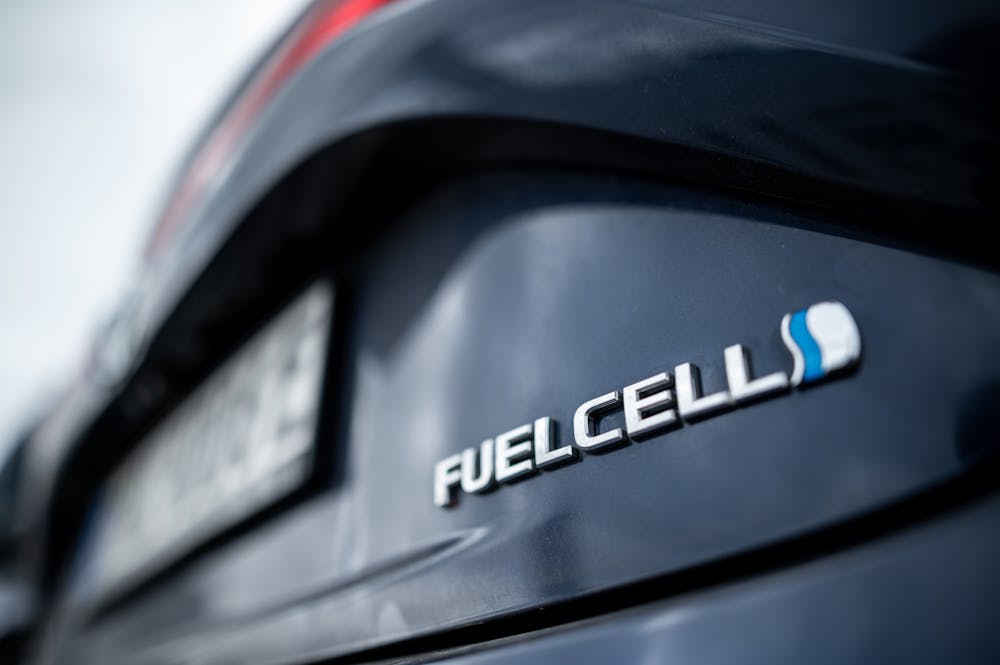 Powering fuel cell vehicles is one early use for green hydrogen.
EPA
Powering fuel cell vehicles is one early use for green hydrogen.
EPA
Green hydrogen will also be needed to decarbonise industries such as steelmaking.
And we will probably need green hydrogen as a way to store energy long term. Once it’s stored, you can keep it indefinitely and use it when you need it. It could be a good complement to solar, wind and storage. Plus, green hydrogen can produce heat for industrial processes.
Like it or not, Australia is in a race to secure part of this new market. We export gas and coal, but their time is ending. Think of how Taiwan went early to secure a lead in making the silicon chips on which so much of the world’s economy relies.
If we want to be competitive, we have to act decisively and fast. Yes, the budget announcement is a step forward. But a step doesn’t win a race.
Authors: Kondo-Francois Aguey-Zinsou, Professor of Chemistry, University of Sydney