What is Shen Yun, the Chinese dance troupe connected to the bomb threat at the Lodge?
- Written by Haiqing Yu, Professor, School of Media and Communication, RMIT University
Yesterday’s evacuation of the prime minister from the Lodge has been linked to the Chinese dance troupe Shen Yun. In a bomb threat emailed to the group, the sender said explosives would be detonated if Australian performances by Shen Yun proceeded.
This is just the latest controversy surrounding Shen Yun. But this use of a security threat as a prop to achieve other goals exposes a deeper and increasingly consequential struggle over culture, representation and political voice in the transnational Chinese world.
At stake is not a dance performance, but a deeper question: who gets to represent “Chinese culture” on the global stage?
What is Shen Yun?
Shen Yun, short for Shen Yun Performing Arts, literally translates to divine rhythms.
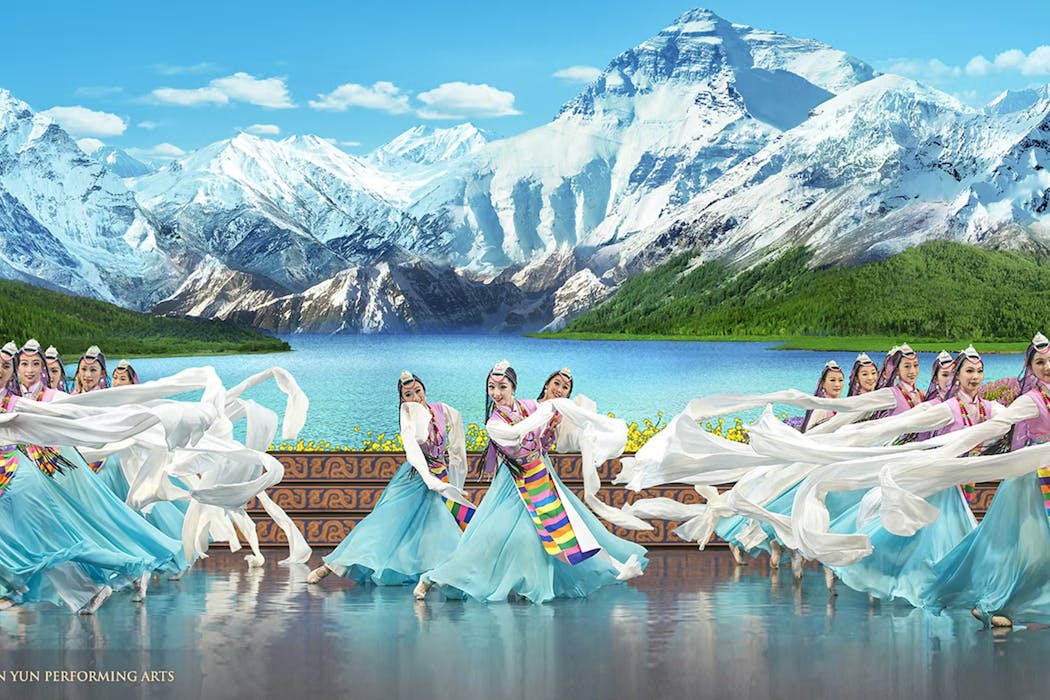
Shen Yun markets itself as a revival of “traditional Chinese culture” and “China before communism”. Based in New York and touring globally, the classical Chinese dance and music company was established in 2006 by the Falun Gong spiritual movement.
Their productions combine high-production dance, orchestral music and digital backdrops with narrative elements that often depict the persecution of Falun Gong practitioners in China.
Falun Gong is a new religious movement, established in 1992, rooted in traditional Chinese qigong meditation practices with moral teachings from Buddhism and Daoism. It has been banned by the Chinese government as an illegal organisation since 1999.
Falun Gong has grown into a transnational Chinese dissident movement with religious clout, a political message and a cultural mission.
Shen Yun is one of Falun Gong’s media and culture outreach organisations, alongside The Epoch Times newspaper. Shen Yun regularly tours across 36 countries, mostly in elite cultural venues.
The dance company is best understood as a hybrid cultural-political formation. It is simultaneously a cultural performance enterprise, a diasporic religious movement, a political messaging vehicle, and cultural diplomacy from exile.
What criticism has Shen Yun faced?
Shen Yun has been highly criticised by officials from the People’s Republic of China. They call the group an “evil religion” and a “cult” with great destructive power, and a political vehicle presenting a distorted version of Chinese culture.
The group also has its critics outside of China. A 2024 report in the New York Times detailed poor treatment of injured dancers, and one dancer brought a lawsuit against Shen Yun, calling it a “forced labour scheme” which exploits young dancers.
But the Chinese government’s sensitivity to Shen Yun reflects a broader strategic concern.
Since the early 2000s, Beijing has invested heavily in cultural soft power, from Confucius Institutes to state-sponsored media expansion. These efforts rest on the implicit premise that the Chinese state is the primary custodian and legitimate representative of Chinese civilisation and cultural rejuvenation.
This also can be seen in the “Chinese dream” narrative of President Xi Jinping: a message of patriotism, reform and innovation, with the goal of making China a dominant power on the world stage.
But Shen Yun disrupts the premise that Xi and the Chinese government can define Chinese culture.
How does Shen Yen use cultural diplomacy?
For their supporters, Shen Yun preserves authentic Chinese heritage and the true Chinese spirit, despite the Chinese government’s long-running campaign of repression of Falun Gong practitioners beyond its borders.
Traditionally, cultural representation and cultural diplomacy have been the domain of nation-states. Cultural diplomacy initiatives are state-led, via ballet companies, orchestras, sports, festival celebrations and cultural institutes (such as Confucius Institutes) projecting soft power abroad.
Shen Yun inverts this model. It is a non-state actor using dance to advance a narrative in direct contest to the Chinese state’s definition and representation of Chinese culture.
The company is not interested in the official Chinese “positive energy”. Instead, Shen Yun shares a story about struggle and survival, repression and resistance, highlighting their version of classical Chinese culture.
Shen Yun is not simply performing culture. It is contesting China’s cultural authority. In Shen Yun’s performances, cultural authenticity is not created by the state. Instead, cultural authenticity is created by the diaspora and the people.
A new geopolitics
Shen Yun is especially keen to spread their values in the Western liberal cultural marketplace.
The performances are staged in mainstream theatres, marketed as high culture (tickets in the current Australian tour range from approximately A$100–$300), and protected under norms of artistic freedom. Yet these spaces have become the theatre where geopolitical tensions are performed.
The bomb threat – even though authorities found no evidence linking it to the Chinese government – illustrates how quickly cultural performance can become entangled with national security anxieties.
The Shen Yun controversy is a symptom of a new geopolitical condition, rather than merely an isolated dispute.
Culture, religion and political legitimacy are increasingly entangled across borders. Australia, like many liberal democracies, will likely see more of these disputes in the years ahead.
In an era of transnational media and diaspora mobilisation, cultural performances can carry significant political weight – even in the form of classical dance and music.
Shen Yun’s success depends on its hybridity. It is a performing arts company, a diasporic religious movement operation, a commercial entity and a political messaging platform, all at once.
The Shen Yun case illustrates the fragmentation of cultural sovereignty. Competing actors are engaged in ongoing struggles to define what counts as authentic Chinese culture and who represents it.
Western cultural venues – and today, the Lodge – have become key battlegrounds in this contest.
Authors: Haiqing Yu, Professor, School of Media and Communication, RMIT University