

4 ways our streets can rescue restaurants, bars and cafes after coronavirus
- Written by: Thami Croeser, Research Officer, Centre for Urban Research, RMIT University
As Australia re-opens, the bars, cafes and restaurants that give life to our streets face a tough ask: stay open and stay afloat with just a fraction of the customers.
From June 1 in Victoria, for example, the limit will be 20 patrons, with 1.5 metres between tables or four square metres per patron. If that goes well, it’ll be 50 patrons from June 22 – if they can be seated the required distance apart. Many smaller businesses won’t be able to do that.
With the Jobkeeper package due to expire in September, the next couple of months is a critical window for traders to find new ways to seat patrons. Fortunately, street space can help a lot with this.
Read more: We can't let coronavirus kill our cities. Here's how we can save urban life
Here are four proven ways to quickly reconfigure street space. We might even find them nice enough to keep. Have your say in the poll at the end of this article.
Footpath trade
Footpath dining already gives many iconic streets their character. Even two or three tables outside a small bar in the evenings can give life to a street.
 Chairs on the footpath are part of the experience of dining out in Crossley Street, Melbourne.
Alpha/Flickr, CC BY-SA
Chairs on the footpath are part of the experience of dining out in Crossley Street, Melbourne.
Alpha/Flickr, CC BY-SA
Putting out tables sounds simple, but the permit process is the real hurdle. It can take weeks or months of waiting and uncertainty while a small team assesses a long list of details.
Councils could employ more assessors to fast-track the process, but there is another option. In the post-COVID environment, it may be time to trust traders and embrace more of the informality we see in cities with great street food. Councils could trial a system where dining is permitted by default in front of each establishment, subject to a few simple rules.
Traders must understand that their permits depend on not blocking thoroughfare. Disability access in particular must be maintained.
However, many footpaths are wide and quiet enough that dining tables could be up and working well in a matter of days.
Parklets
One roadside parking space in front of a café or bar might mean one or two customers – assuming they come to that business. A car park can instead become a “parklet” with space for six to eight people, while looking a lot more inviting. Put two or three parking spaces together and you’ve got a miniature dining area or a parklet.
Read more: Parking isn't as important for restaurants as the owners think it is
The parklet idea came out of San Francisco. Examples from there show how diverse and successful these can be. From weirdly sculptural to classically European to high-end and polished, they all add character to the places where they spring up.
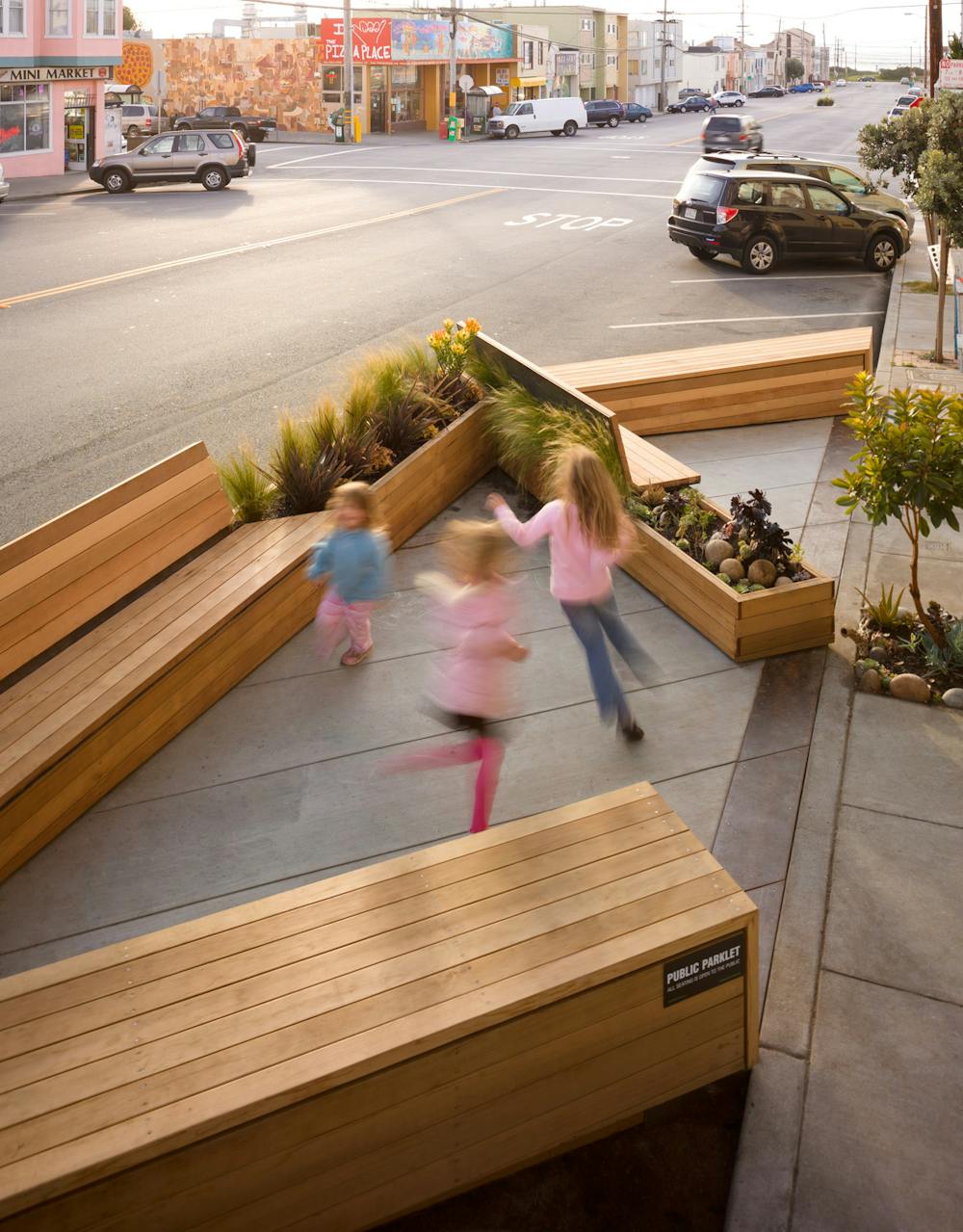 Noriega Street Parklet outside a bakery in San Francisco.
Photo: Matarozzi Pelsinger Builders & Wells Campbell photography/San Francisco Planning Department/Flickr, CC BY-SA
Noriega Street Parklet outside a bakery in San Francisco.
Photo: Matarozzi Pelsinger Builders & Wells Campbell photography/San Francisco Planning Department/Flickr, CC BY-SA
In Melbourne, Moreland Council has one long-term parklet in Brunswick. Its simple, neat design fits plenty of patrons and includes a bit of greenery. Perth and Adelaide have examples too, but the potential seems to be mostly untapped in Australian cities.
And the benefits are significant. A recent parklet study in Perth found a 20-35% increase in local footfall, and 89% community support.
Read more: People love parklets, and businesses can help make them happen
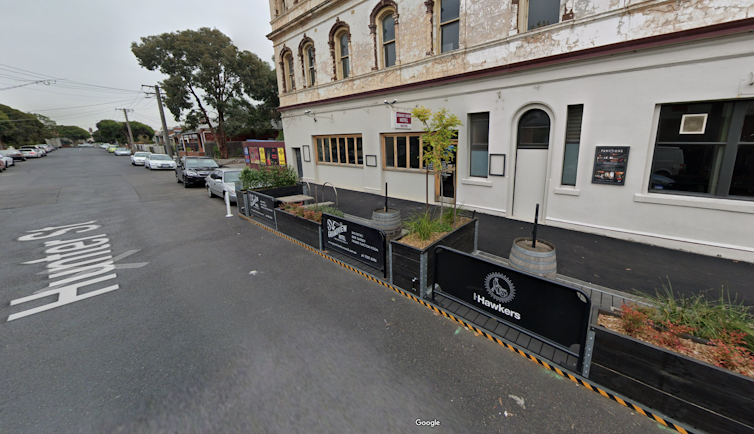 Grandview Hotel Parklet in Brunswick.
Google Streetview
Grandview Hotel Parklet in Brunswick.
Google Streetview
Again, a bit of sanctioned informality may be the best way to get parklets working quickly. Each trader could be allowed to use, say, one or two parking spaces outside their business if some simple criteria are met.
If we decide the approach is worth keeping, San Francisco shows how to go from pop-ups to something bigger and better. The city’s first parklet was a roll of astroturf, a park bench and a tree in a pot. It lasted just two hours. Now there are over 50 parklets, a “how to” manual, a clear application process and case studies of the benefits.
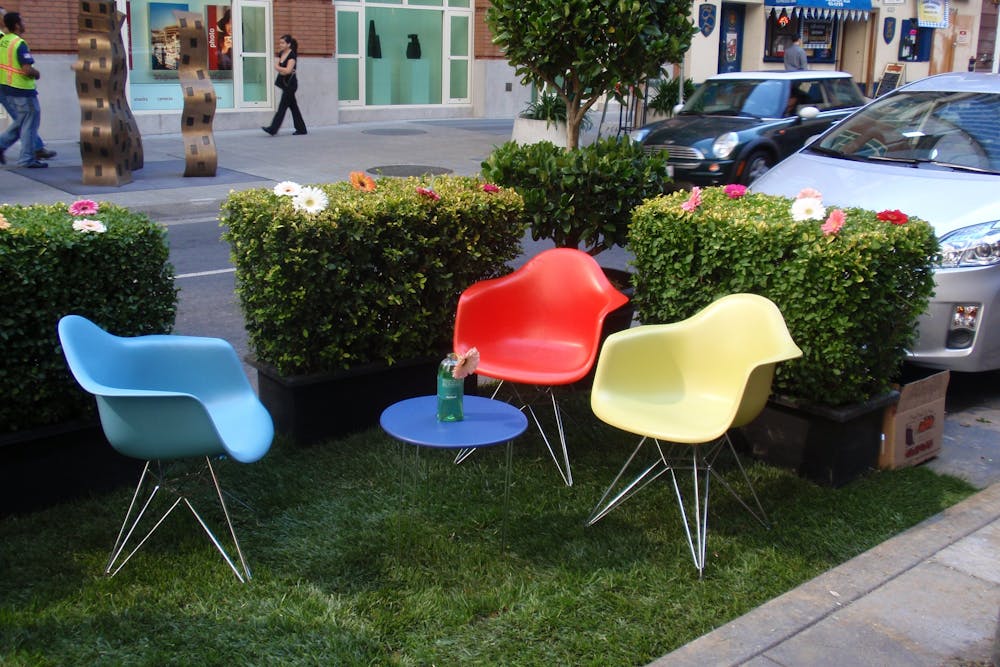 This parklet popped up for a day on Park(ing) Day 2009 in San Francisco.
Tom Hilton/Flickr, CC BY
This parklet popped up for a day on Park(ing) Day 2009 in San Francisco.
Tom Hilton/Flickr, CC BY
Read more: A day for turning parking spaces into pop-up parks
Road closures
Roads are wide open spaces. Put bollards at the ends of a street that doesn’t need full vehicle access, carry out tables and chairs, and you’ve got a huge new seating area. It has been done and works well.
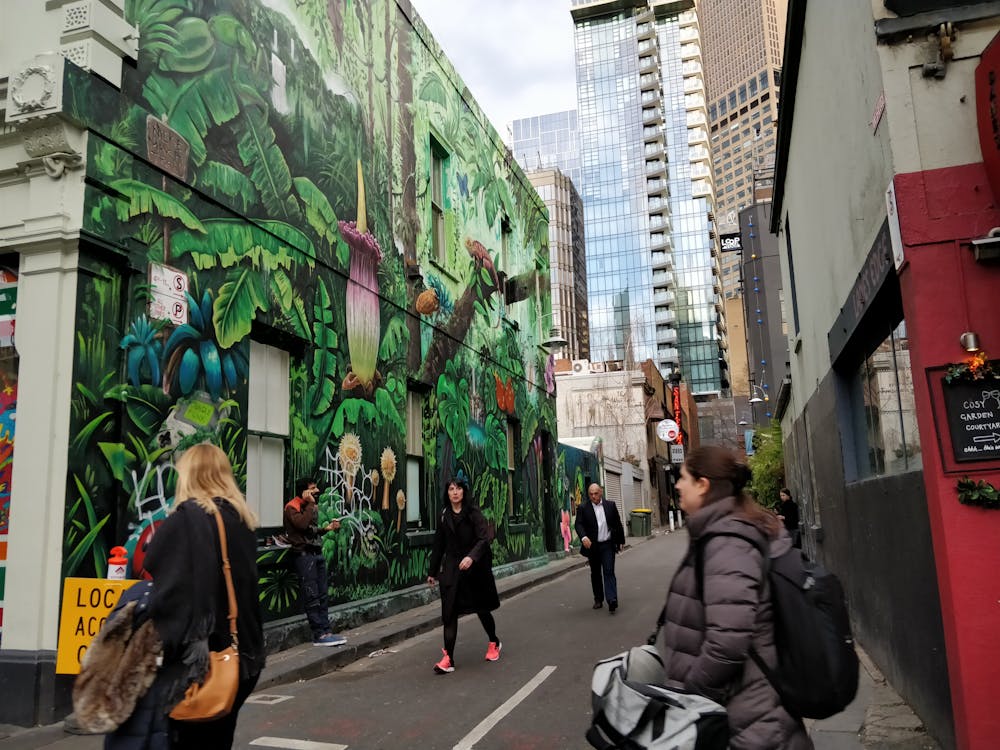 Meyers Place (above and below right), Melbourne, is closed to through traffic and open for pedestrians and dining.
Alpha/Flickr, CC BY-NC
Meyers Place (above and below right), Melbourne, is closed to through traffic and open for pedestrians and dining.
Alpha/Flickr, CC BY-NC
 Before full closure.
Aplha/Flickr, CC BY-NC
Before full closure.
Aplha/Flickr, CC BY-NC
Of course, closing a street permanently is quite a process. I worked with the community to pedestrianise a Melbourne laneway called Meyers Place. Negotiating the legalities took about 18 months. Emergency, bin collection and disability access requirements had to be met.
The restaurants can now put tables on the former road space, surrounded by trees and murals under a green wall. The thing is, we started out by closing the street for just two weeks. Businesses rolled out temporary tables and chairs, astroturf and potted plants. The lane went beserk with activity; we went from tentative support to heavy pressure for a permanent pedestrian space.
We took our inspiration from a much larger closure in Ballarat Street, Yarraville. It was also temporary and got removed, but was brought back permanently with funding from traders and overwhelming community support.
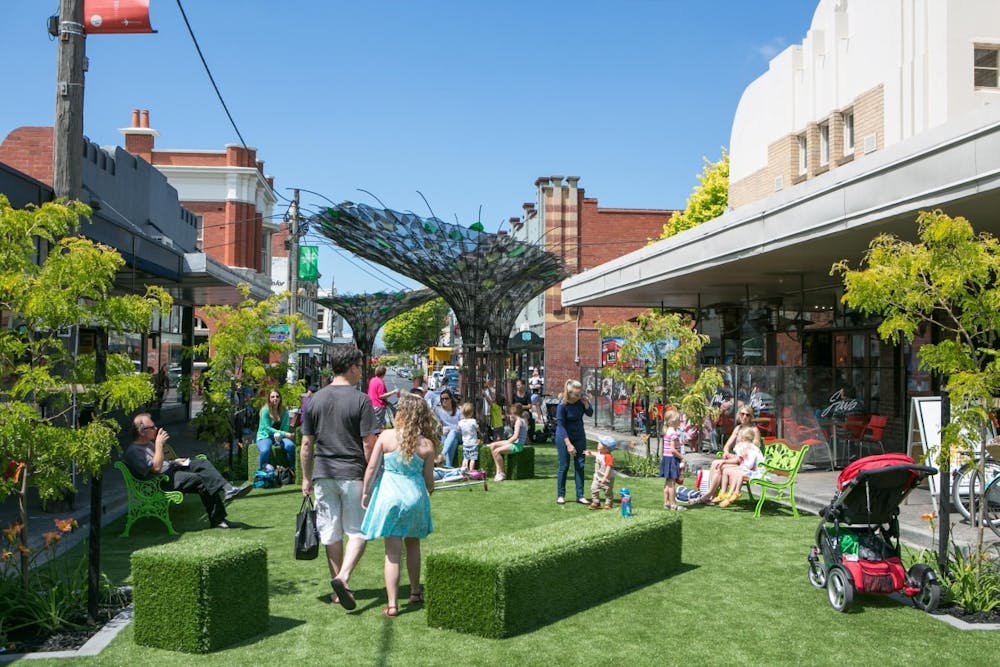 Ballarat Street, Yarraville, was transformed with strong community support.
Darren Sharp/Shareable, CC BY
Ballarat Street, Yarraville, was transformed with strong community support.
Darren Sharp/Shareable, CC BY
Parking lot conversions
Outside our inner suburbs, the areas dedicated to parking get bigger. But Copenhagen offers an example of how big an opportunity a large car park can be.
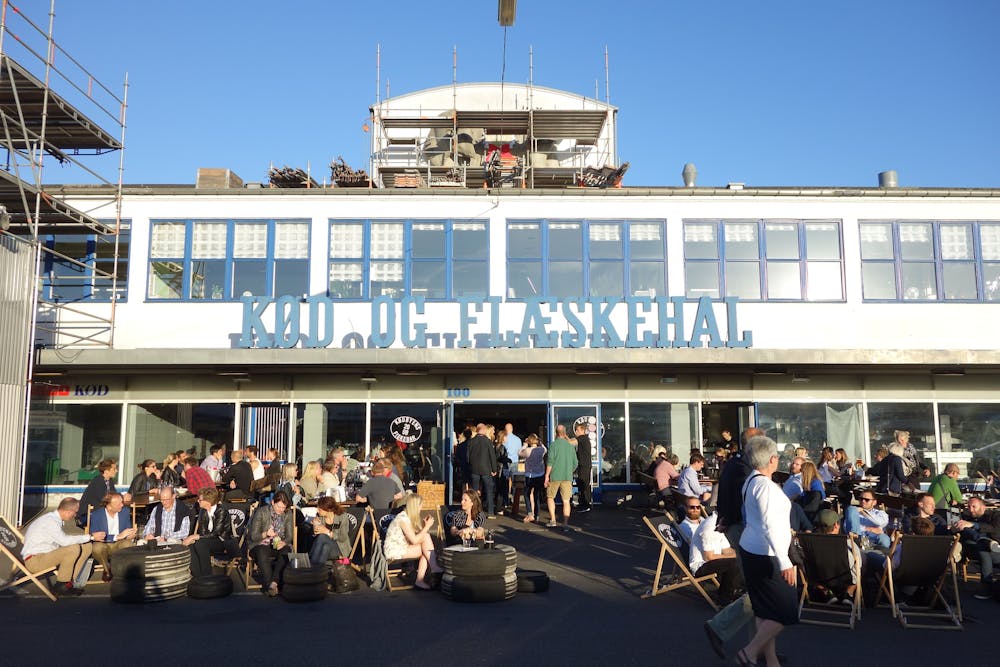 Kødbyen in Vesterbro, Copenhagen, has become a hub for fine dining, galleries and nightlife.
thewavingcat/Flickr, CC BY-NC-SA
Kødbyen in Vesterbro, Copenhagen, has become a hub for fine dining, galleries and nightlife.
thewavingcat/Flickr, CC BY-NC-SA
In the city’s former meatpacking district, you can find anything from high-end seafood to a craft beer pub that pumps heavy metal and barbecue smoke. The central car park serves as a giant dining area – when the weather’s good, chairs and benches come out and hundreds of locals turn up. This is super-simple stuff, mostly involving folding chairs and benches, plus lots of people. It’s adaptable, fun and very popular.
Read more: Freeing up the huge areas set aside for parking can transform our cities
The concept seems to work too in Melbourne too. “Welcome to Thornbury”, a popular hub for food trucks and outdoor dining, used to be a car factory.
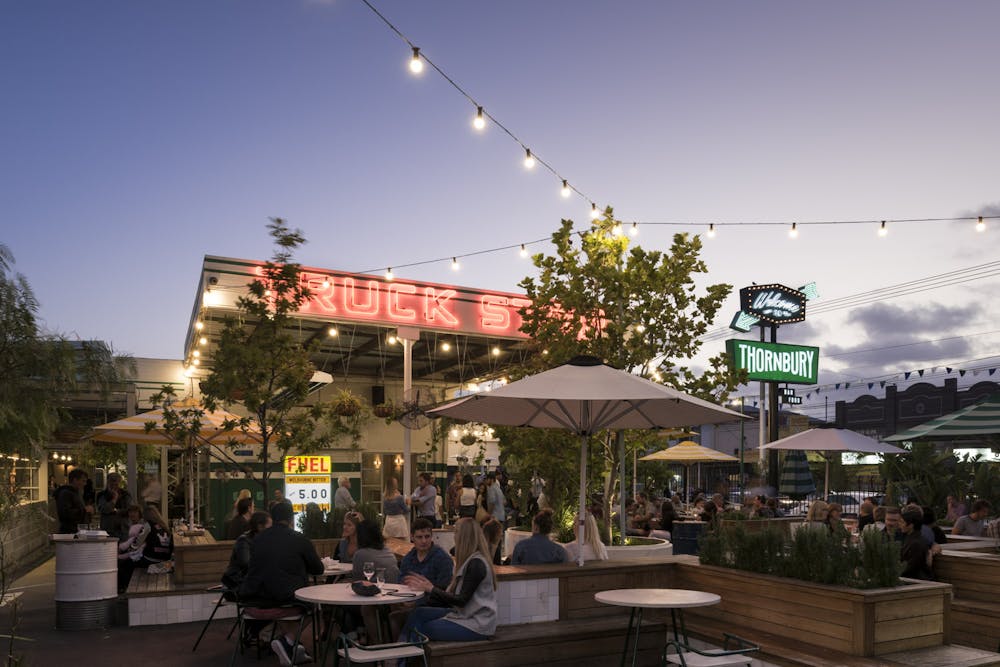 Welcome to Thornbury’, the former site of a car factory, is now a drive-in food truck park.
Welcome to Thornbury
Welcome to Thornbury’, the former site of a car factory, is now a drive-in food truck park.
Welcome to Thornbury
We can start right now (and probably should)
Community engagement with Melbourne’s new Transport Strategy 2030 indicates broad support for reallocating street space to people.
Read more: Move away from a car-dominated city looks radical but it's a sensible plan for a liveable future
Now is the time to press ahead, because of what’s at stake – not just jobs and profits, but our collective identity and sense of place. Food and drink are a big part of city life and how we spend our time. The places we gathered with friends, nurtured romances and celebrated milestones are where memories live. Doing nothing could mean these experiences are replaced by numbing “For Lease” signs.
Luckily, taking action isn’t very risky. We can give our hospitality sector a boost right now by allowing businesses to trial a set of proven approaches. Everyone will then have a chance to experience the changes and decide what they’d like to keep.
Read more: Kebab urbanism: Melbourne's 'other' cafe makes the city a more human place
Authors: Thami Croeser, Research Officer, Centre for Urban Research, RMIT University


















