

Yoko, Linda, Get Back and shifting perceptions of the women of the Beatles
- Written by: Christine Feldman-Barrett, Senior Lecturer in Cultural Sociology, Griffith University
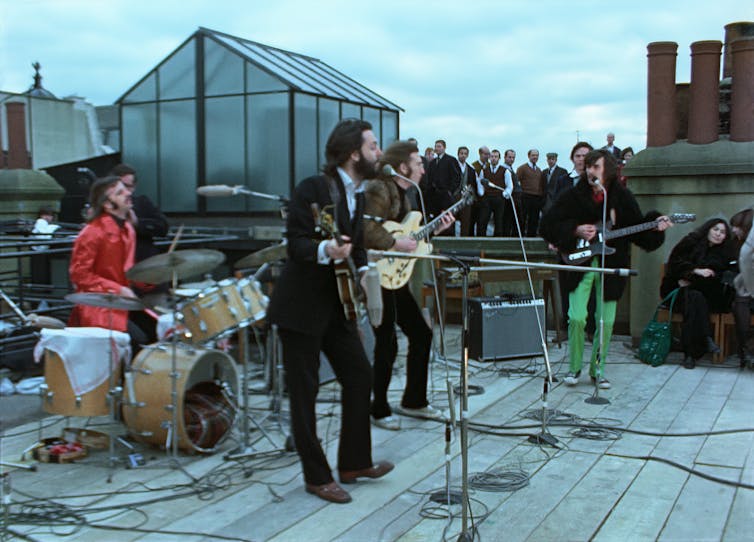
When the official trailer for The Beatles: Get Back was released in October, commentary across social media often referenced how harmonious and collegial the band looked in the footage. Undoubtedly, much of the anticipation surrounding Peter Jackson’s docu-series was its suggestion that the Beatles’ final years were much less acrimonious than previously believed.
In tandem with this, another set of comments focused on Yoko Ono’s inclusion in the jovial preview. After all, the 1970 Beatles documentary Let It Be, directed by Michael Lindsay-Hogg – which was created from the same 60-plus hours of footage – has not only served as supposed evidence of the group’s disintegration, but as “proof” that artist Ono, John Lennon’s then girlfriend and soon-to-be wife, played a major role in the world’s greatest rock band splintering apart.
Given that docuseries director Peter Jackson is also a lifelong Beatles fan, he was likely familiar with how the “Yoko-broke-up-the-Beatles” narrative was often mapped onto Let It Be, and has continued as popular discourse today.
Little wonder that The Beatles: Get Back trailer included Paul McCartney quipping, “It’s going to be such a comical thing like in 50 years’ time: ‘They broke up because Yoko sat on an amp.’”
Shots of Yoko smiling, dancing with John, and sitting with Ringo’s wife, Maureen Starkey, depict her as a welcome, observant guest rather than an intrusive figure in the Beatles’ workspace.
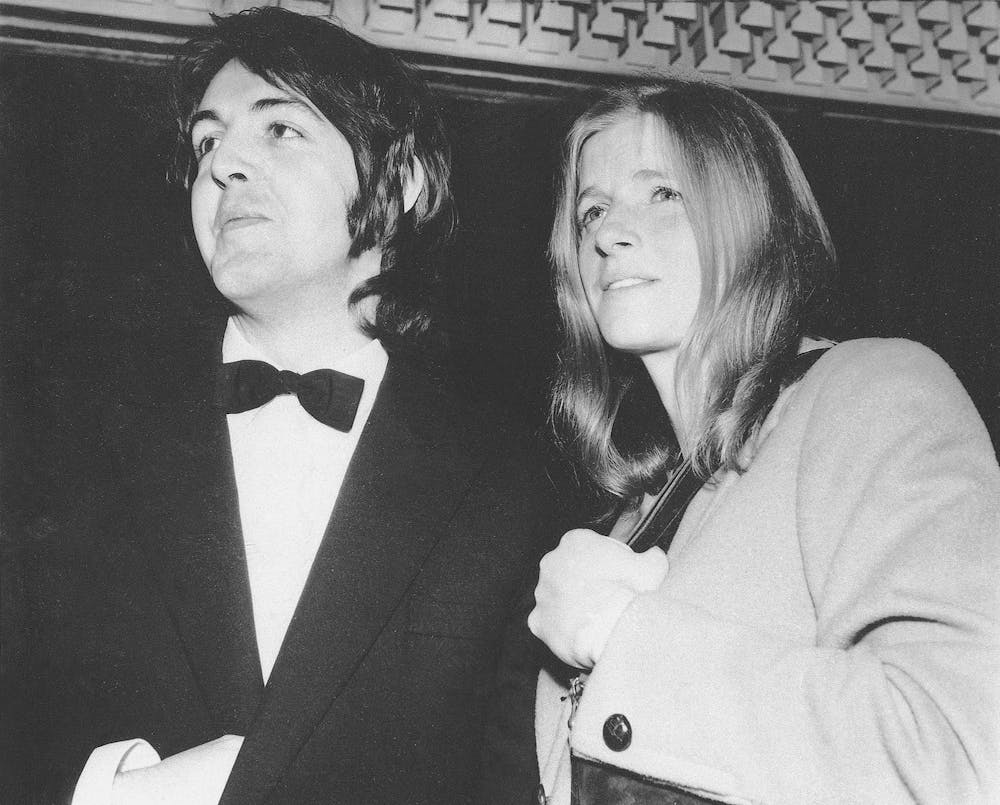
Similarly, this can be said for the other major female figure present at the filmed Get Back sessions, Paul McCartney’s future wife, American photographer Linda Eastman. While she did not face the extreme criticism that Ono initially received for partnering with a Beatle, by the early 1970s she would be the punchline for cruel jokes about McCartney’s post-Beatles group Wings, of which she was a founding member.
In this way, Jackson’s trailer suggested the potential to reframe Ono and Eastman in the Beatles story and its continuing cultural legacy.
The Beatles: Get Back
The Beatles: Get Back, the three-part Disney+ series, follows John Lennon, Paul McCartney, George Harrison, and Ringo Starr throughout January 1969 as they practice and record songs that would appear on their final two albums, with the majority of them making up their 1970 swansong, Let It Be.
Since the Beatles stopped touring in 1966, filming the group was in conjunction with a proposed TV special. The Beatles also wanted to record an album featuring live performances, which reflected their early history of electrifying club gigs. While the TV program was cancelled, the footage became the documentary Let It Be.
The story that emerges from Jackson’s retelling is how the Beatles worked together during what was a transitional time. Both Lennon and McCartney – to varying degrees – are shown as regularly inviting girlfriends Ono and Eastman to the recording sessions. Though Ono’s presence is the more documented of the two, both couples would marry by March 1969.
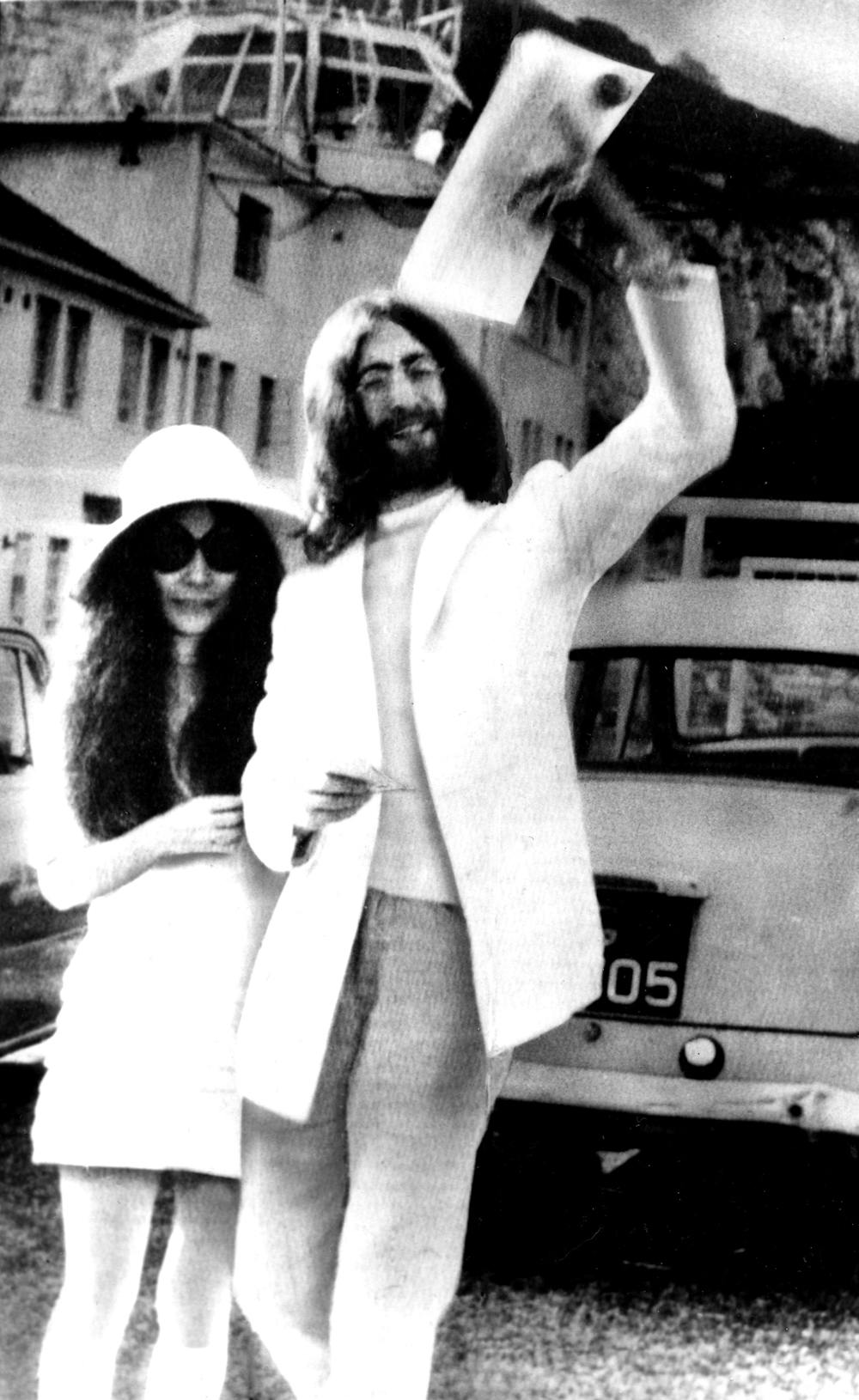 John Lennon and Yoko Ono waving their marriage certificate after their wedding at the Rock of Gibraltar on March 20, 1969.
AP
John Lennon and Yoko Ono waving their marriage certificate after their wedding at the Rock of Gibraltar on March 20, 1969.
AP
In the series, Ono’s attendance at the Get Back sessions is not introduced. She is simply there, often sitting close to Lennon while the band works out new songs or runs through old favourites. Sometimes she is raptly attentive to the music, smiling and rocking along to the beat, while in other moments she is involved in her own activities – often reading and writing.
Mostly, hers is a quiet but constant presence on film, though interspersed with a few avant-garde jam sessions with both Lennon and McCartney. In those moments, her singular voice comes through loud and clear.
Though McCartney has said that Yoko’s initial presence at the recording studio felt uncomfortable, such sentiment is not on display here. McCartney seems an enthusiastic participant in these sonic forays – not looking at all annoyed that his musical partner’s girlfriend is getting in the mix, if even just for fun.
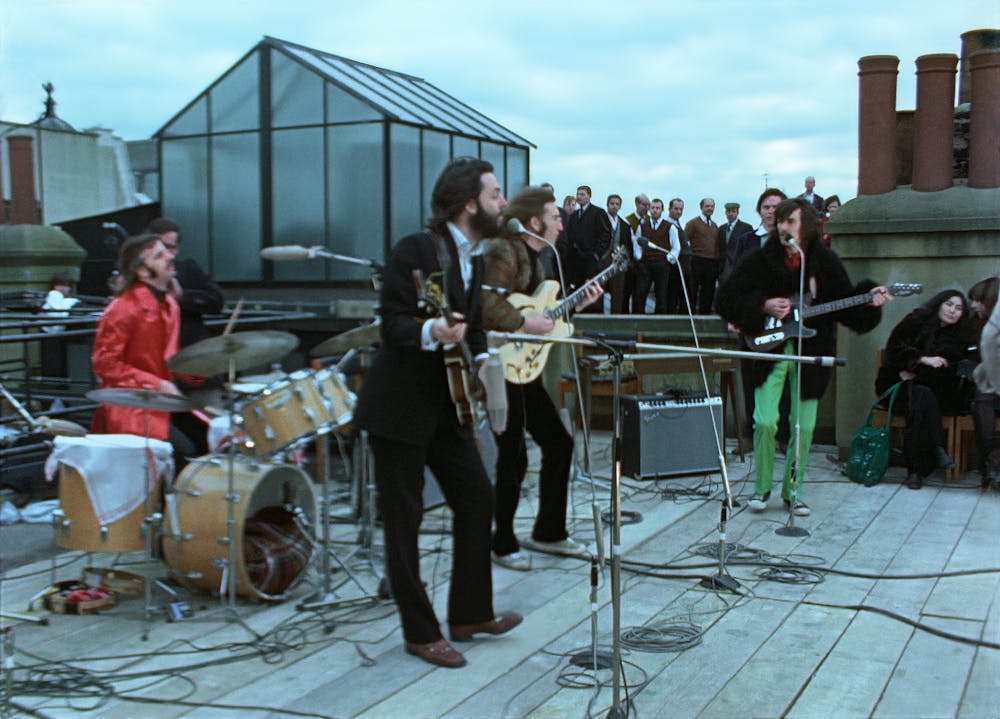 Ringo Starr, Paul McCartney, John Lennon, and George Harrison in The Beatles: Get Back. Photo courtesy of Apple Corps Ltd.
Disney+
Ringo Starr, Paul McCartney, John Lennon, and George Harrison in The Beatles: Get Back. Photo courtesy of Apple Corps Ltd.
Disney+
Eastman, meanwhile, is introduced to viewers by way of McCartney’s own introduction of her to members of the film crew. Most of the interspersed close-ups of Linda are of her photographing her future husband and his band mates, which references the fact that Eastman was already a rock photographer when she first met McCartney in 1967.
Other shots of Linda depict her quietly regarding Paul as he focuses on his work. Elsewhere, she is depicted as a young mother, when she brings daughter Heather to the studio, and as a true Beatles enthusiast, when she jokingly argues with director Lindsay-Hogg over who is the bigger fan of the band.
For contemporary viewers encountering such scenes, it might be difficult to understand how Ono’s or Eastman’s presence could have been perceived as a disturbance or distraction by some fans and cultural observers when the Let It Be film debuted in 1970.
Cultural changes since Let It Be
But there have been many changes in music and culture since Let It Be premiered over 50 years ago. Shifting perceptions of both Yoko Ono and Linda McCartney since 1970 will likely foster different interpretations of the footage – any directorial or editorial decisions aside.
For instance, from the advent of punk and new wave onward – with many women performers adopting those genres – Yoko Ono became a musical icon in her own right. Meanwhile, Linda McCartney may have received flak for her involvement in Wings, but her work for animal rights, promoting vegetarianism, and a clear dedication to family life won over some original and latter-day fans prior to her death in 1998, a trend that continues today.
Posthumously, her photography continues to be exhibited around the world and praised by many.
In terms of wider cultural change, the seemingly fixed nature of women’s roles both professionally and personally was greatly challenged through second-wave feminism soon after Let It Be’s release. Arguably, both women’s reputations within Beatles history likely benefited from a cultural movement that advocated for female individuality and agency.
Though second-wave feminism did not take off until the early 1970s, the 1960s was still a transformative decade for women. This is demonstrated by both Ono’s and Eastman’s careers and their status as divorcees. However, even before these two women entered the Beatles’ sphere, the way the band interacted with women and addressed them in their songs often proved forward-thinking.
Female photographers, journalists, fellow musicians, and fans were included in the Beatles’ world early on and treated respectfully. While the postwar era still favoured men as the dominant participants of society, each band member and the Beatles’ music itself nonetheless created an exciting, new space for girls and young women to boldly engage with cultural life. No wonder their initial presence elicited screams.
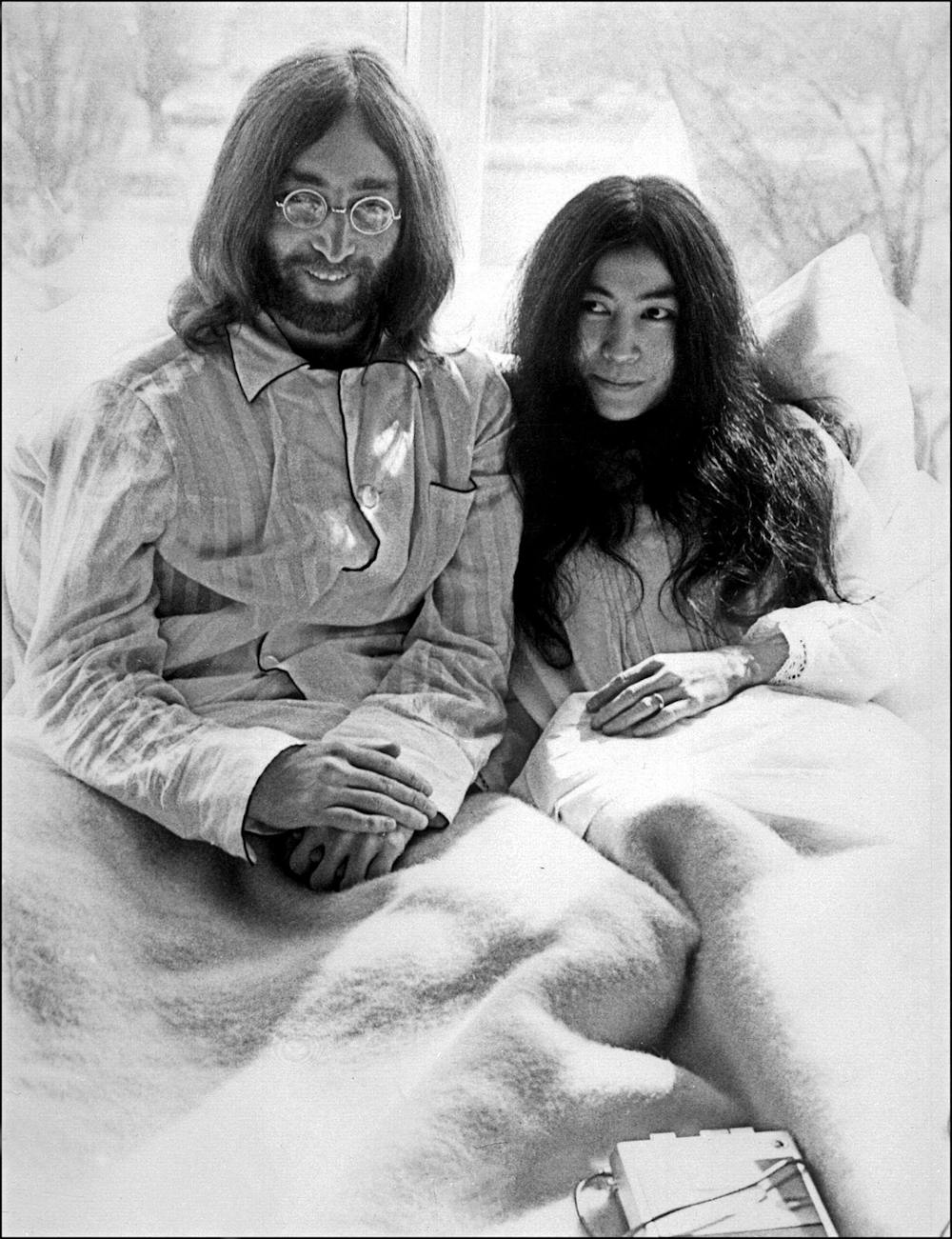 Yoko Ono and John Lennon, taken on March 25 1969.
EPA
Yoko Ono and John Lennon, taken on March 25 1969.
EPA
Women and the Beatles: on-set and behind the scenes
If the footage that comprises The Beatles: Get Back can allow us to review and reconsider Yoko Ono and Linda McCartney within the Beatles’ later history, it can also serve as a jumping-off point for re-examining how women (both real and fictional) are situated within the Beatles’ first feature film, A Hard Day’s Night.
Since the Beatles’ films can help audiences better understand the band’s cultural impact, looking at their 1964 debut as a bookend to Jackson’s docuseries can provide insights into how women fit into an epic story that continues to fascinate contemporary audiences.
A Hard Day’s Night was directed by Richard Lester and premiered soon after the Beatles achieved international fame. The film aims to replicate the band’s experiences during the height of Beatlemania. Performing as fictionalised versions of themselves, John, Paul, George, and Ringo are introduced onscreen running from screaming, mostly female fans as they catch a train to London.
Though girls and young women were often considered their core audience at this time, the band’s subsequent encounters with them in the film are relatively brief: serenading teenage schoolgirls on the train, responding to journalists at a press event, chatting and dancing with young women at a nightclub, or walking past dancers backstage at the TV studio. And, of course, there are screaming girls at the bands’s actual performance.
While the film helped capture girls’ excitement about the Beatles in early 1964, the stories off-camera tell of different relationships.
The then 19-year-old Pattie Boyd, who would marry George Harrison in 1966, was cast as one of the schoolgirls in the film. In other words, she met her future husband through her career as a model and actress. And, while some female reporters are depicted interviewing the Beatles early in the film, behind the scenes it was London Evening Standard journalist Maureen Cleave who was one of the band’s very first champions in the mainstream press. Indeed, young women were at the forefront of nascent rock journalism in the mid-sixties, often interviewing the Beatles.
While no women are shown in the film taking pictures of the Beatles as they arrive in London, their first (unofficial) band photographer and friend Astrid Kirchherr, whom they had met four years earlier while performing in Hamburg, was on set taking photos for German magazine Stern.
Kirchherr’s significance in the Beatles story also extends to the different sartorial styles and music genres she introduced into their world. In these respects, though the “screaming fan” became the main female image connected to the Beatles at this time, it is a limited view of girls’ and women’s engagement with the band both before and during Beatlemania.
Women were always important to the Beatles, not just as a fan base, but as people whose opinions and ideas mattered to them. By the time the Get Back footage was filmed, this aspect of the band remained unchanged.
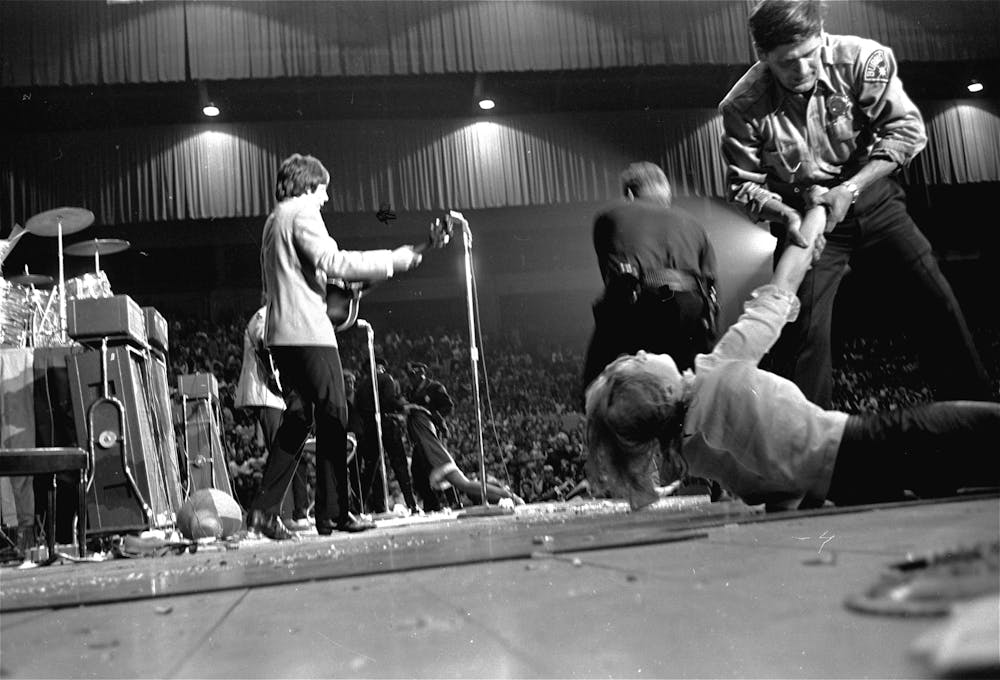 The Beatles had the fans hanging from the rafters for their appearance at Suffolk Downs in Boston, August 19, 1966.
AP Photo
The Beatles had the fans hanging from the rafters for their appearance at Suffolk Downs in Boston, August 19, 1966.
AP Photo
What we can learn from The Beatles: Get Back
Returning to The Beatles: Get Back, it is not only the depiction of Ono and Eastman that demonstrates women’s inclusion within Beatles history. Though they are the two most dominant female figures in the docu-series, George Harrison’s wife Pattie Boyd makes a brief appearance while Ringo Starr’s wife Maureen Starkey – an early Beatles fan in Liverpool – continues to show her enthusiasm for the group’s music in a few key scenes.
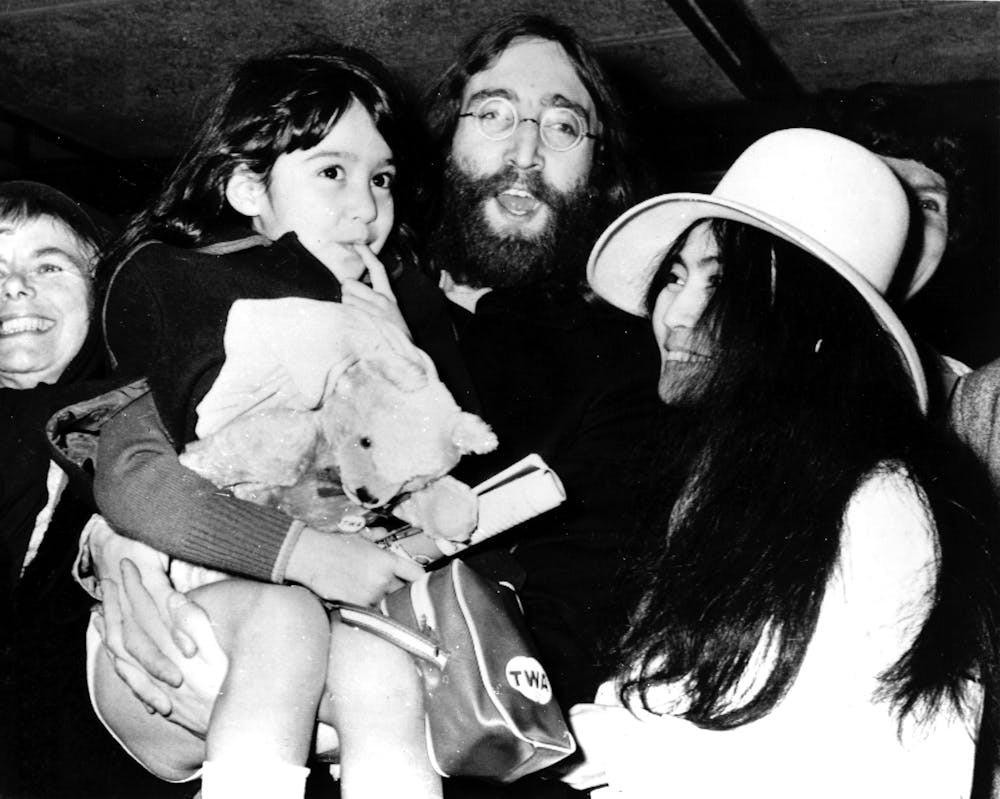 Paying closer attention to how women have been part of this phenomenal story helps us to better understand the Beatles and their continuing appeal.
AP
Paying closer attention to how women have been part of this phenomenal story helps us to better understand the Beatles and their continuing appeal.
AP
Some female employees of the Beatles’ Apple enterprise, as well as two dedicated fans – part of the Apple Scruffs fan collective who would wait outside the band’s Savile Row headquarters – make brief, if noteworthy, appearances in the film. With the Apple Scruffs in particular, the adolescent, screaming fans of 1964 are now quietly observant teenagers hoping for a brief audience with their favourite Beatle.
Interest in the Beatles remains evergreen with many newly published books and myriad podcasts available to today’s fans. Peter Jackson’s docu-series will undoubtedly inspire new cohorts of enthusiasts. For those with a longer history observing the Beatles, this intimate view of the band at the end of their career may prompt a revaluation of what they have believed about the band’s final years and breakup.
The Beatles: Get Back both provides a new window into the dynamic relationships within the band itself while posing a challenge to those who, for whatever reason, still insist that Yoko Ono’s role in the band’s history was a negative one.
It also reminds viewers that one of the greatest stories of the 20th century is not only predicated on the friendship and talent of four British musicians, but on the people who have loved them.
Paying closer attention to how women have been part of this phenomenal story helps us to better understand the Beatles in their time and the band’s continuing appeal.
Authors: Christine Feldman-Barrett, Senior Lecturer in Cultural Sociology, Griffith University


















