the governor-general is also commander-in-chief of the defence forces. What does this mean in practice?
- Written by Anne Twomey, Professor Emerita in Constitutional Law, University of Sydney
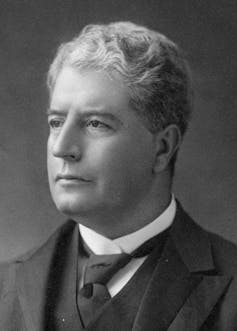
Australia’s new Governor-General, Sam Mostyn, recently said that she does not fit the usual idea of a governor-general – especially the type of person we expect to see as the commander-in-chief of the Australian Defence Force (ADF). But those expectations are beginning to change, and Mostyn, from a military family, is challenging them, while respecting the importance of the role of the military in Australia and the sacrifices involved in military life.
What is the governor-general’s role as commander-in-chief?
Section 68 of the Commonwealth Constitution vests the command-in-chief of the naval and military forces of the Commonwealth in the governor-general, as the monarch’s representative. This is of symbolic importance, as it ensures the defence force is formally headed by a civilian (even though the governor-general has sometimes been an ex-military officer), rather than a military leader or a politician.
In fulfilling this role, however, the governor-general is obliged by convention (and sometimes by statute) to act on the advice of ministers. This can happen either through the Federal Executive Council, which is the formal way by which ministers advise the governor-general, or by direct advice from the defence minister or the prime minister.
The governor-general’s powers as commander-in-chief are not regarded as “reserve powers” that can be exercised contrary to, or without, the advice of his or her responsible ministers. The governor-general cannot call out the defence forces at will and use them to assume command over the country.
Why is the governor-general also commander-in-chief?
When Sir Ninian Stephen, a former High Court judge, was governor-general, he gave a speech in which he analysed the interpretation of section 68 of the Constitution. Sir Ninian had seen where military power could lead, having attended Hitler’s 1938 Nuremberg rally as a tourist while a teenager, and having fought for Australia during the second world war. He was therefore very cautious in his analysis of the control of military power in Australia.
In that speech, Sir Ninian outlined the colourful history of the relationship between vice-regal office and the role of commander-in-chief throughout colonial times. He explained how the role had transformed from being a powerful and practical one, to becoming titular in nature.
He pointed to the 1898 Constitutional Convention debates over the drafting of section 68 of the Constitution. Alfred Deakin wanted particular words included that said the governor-general could only exercise the powers of commander-in-chief on the advice of ministers in the Federal Executive Council. Edmund Barton, who went on to become Australia’s first prime minister, considered that these words were unnecessary because it was clear the governor-general’s powers were only titular.
Everyone agreed the governor-general would have no substantive military power – it was just a matter of how this was best described. Barton won the dispute, so there is no mention of the Federal Executive Council in section 68. But it is still the case that the governor-general must act on ministerial advice when exercising the powers of the commander-in-chief.
What type of powers are exercised?
Some powers, such as the power to declare war and the power to deploy troops, remain prerogative powers. This means they can be exercised by the executive government without any source in a statute. Most powers regarding defence, however, are now set out in detail in the Defence Act 1903.
Even though the governor-general is “commander-in-chief” of the ADF, section 9 of the Defence Act says the chief of the defence force “has command of the Defence Force”. In other words, the chief has the direct day-to-day power to command its activities.
In contrast, section 8 says the defence minister has “general control and administration of the Defence Force”, and that the chief of the defence force must comply with any directions of the minister.
There are nonetheless statutory limits to that compliance. For example, section 39 says that when the governor-general makes a call-out order, the chief of the defence force must utilise the force in “such a manner as is reasonable and necessary” for the purpose specified in the order. In doing so, the chief of the defence force must comply with ministerial directions, but must not stop or restrict any protest, dissent, assembly or industrial action, unless there is a reasonable likelihood of death or serious injury or serious damage to property.
The role of the governor-general is more formal than that of the chief of the defence force. It includes appointing the chief of the defence force and terminating that appointment, on the recommendation of the prime minister. In a time of war, the governor-general’s powers become more serious, including the power to issue a proclamation to conscript people to serve in the ADF.
Most importantly, it is the governor-general who formally issues a “call out order” for the deployment of the ADF to protect Commonwealth interests, such as infrastructure, or Commonwealth functions, such as the holding of elections, from violence. A call out order can also be issued, in accordance with section 119 of the Constitution, to protect a state or territory from internal violence, such as terrorism or riots, at the request of the state or territory government.
The governor-general makes a call out order under Part IIIAAA of the Defence Act, if the prime minister, the attorney-general and the defence minister are all satisfied certain conditions have been met that would justify the call out.
In making or revoking the call out order, the governor-general must act on the advice of the Federal Executive Council, or in a case of urgency, the advice of one of the prime minister, the attorney-general or the defence minister.
A symbolic role
But in the absence of war, violence and disaster, the governor-general’s defence role is mostly symbolic. He or she visits military units and presents them with colours, banners and other honours. The governor-general commemorates Australia’s war dead and military action in different ceremonies throughout the year. It is an important role that requires dignity, compassion and appreciation, and one to which the new governor-general seems well suited.
Authors: Anne Twomey, Professor Emerita in Constitutional Law, University of Sydney