Climate anger can lead to action – or curdle into despair. We found out why
- Written by Samantha Stanley, Research Fellow in Social Psychology, UNSW Sydney
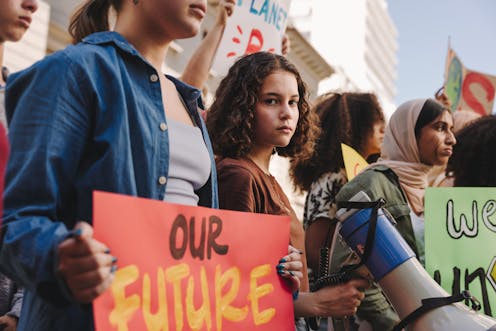
Strong emotional responses to environmental problems are remarkably common. We know people are angry about climate change – but how many?
Our new research surveyed 5,000 Australians and found almost half (49%) are angry about our warming world. So what do people do with their climate anger?
Anger can be a galvanising emotion, spurring us to action. But when faced by a seemingly insurmountable cause, it can also turn into despair.
Our research found responses to climate anger depend on what aspect of the problem people are angry about – and who they feel is responsible.
Not all emotions are created equal
Emotions differ in how energising they are – in other words, whether they motivate us to act. Anger has been shown to be a motivating emotion.
In our previous research, we found participants who felt more intense anger about climate change were more likely to take part in climate protests and switch to climate-friendly behaviours. Participants with more anger also reported less stress, depression and anxiety.
But not everyone gets angry at the same things.
To study the different kinds of climate anger, we asked a nationally representative sample of more than 5,000 Australian adults how angry they feel about climate change. We also asked about the environmental behaviours they take part in and about their recent experiences with symptoms of depression and anxiety. Just under 50% said they were at least “somewhat” angry.
Next, we asked them why.
Their responses ranged from a few words to long explanations. The sheer variety in their responses indicated many kinds of climate anger exist. In fact, we identified 13 distinct kinds held by our participants. That’s because anger is usually directed externally, to various targets.

13 kinds of climate anger
Far and away the most common type of anger was directed at the inaction and apathy of other people. About 60% of our angry participants were angry at what they saw as a lack of action and concern.
Who was this directed at? Sometimes, it was aimed at leaders: “a lack of action by government”. Or it was directed at regular people who “don’t care and aren’t willing to help change it”. Businesses or entire nations were also targets.
The next most common grievance (about 13%) was at those who deny climate change. For instance:
There are a lot of people who still think that climate change is not happening.
About 11% directed their anger at those they see as most to blame for causing climate change such as large corporations, while 10% were angry at humanity (“humans have done this”). Around 9% were mad about the damage climate change was doing and 8% about the slow pace of climate action. Another 8% felt angry because they felt powerless, believing their actions would be just a drop in the ocean.
Less common forms included:
the injustice that younger generations would be more affected than older generations
environmentally harmful behaviours participants had observed in others
a lack of cooperation between people and nations on climate change
a sense of unfairness when individuals or certain countries are expected to make sacrifices when large corporations or other nations are not doing more.
 Climate anger can lead to large-scale protests such as November’s blockade of the Port of Newcastle, a major coal export hub.
Rising Tide/AAP
Climate anger can lead to large-scale protests such as November’s blockade of the Port of Newcastle, a major coal export hub.
Rising Tide/AAP
Which types of anger lead to action?
We wanted to know what our participants were doing about climate change, and whether their actions differed depending on what they were angry about.
We found clear trends. People who were angry about inaction and apathy reported more environmental behaviours such as reducing their meat consumption, or joining climate marches. This was especially true when they were angry about ordinary citizens not doing or caring enough, or governments not doing or caring enough.
Interestingly, participants angry about other people’s inaction and apathy had more symptoms of depression and anxiety. But participants angry about government inaction and apathy had fewer of these symptoms.
Being angry about a sense of powerlessness, or angry humanity broadly was to blame for climate change, was unrelated to taking action on climate change. But this group, who felt angry but powerless, were more likely to have increased symptoms of depression and anxiety.
One possible explanation for these findings is that anger could motivate climate action, but if that action leads to nothing, the anger might curdle into despair or fade into resignation.
Anger about a sense of powerlessness and humanity’s role in causing climate change were both higher in younger than older participants. Young Australians involved in climate action have told researchers taking action helps alleviate despair. But they also said having their anger ignored or dismissed has the opposite effect.
 Climate anger can turn into isolation and despair.
WPixz/Shutterstock
Climate anger can turn into isolation and despair.
WPixz/Shutterstock
Climate anger could motivate action
Anger is complex. When we’re angry, we usually respond by trying to right something we see as wrong, by discussing the issue or compensating people who were harmed by the situation.
On climate change, our findings suggest feeling angry about broad inaction could motivate personal action. But if someone is directing their anger at fellow citizens they think aren’t doing or caring enough, it could affect their wellbeing.
Many people were angry because they feel nobody cares. But our results suggest the opposite is true. If 49% of Australians are angry about climate change, this means many, many people care.
Among young Australians, this figure is higher still – 57%, according to 2021 research.
People tend to falsely assume most other people don’t support climate action. For example, in the United States, people assume support for climate policy is about 40%. But real support is 66-80%. For instance, Americans assume only 43% of people support generating renewable energy on public land, but in reality, the figure is 80%.
In our body of research, we have found Australians are similar. Most policies aimed at tackling climate change we tested enjoyed healthy support, but people assumed support from other Australians was much lower.
As children, we were often taught to see our anger as a “bad” emotion. Anger has long been seen this way. But as we struggle to rise to the growing challenge of climate change, we could see anger differently. If harnessed appropriately, it could be a useful ally to strengthen our collective resolve on climate.
Authors: Samantha Stanley, Research Fellow in Social Psychology, UNSW Sydney