

Antarctic endeavours, primary healthcare research and dark matter exploration – the coronavirus casualties you haven't heard of
- Written by: Lauren Ball, Associate Professor/ Principal Research Fellow, Griffith University
The year 2020 came with big expectations for researchers, myself included. Last year I was successful in the first round of the National Health and Medical Research Council Investigator Grants scheme. Six years since completing my PhD, I managed to launch my Healthy Primary Care research team.
We investigate how principles of wellness such as healthy eating and exercise are incorporated into health care, particularly in general practice. I spent the summer planning how to support my team for the next five years, focusing on impact and research translation into real-world settings.
Big things were in the works. It was an exciting time. But as it turns out, wellness in health care isn’t a priority during the COVID-19 crisis.
As the pandemic lingers, big players (especially pharmaceutical companies) around the world have understandably dropped everything, joining forces to give the virus their undivided attention.
A sudden loss
Many of my team’s projects relied on doctors, nurses and other health professionals to collect or provide data. With the strain placed on health care by the pandemic, continuing was no longer viable. Grant applications, domestic and international travel, conferences and meetings have all been cancelled or postponed indefinitely.
As a supervisor, the hardest part was withdrawing research students and interns I’d lined up to start projects in clinics. This pandemic has challenged the relevance, impact and productivity of our work.
Read more: For most universities, there's little point to the government's COVID-19 assistance package
This shock comes shortly after a summer of devastating bushfires which hindered research progress by forcing experts out of fire-affected regions, destroying expanses of equipment and reportedly setting some studies “back months or years”.
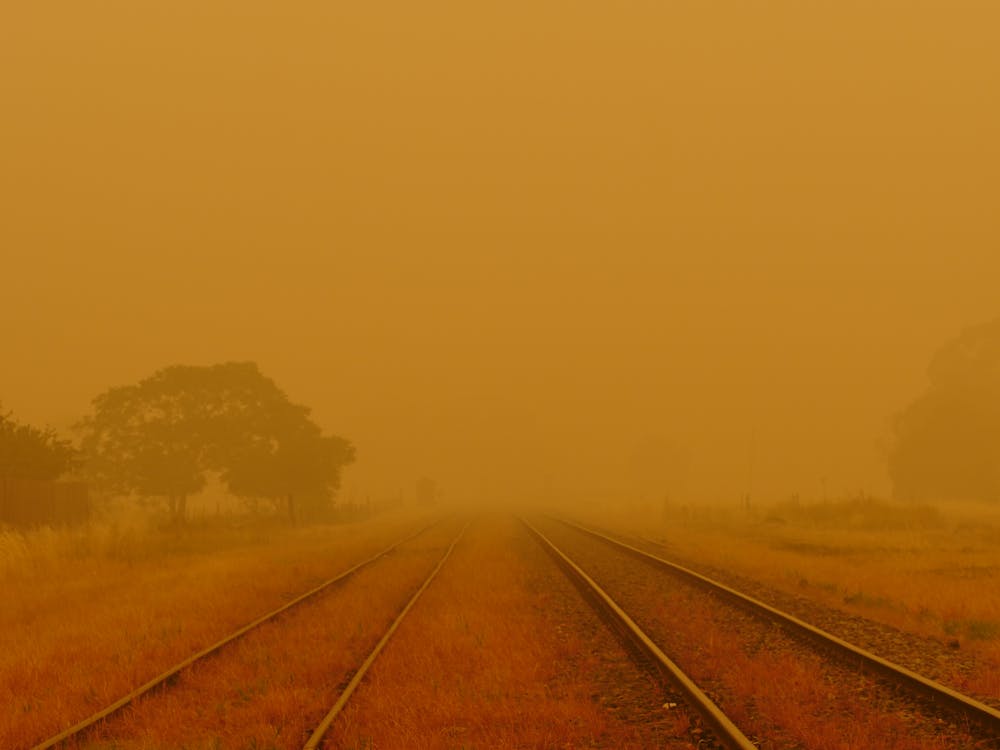 This photo was taken in Junee, New South Wales, in January. According to reports, the total tangible cost estimate of the summer bushfires was close to A$100 billion.
Shutterstock
This photo was taken in Junee, New South Wales, in January. According to reports, the total tangible cost estimate of the summer bushfires was close to A$100 billion.
Shutterstock
Stoppages across the field
Social distancing, travel bans and quarantine restrictions mean scientific fieldwork across the world has almost completely stopped.
The Australian Antarctic Program, led by the federal Department of Agriculture, Water and the Environment has been reduced to essential staff only to keep the Antarctic continent COVID-19-free. Instead of sending 500 expeditioners in the next summer season, the Australian Antarctic Division will only send about 150.
Social distancing measures are also preventing climate scientists from being able to visit their laboratories. If the pandemic continues, this could hamper important weather and climate surveillance practices. In some cases, labs have been reduced to one essential worker whose sole job is to keep laboratory animals alive for when research resumes.
Delays have also impacted one of the world’s largest efforts to investigate the nature of dark matter. The XENON experiment based in Italy is worth more than US$30 million, according to the New York Times. It faced a multitude of roadblocks when the country was forced into lockdown earlier this year.
Young research stars missing opportunities
For young researchers, social distancing and event cancellations are especially damaging to professional development. Scientific conferences and meetings foster collaboration and can also lead to employment opportunities.
Although funding cancellations and grant scheme delays mostly impact established researchers, other schemes supporting early career and postdoctoral researchers have also been postponed, such as the Rebecca L Cooper Medical Research scheme and the Griffith University Postdoctoral Fellowship scheme.
Read more: Coronavirus: Social distancing is delaying vital scientific research
This crisis has left the next generation of researchers unsupported, and have negative flow-on effects for all research areas. In health and disease prevention, research efforts apart from vaccinations are still vital, as the onset of COVID-19 hasn’t stopped the rise of chronic disease.
There are positives
Australia boasts a robust and passionate research workforce, which means we can divert resources to a united cause such as the coronavirus crisis. As the race for a vaccine continues, the value of research has never been more apparent to the non-scientific community. This may help weaken anti-science messages.
The pandemic is also providing opportunity for future university leaders to understand university management, funding and governance decisions. Never before has information been so accessible on where funding comes from.
Online conferencing and collaboration related to research has also made participation more accessible and affordable. This increases inclusively by removing barriers for people who may not be able to attend in-person gatherings, such as people living with a physical disability, full-time carers and people experiencing financial hardship. Less domestic and international travel is also helping reduce carbon footprints.
Charging forward
The health system isn’t working normally, which means my team’s research isn’t working normally. Nonetheless, we’re pivoting well in this uncertain time. We’re helping plan the first online conference for Australian primary care to improve access to relevant research across the country.
New grant opportunities are aligning COVID-19 to our research focus, such as the Royal Australian College of General Practitioners’s and the Hospitals Contribution Fund’s special call for projects on COVID-19 in general practice.
Some may think non-COVID-19 research isn’t currently necessary, but it will be once we combat this disease. And when that happens, we’ll be ready to continue right where we left off.
Authors: Lauren Ball, Associate Professor/ Principal Research Fellow, Griffith University


















