

Elective surgery's due to restart next week so now's the time to fix waiting lists once and for all
- Written by: Stephen Duckett, Director, Health Program, Grattan Institute
The near-total shutdown of elective surgery across Australia will end soon, following National Cabinet consideration on Tuesday.
The shutdown was imposed to ensure there would be enough personal protective equipment (PPE) for doctors and nurses to manage a projected tsunami of COVID-19 patients in our hospitals.
But now there is a big backlog of Australians waiting for elective procedures.
Read more: Good news on elective surgery, but dire warning on the economy
Elective surgery waiting times are the bane of every state health minister’s life. Better ways to manage such procedures could be a major benefit from the shutdown and restart.
But we have to act quickly if we are to change how we manage these wait lists, as federal Health Minister Greg Hunt wants a staged reintroduction to begin on April 27.
Rethink priorities
Currently, elective surgery is classified as urgent (category 1), semi-urgent (category 2) and non-urgent (category 3). But different hospitals and different surgeons actually classify patients in different ways.
What’s worse is that some procedures are undoubtedly unnecessary, such as spinal fusion or removing healthy ovaries during a hysterectomy, and would provide no value for the patient, as Adam Elshaug and I have argued before.
Of course, not all of the backlog is low-value procedures. As states consider how to recommence elective surgery, they should seize this opportunity to introduce new systems, especially in metropolitan areas.
A properly managed elective procedures system should have three key elements:
there should be a consistent process for assessing a patient’s need for the procedure, and ranking that patient’s priority against others
the team performing the procedure, and caring for the patient afterwards, should be highly experienced in the procedure
the procedure should be performed at an efficient hospital or other facility, so the cost to the health system is as low as possible.
Unfortunately, Australia sometimes fails on all three measures.
Stop the inconsistencies
There is no consistent assessment process across hospitals. Even different surgeons in the same hospital seeing the same patient sometimes make different recommendations about the need for a procedure.
This means a patient lucky enough to be seen at hospital A may be assigned to category 2, but the same patient seen at hospital B might be assigned to category 3 and so have to wait longer.
Patient characteristics, such as gender or level of education, also seem to inappropriately affect categorisation decisions.
High-volume hospitals and other facilities generally have better outcomes for a given procedure than low-volume centres. And they are more efficient.
Yet most states ignore these facts. They have done little to rationalise services for the benefit of both the patient and the taxpayer.
Time for change
The large backlog of demand creates the opportunity for a new way of doing things. States should develop agreed assessment processes for high-volume procedures, such as knee and hip replacements and cataract operations, and reassess all patients on hospital waiting lists.
Reassessment could be done remotely using telehealth. Specialists in each area should be invited to develop evidence-based criteria for setting priorities. Where appropriate, patients should be diverted to treatment options other than surgery.
Private health insurers should be empowered to participate in funding diversion options so patients are able to have their rehabilitation at home rather than in a hospital bed.
A new, coordinated, single waiting list priority system in each state would enable all patients to know where they stand. A patient on the top of the list would be offered the first available place, regardless of whether it was closest to their home.
They could refuse the offer, without losing their place in the queue, if they wanted to wait for a closer location.
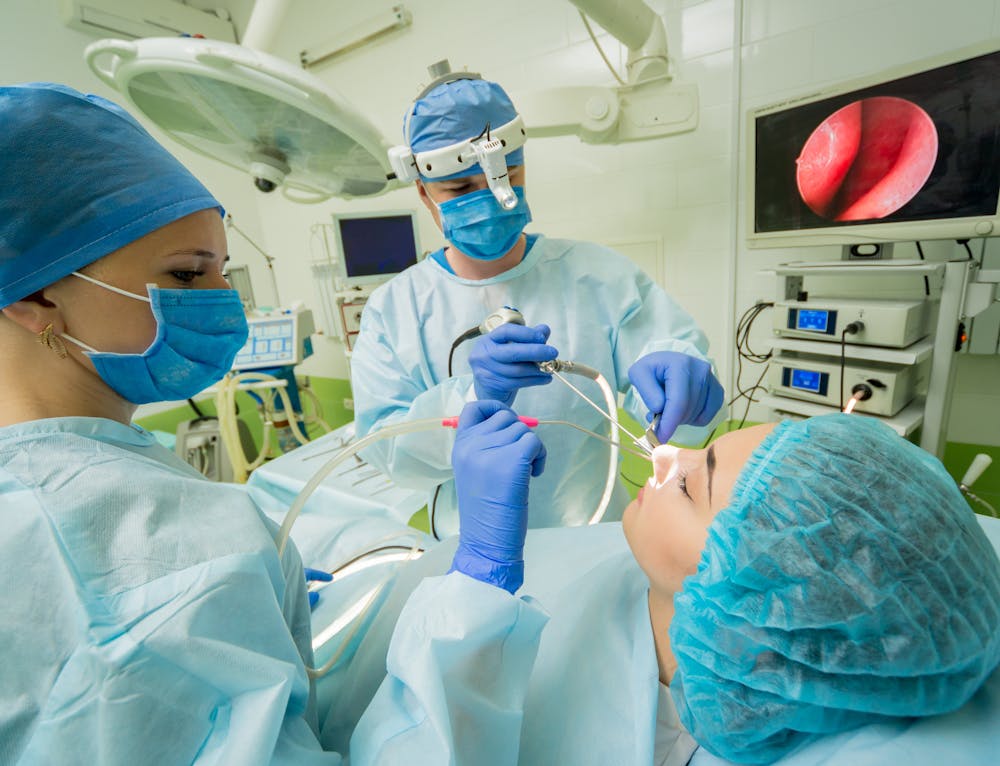 The health minister says it’s up to hospitals to decide which patients get to undergo elective surgery.
Roman Zaiets/Shutterstock
The health minister says it’s up to hospitals to decide which patients get to undergo elective surgery.
Roman Zaiets/Shutterstock
The single waiting list should include both regional and metropolitan patients, to ensure as much as possible that city patients do not get faster treatment than people in regional and remote area.
Patients with private health insurance can opt to be treated as a private patient in a public hospital. So the waiting list should include public and private patients, to prevent private patients gaining faster admission to public hospitals.
The system should be further centralised in metropolitan areas. The full range of elective procedures should not be re-established in every hospital. Some surgeons would need to be offered new appointments if elective surgery in their specialty was no longer being performed at the hospital where they previously had their main appointment.
Private hospitals can help
The private hospital system has taken a battering during the pandemic. Private hospitals have effectively been closed, and their viability may be under pressure.
States should consider signing contracts with private hospitals, at or below the public hospital efficient price, for elective procedures to be performed in these hospitals to help clear the elective surgery backlog.
As part of the new service model, states should bolster their hospital-in-the-home systems. For many patients, rehabilitation at home or as an outpatient can produce better outcomes than in-hospital rehabilitation.
The pandemic is not over yet and policymakers are right to be turning their minds to the transition back to something approaching business as usual. But the new, post-pandemic normal should be nothing like the old.
Physical distancing seems to be beating the virus, but the second victim might be health reform. Not wasting the crisis is the cliché on everyone’s lips. Australia has the chance to improve our elective surgery system. For the sake of taxpayers and patients, we should grasp it.
Authors: Stephen Duckett, Director, Health Program, Grattan Institute


















