

Australia's education system is one of the most unequal in the OECD. But we know how to help fix it
- Written by: Meera Varadharajan, Research Fellow, Centre for Social Impact, UNSW Sydney
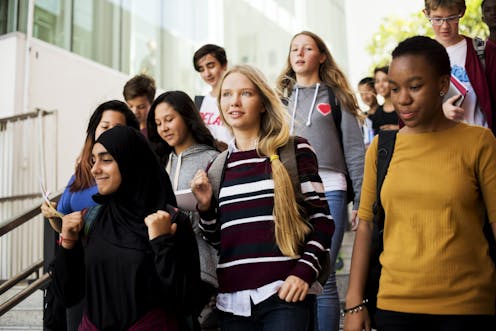
According to UNICEF, Australia ranks in the bottom third of OECD countries in providing equitable access to quality education. This means our education system – from access to early childhood education to expectations for study after school – does not allow every student to enjoy the same benefits that come from schooling.
The students who often miss out are from disadvantaged families. This includes young people with disabilities, First Nations peoples, those from lower socioeconomic backgrounds, students in regional and remote communities, and young refugees and asylum seekers.
A Grattan Institute report shows the gap between students whose parents have low education and those with highly educated parents grows from ten months in year 3 to around two-and-a-half years by year 9. And because of COVID, and the disruption to education, vulnerable students are even worse off than before.
This is important because what happens to young people at school affects the opportunities they are exposed to for the rest of their lives.
Read more: Australian schools are becoming more segregated. This threatens student outcomes
Existing testing measures don’t capture young peoples’ whole learning experience which occurs both inside and outside formal education settings. Nor do they capture all key objectives of education including promoting active citizenship and social engagement.
In our report out today through the Centre for Social Impact, we reviewed 45 education interventions and culturally inclusive studies. We synthesised the findings and have come up with so-called “levers for change”. These represent actions that can be implemented not only in schools, but also outside educational settings including communities, to make education more equitable.
What programs did we evaluate?
The 45 programs we chose to review had been through a rigorous evaluation process. We specifically looked for those implemented in schools and communities that had shown promise in improving education and other social learning outcomes – such as problem solving and teamwork skills – for young people in vulnerable contexts.
These included programs that connect families in remote communities with local early childhood services and community playgroups, as well as offer small staff-to-student ratios and targeted care to families experiencing stress.
Other programs exposed students to a variety of workplace and study settings and provided Indigenous cultural activities to both Indigenous and non-Indigenous students.
Out of the 45 programs we looked at, 15 focused on First Nations students.
Our findings
From our review, four key findings emerged:
students in disadvantaged groups have a range of skills that aren’t captured in traditional education. These include the ability to care for family members with disability, or be an interpreter to other family members. School systems and other flexible learning models should find a way to use these young people’s existing strengths which will contribute to outcomes including building their resilience and confidence
while there are a number of culturally responsive Indigenous education programs, they are often lacking rigorous evaluation. This means successful ones cannot be replicated. Indigenous education experts are calling for strong evidence of best practice models for Indigenous young people
student agency is often missing from discussions about their future. For example, there could be a formal process in schools where students document and integrate various experiences they gain when doing work experience in their local community. These experiences would transfer to skills such as confidence, time management, teamwork, and students’ increased understanding of themselves and belonging in the world
when schools, families and communities work in non-tokenistic partnerships, this can lead to decreased drop-out rates for young people, improved attendance and strengthened pride in their culture. This was evident in programs where school authorities partnered with parents, Elders and the community to nurture cultural perspectives.
Recommendations for change
Our findings translate to what we have termed “levers for change” as well as recommendations for governments, education systems and communities.
The key recommendations include:
acknowledge the limitations of Western definitions of knowledge and look to other perspectives. This means rethinking what counts as “success” in learning by prioritising competencies gained outside traditional education settings. This includes investing in flexible education options with non-ATAR based pathways
engage young people more fully into school and community life through social learning programs. This includes supporting partnerships between schools, universities and communities to enable young people to pursue education and employment pathways in local and outer regions
develop a robust evidence ecosystem, so there is a continuous process of collecting best practice evidence of student learning from schools and outside schools
share and replicate successful or promising interventions across education settings and in the community. We must recognise programs and evidence are often highly contextual, bound by demographic groups, settings, duration and other parameters.
Feedback on our recommendations
In January we workshopped our recommendations with educators, philanthropic organisations, and those who implement programs. We spoke about which recommendations should be prioritised and the barriers that need to be removed.
People recognised the importance of non-ATAR driven approaches and recognising and documenting skills developed outside schools.
Read more: PISA doesn't define education quality, and knee-jerk policy proposals won't fix whatever is broken
They also identified policy choices and institutional barriers, such as lack of sustained investment and approaches which focus on deficits rather than strengths. We should also be careful in assuming successes in one jurisdiction or context will replicate in others.
Above all, steps must be taken to actively include diverse young people in decisions that impact their future. This is our next step; we will take our recommendations to young people to gain further feedback.
Authors: Meera Varadharajan, Research Fellow, Centre for Social Impact, UNSW Sydney


















