

Is 'Toadzilla' a sign of enormous cane toads to come? It's possible – toads grow as large as their environment allows
- Written by Lin Schwarzkopf, Professor in Zoology, James Cook University
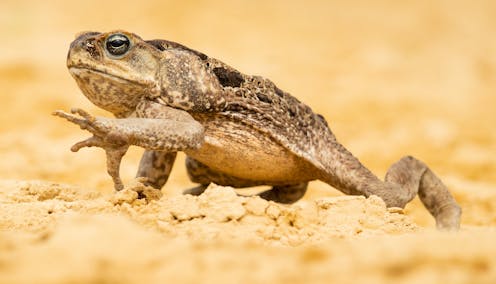
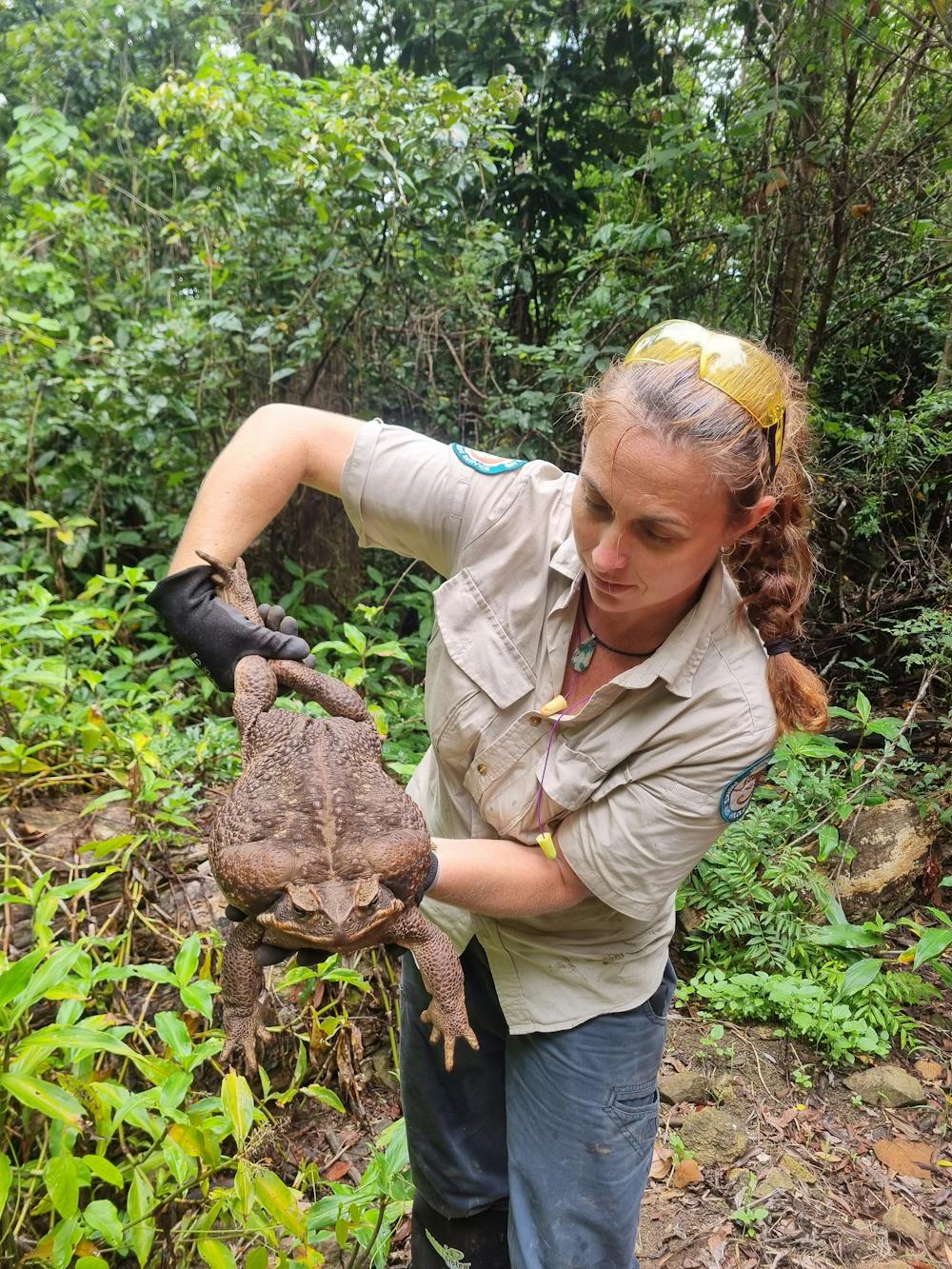
Last week, the world met “Toadzilla”, a cane toad the size of a football and six times larger than average. The rangers who found her – female toads are bigger than male – were stunned. Weighing in at 2.7 kilograms, Toadzilla may be the largest cane toad ever recorded.
Is this a sign Australia’s cane toads are getting bigger? Not necessarily. Like all other “cold-blooded” or ectothermic animals, cane toads don’t have a limit to their body size like mammals and birds do. They can keep growing their entire lives. Researchers have found toads at the front of the invasion wave get bigger quicker due to more prey.
But there’s another possibility too. Last year, we found toads in urban areas have smaller parotid (toxin) glands than those in rural areas. That might be because bush toads experience higher predation, selecting for more toxins. In nature, an easy way to select for larger toxin glands is to make the whole animal bigger.
Given many native animals, reptiles and birds have now figured out how to eat these toads, we may possibly see more Toadzilla contenders in future.
Wait, cane toads have predators in Australia?
When you think of cane toads in Australia, you might think of an unstoppable army hopping across the countryside, killing endangered animals, such as quolls, with their poison. There’s some truth to this – a large cane toad would appear to be a delectable package of protein for everything from freshwater crocodiles to goannas to birds of prey.
To survive, they have evolved large poison glands on their shoulders. When attacked, toads can pump out lethal bufotoxin. Worse, the eggs, tadpoles and toadlets are all poisonous as well.
Read more: What is a waterless barrier and how could it slow cane toads?
In the South American savannas where they evolved, cane toads have many predators, which can consume them in spite of the poison.
While Australia has no native toads, we have frogs with poisonous skins and glands, for example red-crowned toadlets and corroboree frogs, so the concept of a toxic amphibian is not entirely new to our fauna.
Not only that, but many of our birds’ ancestors may have originated in Asia, where they were exposed to other poisonous amphibians. Our native rats, too, have some tolerance of these toxins from their more recent overseas ancestry. And colubrid snakes such as keelbacks can also eat cane toads.
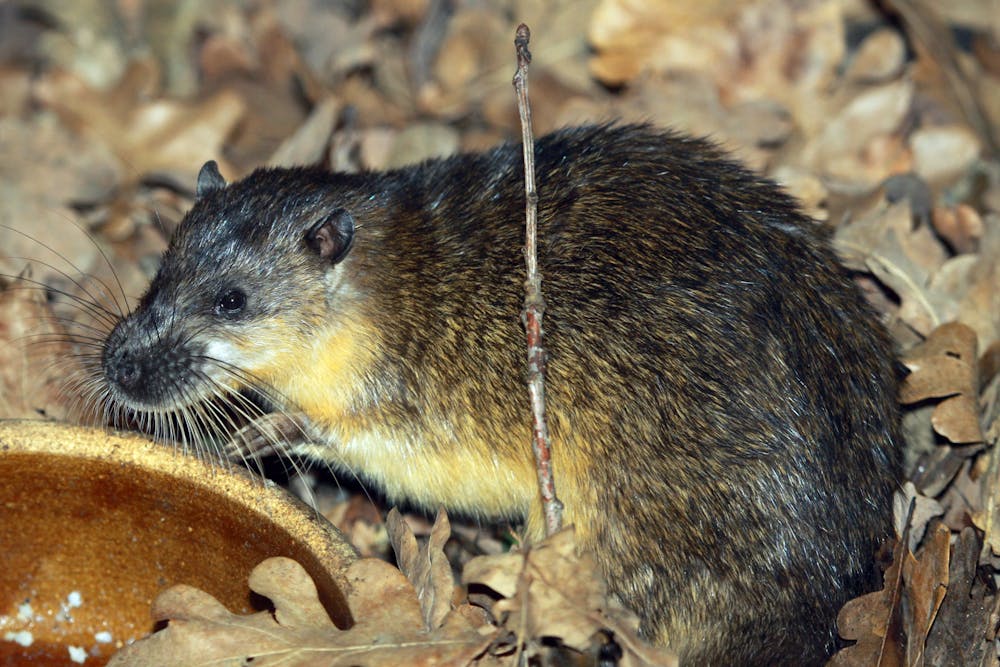 Australia’s answer to the otter, the rakali, has been clever enough to figure out how to eat cane toads without getting poisoned.
Shutterstock
Australia’s answer to the otter, the rakali, has been clever enough to figure out how to eat cane toads without getting poisoned.
Shutterstock
Some species susceptible to the toxin have figured out ways to defeat it. Our famous “bin chickens” – the white ibis – have figured out how to eat cane toads, by flicking them about to make them produce their toxin and then washing them at a nearby creek. Rakali – the large water rat known as Australia’s otter – learned how to eat cane toads. They flip them over and eat their organs, avoiding the glands.Overall, though, cane toads are bad news for many native species. Even with predator pressure, their populations keep growing and they keep moving into new areas.
How do water-loving toads thrive in dry Australia?
The difference between a toad and a frog isn’t whether they can live out of water. Australia has dozens of native treefrog species which have far better ways of holding onto their water than do cane toads. Desert tree frogs, for instance, can live in semi-arid regions, while burrowing frogs can live in true deserts. (The real difference is more obscure – toads have sternums in two cartilaginous parts instead of one, possibly an adaptation to walking or jumping).
So how did they become one of Australia’s most notorious introduced species? One answer: they were introduced purposely and vigorously, with thousands of toads bred up and introduced in many locations.
The plan was for the toads to eat native cane beetles plaguing Queensland’s sugarcane plantations. Before the 1935 introduction, the fantastically named entomologist Walter Froggatt pleaded with authorities not to release them. “This great toad, immune from enemies, omnivorous in its habits, and breeding all year round, may become as great a pest as the rabbit or cactus,” he wrote.
But farmers won, the toads arrived, the beetles proved too hard to catch and the toads began eating everything else. Soon, they began to spread. Each female can lay 20,000 eggs a year. (Cane beetles were brought under control only a few years later, when an effective pesticide was discovered).
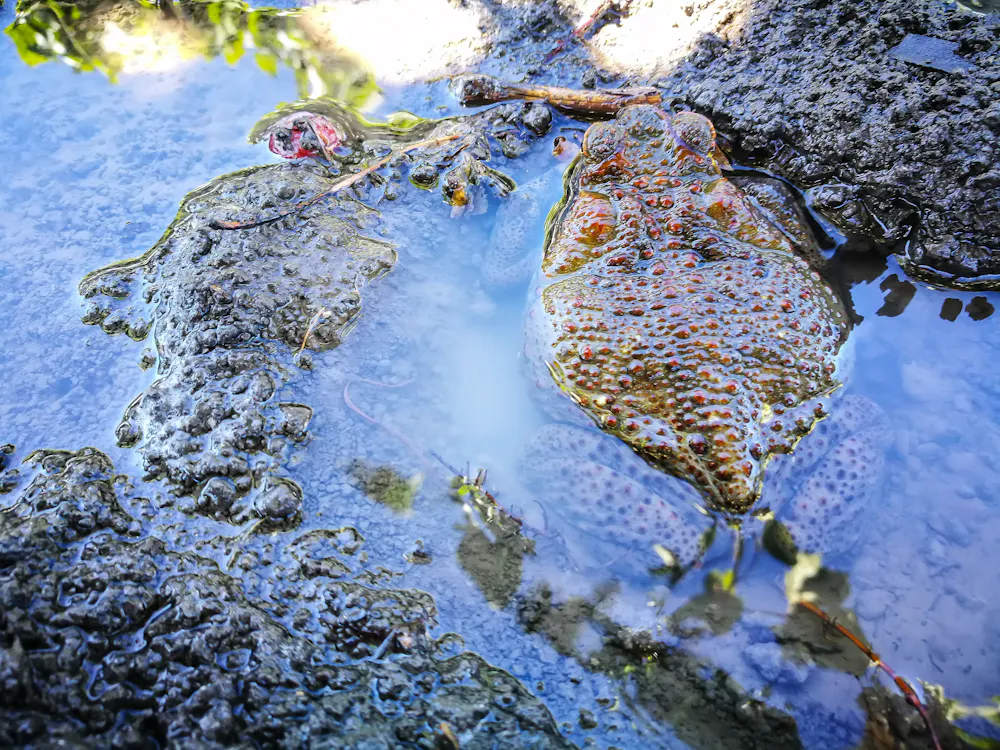 Cane toads are remarkably good at finding water sources in inhospitable regions.
Shutterstock
Cane toads are remarkably good at finding water sources in inhospitable regions.
Shutterstock
Another reason these toads now number in the hundreds of millions is their sheer adaptability. They are incredibly good at finding hidden sources of water, even in semi-arid parts of the country. During the dry season, toads tend to stay very close to water. When the wet season comes and soaks the ground, they begin to move.
You might have come across research suggesting toads at the front of the invading wave are evolving longer legs. This isn’t natural selection – it’s spatial selection, where longer-legged toads naturally get to the front and breed with other longer-legged toads.
But we are seeing signs cane toads may be adapting to local conditions by getting better at retaining water. And, remarkably, they’ve become cannibals.
Are cane toads unstoppable?
They’re formidable opponents, but cane toads have limits.
These toads eat everything they can catch – even if it has a sting or bite. They eat giant centipedes up to 16cm long. Beekeepers hate them because they’ll sit in front of hives and eat bee after bee.
Despite their poison glands, fecundity and adaptability, there’s one thing they can’t beat. Most amphibians can’t live in very arid conditions. That means toads will probably never infiltrate central Australia’s deserts.
Modelling has shown they’re unlikely to get past the arid middle coastline of Western Australia, and we think they’ll never make it to Melbourne because it’s too cold. Researchers have suggested protecting southern Western Australia from toads by converting cattle dams to tanks.
But Sydney will have to get used to cane toads before too long. They’ve already arrived several times, carried in on garden waste or in a pair of boots and establishing little populations before being eradicated. They have made it very clear they’re here to stay in Australia. Reducing numbers or protecting vulnerable areas is the best protection we’ve got.
Read more: Eat your heart out: native water rats have worked out how to safely eat cane toads
Authors: Lin Schwarzkopf, Professor in Zoology, James Cook University

















