The Liberal Party’s current woes are many. Sidelining Victoria is one of them
- Written by Paul Strangio, Emeritus Professor of Politics, Monash University
The recent elevation of Angus Taylor to leader of the Liberal Party generated an expected avalanche of commentary. The reactions ranged over most points of the compass. In some, Taylor was depicted as a final leadership throw of the dice to avert the slide of the Liberals towards electoral oblivion. In others, he was a man with the right stuff to put the party “on track” (that is, to propel it further towards conservative populism).
However, one salient point missing in the tens of thousands of words expended on Taylor’s ascension was that it continued the now 36-year exile of Victorians from the Liberal Party’s helm.
The state has not produced a leader of the party since Andrew Peacock was defeated by John Hewson in April 1990. Over that time, the Liberals have changed leader 11 times, yet none has been from Victoria.
By contrast, of the ten individuals who have had charge of the party during that period, one has been from Queensland (Peter Dutton), one from South Australia (Alexander Downer) and eight from New South Wales. In short, the NSW division has enjoyed a virtual mortgage on the leadership, Taylor the latest instance.
Once the heartland of the Liberal project
The relegation of Victorians from the apex of the Liberal Party since the beginning of the 1990s is a radical departure from the story of the last century. The state’s primacy in the party was evident from its inception during the second world war.
In fact, disproportionate Victorian influence was also a reality of the Liberal Party’s original predecessor and namesake. It formed at the end of the first decade of the Commonwealth under the leadership of the quintessential Victorian and three-time prime minister, Alfred Deakin.
The moving spirit of the creation of the modern Liberal Party in 1944 was, of course, Victoria’s Robert Menzies, and the lion’s share of his influential allies in that foundation were also from his home state. Menzies became the party’s first leader and first prime minister. This began a pattern of predominance — during the second half of the 20th century, four out of six Liberal prime ministers and six out of ten of the party’s federal leaders were Victorians.
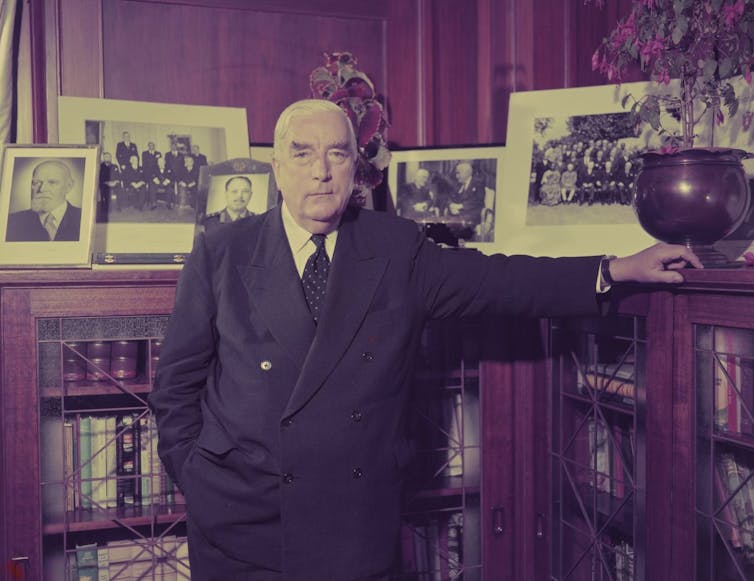
This Victorian hegemony effectively ended with John Howard’s resurrection as Liberal leader in January 1995. Howard not only remained leader until his defeat as prime minister at the 2007 election, but his abiding influence over the party ever since has worked to consolidate the ascendancy of NSW and the isolation of Victoria.
In other words, from the 1990s, the power centre of the Liberal Party migrated from its traditional base of Melbourne to Sydney. Moreover, in recent years that shift has stretched further northwards as a consequence of the preponderance of Queenslanders in the federal Liberal parliamentary room. Between 2022 and 2025, Queenslanders constituted nearly 40% of the party’s MPs, a dominance amplified by Dutton’s leadership.
The extraordinary weakening of Victoria’s hold on the federal Liberal Party from its heights of last century has mattered in at least two significant ways. Though frequently overlooked, historically the Australian colonies and states exhibited distinctive political cultures. Victoria’s was of an interventionist, progressive hue, whereas in NSW it was of more a conservative laissez faire flavour.
This distinction was evident in the contrasting philosophical tempers of the non-Labor parties from their early incarnations. Broadly speaking, the NSW Liberal division and its predecessors were ideologically positioned to the right of their Victorian counterparts.
This mostly persisted throughout last century. Consequently, it is reasonable to conclude the pre-eminence of the NSW Liberals from Howard’s time (abetting his vast individual influence) is implicated in the party’s rightward pivot nationally. The recent numerical ascendancy of Queensland, a state with a tradition of strong strains of authoritarianism, populism and racial chauvinism in its political makeup, has only exacerbated this.
Second is the residualising effect on the Victorian Liberal Party. This century, it has become a pale imitation of its glory days during the postwar era. There is a chicken-and-egg conundrum to the Victorian Liberals’ electoral fall from grace over the past four decades and their shrinking sway in the federal party. Which of these developments catalysed the other?
Leaving that question aside, the electoral decline of the Liberals in the state can be readily summarised: the Coalition has lost the two-party preferred vote in Victoria in 15 out of 17 federal elections from 1980. The Liberals now hold only one out of 23 metropolitan seats in Melbourne: Tim Wilson’s electorate of Goldstein, which he reclaimed in 2025 by a wafer-thin margin of 175 votes.
The collapsed electoral fortunes of the Victorian Liberal division is also stark at state level. The party has enjoyed a solitary term of government at Spring Street this century. Its abject condition is injecting competitiveness into the state election to be held this November that would otherwise be anticipated as an inevitable defeat for Jacinta Allan’s Labor government.
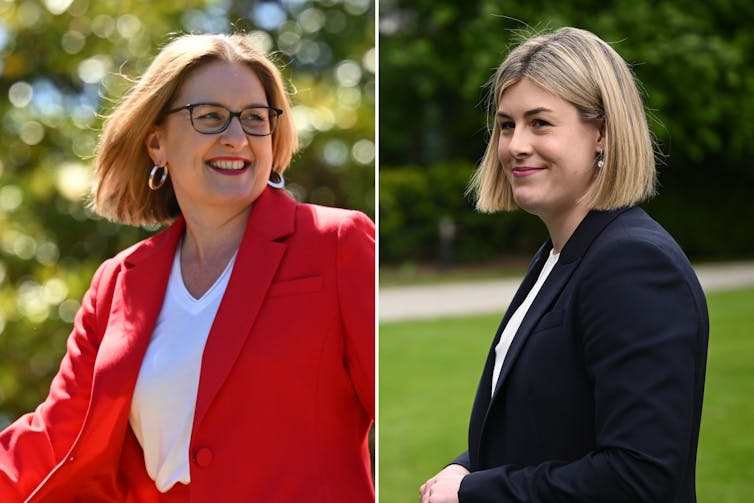
With Labor seeking an unprecedented 16 years in office and mired in scandal, the Liberals ought to have a virtual lock on winning power. Yet November’s election looms as not merely a referendum on Allan’s tainted government, but also on whether the Liberals can be entrusted with office.
Riven by ideological and personal feuds that routinely explode to the surface, low on talent and led by the young and highly inexperienced Jess Wilson, few are willing to punt on a Liberal victory. Indeed, it appears voters are so repelled by both Labor and the Liberals that we are likely to see a chaotic smorgasbord of swings to minor parties and independents.
Read more: The Coalition leads in Victorian DemosAU poll, with One Nation posting 21% support
The waning of a Victorian tradition
It is intriguing to note that twice in the era of NSW dominance (and Queensland’s escalating influence) within the Liberal Party, there has been the prospect of the leadership returning to Victoria. The first opportunity followed Howard’s defeat at the 2007 election, when Peter Costello was the assumed heir apparent: he had been blocked from succeeding the older man by Howard’s manic determination to stay prime minister to the bitter end.
However, aggrieved at Howard’s denial of him and unwilling to endure a potentially lengthy stint in opposition, Costello spurned the leadership before leaving parliament. The second time was when Scott Morrison’s government was defeated in May 2022. Morrison’s treasurer, Josh Frydenberg, had been regarded as a leader-in-waiting. However, he lost his formerly blue ribbon seat of Kooyong at that election, a casualty of the Teal insurgency.
It is impossible to say with confidence whether, if either of these Victorians had acquired the Liberal leadership, they would have been willing or able to chart a more moderate course for their party. Costello had displayed signs of less conservative sensibility to Howard on the issues of climate change and Indigenous reconciliation. Frydenberg, too, had moments when he showed a markedly different mindset to Liberal right-wing warriors, such as with his ultimately futile effort when environment minister in Malcolm Turnbull’s government to devise a policy mechanism for curbing carbon emissions.
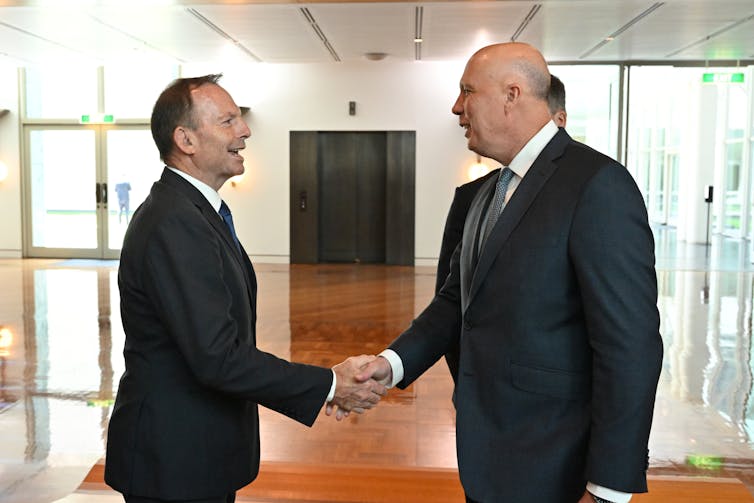
As it was, the leadership passed to NSW and Queensland in 2007 and 2022, respectively. On the first occasion, it went briefly to Brendan Nelson and then to Turnbull before settling in Tony Abbott’s hands. On the second occasion it went straight to Dutton. Notably, these two, Abbott and Dutton, more than any other leaders of the Liberal Party post-Howard, through a process of imitation and amplification of Howardism, accelerated the party’s journey to conservative populism and an intolerance of progressivism.
The marginalising of Victorian influence has undoubtedly been one factor in the dire place the Liberal Party has arrived at in Australia. Where once the Victorian division could have been relied on to provide a point of resistance to the party’s rightward trajectory, it has been largely reduced to impotence as an ideological balancing force.
Indeed, this sidelining has been so prolonged there is little sign of the division any longer being custodian of an alternative, more centrist philosophical outlook.
The Victorian division has grown virtually unrecognisable from its distinctive historical identity: as a party whose forebears encompass Deakin, Menzies, Rupert Hamer and Malcolm Fraser. The end result is that, unlike during the second world war when the renaissance of non-Labor was led from Victoria, there appears a greatly diminished prospect of the state being a springboard for the party’s national rejuvenation today.
Authors: Paul Strangio, Emeritus Professor of Politics, Monash University