Modern Australian
The Times

Australia can’t easily reduce its military dependence on the US, but with Canada, we can mitigate risk

  • Written by John Blaxland, Professor, Strategic and Defence Studies Centre, Australian National University

Canadian Prime Minister Mark Carney issued a stark warning in his address to the Australian parliament. The post-war global order is “breaking down”, he said, and middle powers like Canada and Australia risk subordination due to their integration with great powers like the United States.

But how entangled is Australia with the United States, and is Canada’s path the one we should follow?

Canada and Australia are “strategic cousins”, with many commonalities and shared interests. Both countries span the breadth of continents and face the Pacific Ocean. Both are free-market, common-law federations, founding members of the United Nations, Five Eyes partners, and extremely close US allies.

And both are middle powers that are active in international institutions and have been beneficiaries of the rules-based international order they helped create.
Australia can’t easily reduce its military dependence on the US, but with Canada, we can mitigate risk
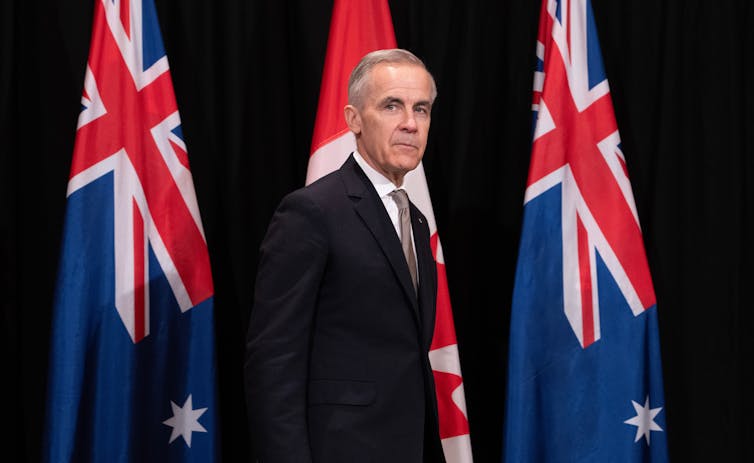
Mark Carney has made the first visit to Australia by a Canadian prime minister in nearly 20 years. Adrian Wyld/The Canadian Press/AP

Yet, when it comes to the relationship with the US, there are some differences. Australia has long had a “fear of abandonment” from the US, while Canada has historically been worried more about entrapment and the vulnerability of its sovereignty.

The Canadians’ concern stems from their long shared border with the US: if they are unable or unwilling to defend their own borders, the US could do it for them, whether they liked it or not.

Under successive prime ministers, however, Canada’s defence spending has atrophied to the point where US President Donald Trump humiliated Carney’s predecessor as a mere “governor” of the “51st state”.

Canadians were incensed, their sense of honour tarnished. That sentiment has been reinforced by Trump’s arbitrary tariffs on Canada. Carney’s middle power push needs to be viewed somewhat through this lens.

And though Canada is looking to diversify its partnerships with other middle powers (including Australia), it can’t wean itself completely off trade with its neighbour. Nearly 80% of Canadian exports go to the US.

So, Canada’s enduring interests remain closely intertwined with those of the US, even though it doesn’t feel that way right now.
Australia can’t easily reduce its military dependence on the US, but with Canada, we can mitigate risk
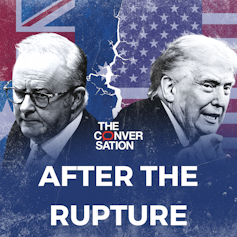
The world order has “ruptured”, Canadian Prime Minister Mark Carney has warned – so it’s time for countries like Australia and New Zealand to forge a new, less US-reliant future. In this new series, we’ve asked top experts to explain what that future could look like – and the challenges that lie ahead. Why the US needs Australia While being similar in many ways, Australia’s predicament is also different from Canada’s. Prime Minister Anthony Albanese gets this. Australia is a largely Anglo-European transplant nation on the edge of Asia, where a rising and authoritarian China is increasingly expanding its influence and interests. This has long made Australia a key strategic and military partner of the United States. This hasn’t changed, even with Trump’s “America first” rhetoric, shift in focus towards the Western Hemisphere and recent launching of a new war in the Middle East. Trump isn’t going to give up the Indo-Pacific region to China. He wants to “successfully compete there”, as the National Security Strategy of 2025 puts it. This entails maintaining a robust military deterrence, with key regional allies doing more to help prevent a war. The US sees Australia as vitally important to this deterrence. And it’s more invested in Australia than most realise. This isn’t to say there haven’t been adjustments since Trump took power, however. Foreign Minister Penny Wong has articulated a new foreign policy based on “four Rs” – region, relationships, rules and resilience. She’s emphasised the US alliance being embedded within a broader web of relationships, rather than standing alone. This reflects a more considered, less binary approach to the relationship. Australia is no longer seen as either a “dependent” or “independent” ally. Rather, there is a middle ground for a middle power like Australia. This foreign policy acknowledges Australian reliance on the US military and intelligence for deterrence, but is more active in securing its own interests, particularly in the South Pacific and Southeast Asia. Australia can’t easily reduce its military dependence on the US, but with Canada, we can mitigate risk
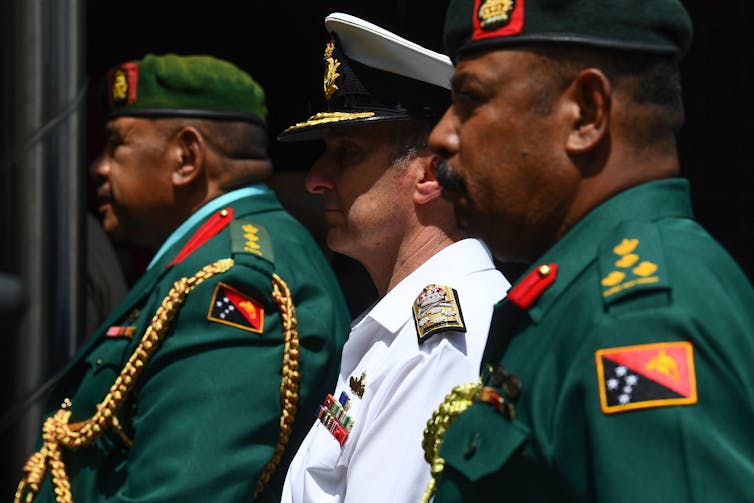
Defence ministers from Australia and Papua New Guinea came together for a bilateral security meeting in Brisbane in February 2025. Jono Searle/AAP

Why Australia can’t replace the US so easily

Australia has long maintained a boutique defence force. With the strong US alliance in place, Australia doesn’t need to spend too much more on defence or enact compulsory national service. It just needs to ensure its military is high-tech and interoperable with its allies.

This model relies on trusted and ongoing access to the US military for hardware (warships, aircraft, tanks, air and space defence systems) and software (the technology to operate these systems and build robust intelligence gathering and cyber defence capabilities).

This involves collaborations with a range of US firms and the expansion of a national security innovation base in Australia, part of the AUKUS agreement.

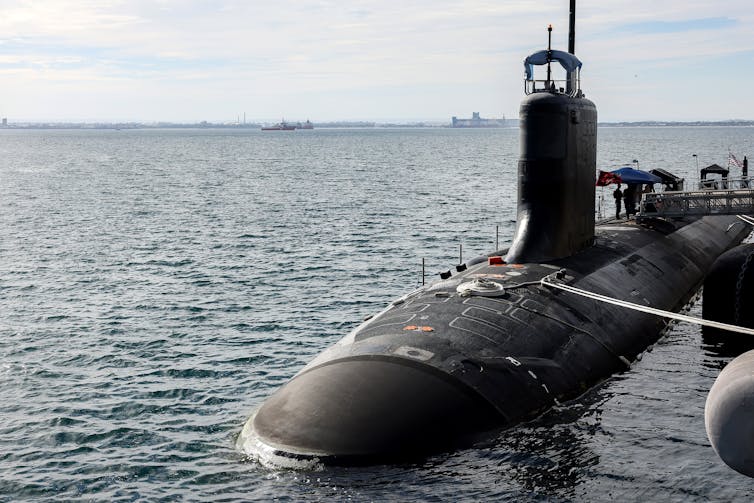
Meanwhile, Australian sailors have been training at US naval facilities and are now crewing US nuclear-propulsion submarines. Under AUKUS, these subs will be stationed at the HMAS Stirling naval base in Western Australia as part of the Submarine Rotation Force West, starting next year.
Australia can’t easily reduce its military dependence on the US, but with Canada, we can mitigate risk
US Navy officers stand guard aboard the Virginia-class fast attack submarine USS Minnesota after docking at HMAS Stirling in February 2025. Colin Murty/AFP pool/AP

The US and Australia also operate the Joint Defence Facility at Pine Gap, a signals intelligence surveillance base that provides crucial insights into the Indo-Pacific and beyond. Successive Australian governments have viewed this facility as worth the investment.

All of this shows how closely tied Australia is to the US from a military technology, equipment and intelligence standpoint. Finding alternatives to the US would be expensive, as would running legacy systems in parallel for decades.

The principal sources of alternative kit – among them, South Korea, Japan, Sweden and Germany – are all US allies, as well.

Some pundits have speculated that a more independent Australian foreign and defence policy would cost upwards of 4–5% of GDP to sustain. I believe it would cost considerably more.

Conceivably, Trump could weaponise these connections with Australia. However, Australia is not viewed in the same way as Canada on national security matters. The US administration has a keen appreciation of Australia’s importance in generating a deterrent effect in the Indo-Pacific.

Taking a more aggressive approach towards Australia would also bring incalculable harm to US interests in the region. Given what’s at stake, that remains highly unlikely.

How to be less dependent

In 2024, I wrote a paper exploring ways Australia can better respond to the “polycrisis” we face today. This includes the challenges posed by a changing climate, the green industry transformation, overstretched health services, deepening geopolitical shifts, and the growth of artificial intelligence.

I proposed a national institute to survey Australia’s options, and an incentivised but voluntary scheme for community and national service

But addressing these challenges also requires working more closely with our neighbours.

As part of this, we need a more muscular and sophisticated military force closely tied to our neighbours. This would bolster measures already being pursued in the Pacific, such as:

Australia is also taking steps to deepen security ties with Indonesia. I’ve proposed a future “regional maritime cooperation forum” starting with Australia, New Zealand, Singapore, Indonesia and Malaysia that could collaborate on issues ranging from border security to intelligence, as well.

With so many shared interests and concerns, we can deepen ties with Canada, as well. The joint statement by Carney and Albanese last week outlines a substantial range of opportunities for expanding cooperation in critical minerals, defence and security, and strengthening institutions.

Australia is a middle power with small-power pretensions. It must manage its enduring US alliance ties while bolstering other arrangements in the region and beyond.

Working more closely with Canada would help ensure we can be a more confident, self-reliant regional leader, stepping forward in a crisis when others are reluctant. The upturned world order is an opportunity to just that.

Authors: John Blaxland, Professor, Strategic and Defence Studies Centre, Australian National University


Read more https://theconversation.com/australia-cant-easily-reduce-its-military-dependence-on-the-us-but-with-canada-we-can-mitigate-risk-276528

Sunshine Coast Baby Classes Prove Big Hit Among First-Time Mums

There's a movement gaining traction on the Sunshine Coast, providing a village of support, socialisation and relief for first-time mothers and babie...

Father's Day Gift Ideas for Men Who Are Hard to Buy For

Some dads are easy to buy for. Others do not want anything, already have everything, or give you the classic "don't worry about me" answer every yea...

Top 5 Mistakes That Wear Out Your Brakes Faster

Brakes don't need frequent replacements like oil changes do.   But a lot of the wear happens quietly, over months, because of habits most drivers...

Plantation Shutters vs Curtains: Which Is Better for Your New Home?

Moving into a new home is an exciting opportunity to personalise your space and make it your own. While many homeowners focus on furniture, flooring...

Celebration of Life vs Traditional Funeral: What's the Difference?

When saying goodbye to someone you love, there is no single way to honour their life. Every family has different traditions, beliefs, and preference...

Building Approval for Roofing Projects: What Homeowners Need to Know

Roofing projects are an important part of maintaining and protecting your home. Whether you're repairing storm damage, replacing an ageing roof, or ...

Chatswood Tutoring And Its Role In Academic Achievement

Academic success often requires more than classroom attendance alone. Students face increasing expectations as they progress through school, particu...

Why Laser Hair Removal Treatments Continue Growing In Popularity

Managing unwanted hair can become time-consuming and frustrating for many people, especially when shaving, waxing, and other temporary methods requi...

Choosing the Right Devices for a Flexible Workplace

For IT leaders managing large fleets, the device layer is where workforce productivity and security policy meet. The shift towards flexible and hybrid...

How Business Advisory Services Help Companies Achieve Sustainable Growth

Every business owner aims to build a profitable and sustainable organisation. While dedication, innovation, and hard work are important, achieving l...

Why Body Contouring Has Become A Popular Cosmetic Treatment

Many people maintain healthy lifestyles through regular exercise and balanced eating habits but still struggle with stubborn areas of fat that are d...

How to Choose the Right POS Hardware for Your Business in Australia

A lot of Australian business owners spend weeks researching POS software but buy hardware almost as an afterthought. That's a mistake. The wrong har...

Why Material Handling Hose Is Critical for Industrial Efficiency

A high-performance material handling hose is an essential component in industries that transport abrasive, dry, or bulk materials on a daily basis...

How to Choose the Right Lawyer in Melbourne for Your Situation

Choosing legal support can feel difficult, especially when the stakes are personal or business-related. The right lawyer in Melbourne should underst...

Hoteliers Look to Clever Value Adds to Increase Revenue

The Australian hospitality industry is still in recovery mode after a notoriously rough patch in recent years. While there has been a post-COVID tra...

Moving to Queensland? Here’s How to Prep Your Car for the Big Move North

There’s no sign of the northern migration slowing down, with thousands of southerners fleeing from chaotic lifestyles and cooler climates for a brig...

Diesel Shortage to Impact Trades and Contractors

Strait of Hormuz blockage affecting all major parts of trades and construction Trades and construction across residential, commercial and industria...

Why Holiday Home Owners Turn to Rental Management Agents

The Allure — and the Reality — of Renting Out Your Property Owning a holiday home is a dream for many Australians. Whether it's a beachside sha...