Your child has pathological demand avoidance? Here’s what it means – and 9 tips for what to do
- Written by Nicole Rinehart, Nicole Rinehart, Professor, Clinical Psychology, Director of the Neurodevelopment Program, School of Psychological Sciences, Faculty of Medicine, Nursing and Health Sciences, Monash University
For some children, everyday demands such “brush your teeth” or “time to get off of your computer game”, can trigger intense anxiety and extreme resistance. When this type of response affects everyday life it may fit into the pattern of behaviour known as pathological demand avoidance, or PDA.
Children with this pattern of behaviour have intense emotional reactions to parents’ and teachers’ requests that infringe on the their sense of control. This can prompt angry or punitive responses from parents or teachers, culminating in a cycle of distress and frustration for adult and child.
PDA isn’t a diagnosis or in the DSM-5, which defines mental disorders. And there is debate among experts about its key features. Like most conditions describing a cluster of psychiatric symptoms, demand avoidance exists on a continuum, with different degrees of anxiety-driven distress and control-seeking symptoms.
PDA mainly affects a subgroup of autistic children, but adults and people without autism can also have PDA.
What causes these behaviours?
Most neurodevelopmental conditions, including autism, disrupt specific brain circuits, especially in the loop between the basal ganglia, the thalamus and the cortex.
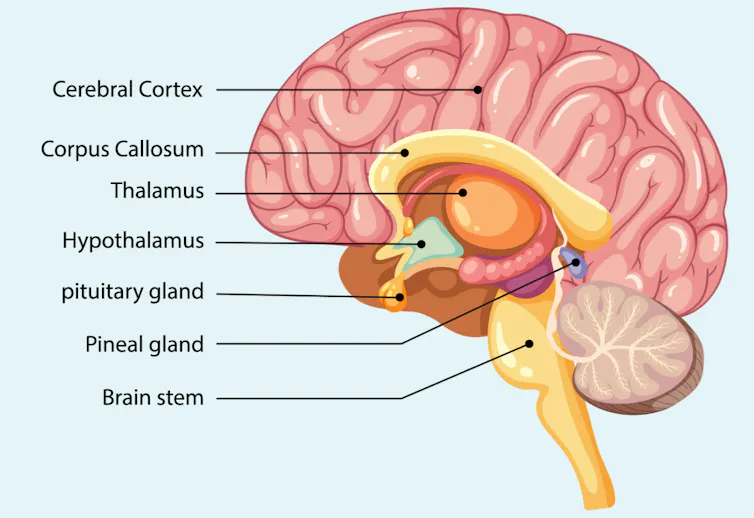
These circuits help people override impulsive responses, consider alternatives, choose suitable courses of action and initiate appropriate responses. This is known as executive functioning.
Stressful events and excessive demands can disrupt these circuits. Rather than respond flexibly, individuals with demand avoidance may get overwhelmed and become rigid, reactive and avoidant.
When non-autistic children feel inundated, they may approach their parent or display other obvious signals to indicate they feel overwhelmed. The parent or teacher can then respond to support them through it.
When autistic children feel inundated, to instil a sense of security they may avert their gaze, absorb themselves in their usual routines, display behaviours they had previously outgrown, or refuse to shift in response to stress.
Parents and teachers can misconstrue these behaviours as defiance, rather than overload, and may not respond appropriately.
Families often don’t receive the support they need
In a 2025 study, researchers interviewed 21 parents of autistic children who had features of pathological demand avoidance.
Rather than receiving consistent, integrated support from health services, parents experienced three recurring challenges:
health services didn’t know how to support the spectrum of demand avoidance behaviours
health practitioners often blamed the parents, who felt judged and inadequate
health practitioners tended to focus only on autistic symptoms rather than the clinically impairing anxiety and control-seeking behaviours.
These responses from health services tended to make symptoms worse.
9 ways to help your child – and yourself
While there is limited research trialling interventions for PDA, there are strategies parents of all children can implement to reduce the degree to which children feel overwhelmed with demands.
These strategies revolve around parents and teachers adopting a mindset of curiosity, humility and a willingness to learn.
This can prevent the child becoming overloaded, boost their executive functioning and enable them to respond more flexibly. It can also leave you feeling less stressed by any setbacks.
Here are nine ways you can put this into practice:
1. Embrace not knowing
Demand avoidance can be confronting and confusing. Don’t feel you need to apply the right strategy. Every child is unique and changes over time, so no one strategy will always be effective. Experiment with various approaches, blend compassion with clear expectations, and revisit ideas later if needed.
2. Stay curious, not judgemental
Recognise when you the child is acting defiantly. Then remember such behaviour often emanates from stress and overload. Remain curious – pause to consider the concerns that may be upsetting the child. Share ideas with the child and, where possible, collaborate on a plan that feels manageable and supports their autonomy.
3. Listen deeply
Recognise that defiance is often a plea for help to manage overwhelming emotions. So, when the child is defiant, acknowledge the situation and ask for their thoughts. If you listen closely to their words, you may learn how you can resolve their distress. Admittedly, children are often unsure why they’ve become upset, so they may need your help to clarify the cause and find a way forward.
4. Hold your ego lightly
Insisting on compliance often escalates distress. Relinquishing the need to be right or in control helps the child feel more at ease and willing to engage. Offering choices about how or when to complete tasks, while maintaining safety and guidance, gives children agency.
5. Accept complexity
Children with demand avoidance often have needs that don’t fit into simple categories. Accepting complexity helps adults remain flexible and open-minded.
6. Prioritise relationships
A strong and trusting relationship is the foundation for effective behaviour support. Building connection and repairing ruptures helps children feel you are supportive. This naturally reduces avoidance.
7. Notice strengths and create opportunities to shine
Children with demand avoidance often have strong abilities that can be nurtured and applied under the right conditions. Highlighting strengths and building opportunities for leadership and helping other people can build confidence and motivation.
8. Regulate yourself first
Managing your own emotions helps you respond more calmly. When a child seems defiant, observe your breath for a few seconds (partly to override the initial temptation to display anger). Once your intense emotions dissipate, your curiosity will return. A calm response also models the emotional regulation you want your child to learn.
9. Build a support team
A team of supportive adults, such as family members, teachers and support workers, helps share the load and ensures the child can always seek support when needed. Prioritising understanding, offering choices and building trust helps children feel more confident and understood.
Read more: A new diagnosis of ‘profound autism’ is on the cards. Here’s what could change
Authors: Nicole Rinehart, Nicole Rinehart, Professor, Clinical Psychology, Director of the Neurodevelopment Program, School of Psychological Sciences, Faculty of Medicine, Nursing and Health Sciences, Monash University