

Sleep won't cure the coronavirus but it can help our bodies fight it
- Written by Cassandra Pattinson, Research Fellow, The University of Queensland
Getting a good night’s sleep can be difficult at the best of times. But it can be even harder when you’re anxious or have something on your mind – a global pandemic, for example.
Right now though, getting a good night’s sleep could be more important than ever.
Sleep is essential for maintaining our health and mood. Sleep can also boost our immune function and help us deal with stress.
Read more: Can't sleep and feeling anxious about coronavirus? You're not alone
How much do we need?
Social distancing has many of us spending more time at home. This may mean more sleep for some people – suddenly you’ve got time to sleep in and even have a nap in the afternoon.
For others, falling out of your usual routine may mean less sleep. Instead of going to bed when you normally would, you might be staying up late watching Netflix, scrolling social media or glued to coronavirus news.
For adults, achieving between seven and nine hours of sleep per night is the goal. If you know you’re a person who needs more or less, finding that perfect amount of sleep for you and aiming to achieve that consistently is key.
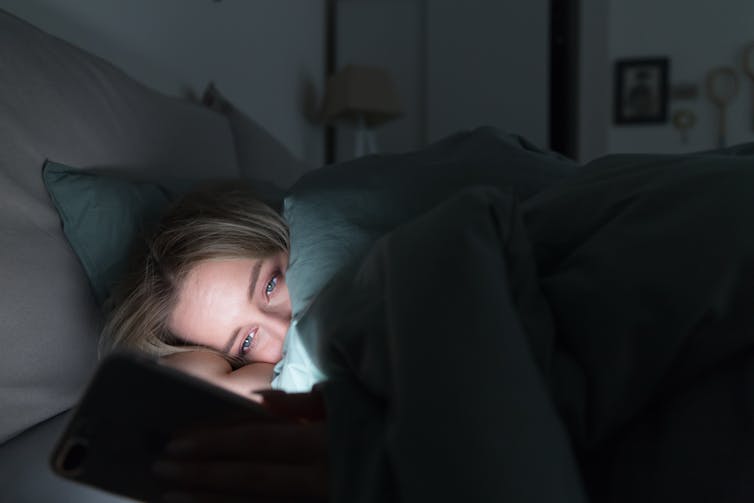 Looking at a screen isn’t the best way to wind down before bed.
Shutterstock
Looking at a screen isn’t the best way to wind down before bed.
Shutterstock
Sleep and our circadian system (or internal body clock) are essential for regulating our mood, hunger, recovery from illness or injury, and our cognitive and physical functioning.
Shifting our bed or wake times from day-to-day may affect all of these functions. For example, higher variability in night-to-night sleep duration has been linked to increased depression and anxiety symptoms.
Long-term consequences of sleep problems can include obesity, diabetes, heart disease, and high blood pressure.
Sleep and immune function
Declines in the quality and/or quantity of sleep can affect our immunity, leaving us more susceptible to illnesses including viruses.
During sleep, the immune system releases proteins called cytokines. Certain cytokines are important for fighting infections and inflammation, and help us respond to stress. But when we don’t get enough sleep or our sleep is disrupted, our bodies produce fewer of these important cytokines.
In one study, participants were exposed to the common cold (rhinovirus). Those who slept less than seven hours per night were almost three times more likely to develop a cold than those who slept eight hours per night or more.
Another study indicated that a single night of no sleep may delay our immune response, slowing our body’s ability to recover.
While we don’t have any research yet on the relationship between sleep and the coronavirus, we could expect to see a similar pattern.
Sleep and stress: a vicious cycle
You’ve probably heard the phrase “to lose sleep over” something. We have this saying because stress can negatively affect sleep quality and quantity.
Lack of sleep also causes a biological stress response, boosting levels of stress hormones such as cortisol in our bodies the next day.
Cortisol levels typically peak in the morning and evenings. Following a poor night’s sleep, you might feel more stressed, have trouble focusing, be more emotional, and potentially have trouble falling asleep the next night.
Prolonged sleep loss can make us more vulnerable to experiencing stress and less resilient at managing daily stressors.
Read more: Why our brain needs sleep, and what happens if we don’t get enough of it
Think of sleep as your “shield” against stress. A lack of sleep can damage the shield. When you don’t get enough sleep the shield cracks and you are more susceptible to stress. But when you get enough sleep the shield is restored.
 Sleep acts as a ‘shield’ against stress. You want to keep your shield at full strength. Credit: Alicia C. Allan, Institute for Social Science Research, University of Queensland.
It’s important to stop this cycle by learning to manage stress and prioritising sleep.
Tips for healthy sleep
To allow yourself the opportunity to get enough sleep, plan to go to bed about eight to nine hours before your usual wake-up time.
This may not be possible every night. But trying to stick to a consistent wake-up time, no matter how long you slept the night before, will help improve your sleep quality and quantity on subsequent nights.
 Reading a book is a good way to relax before bed.
Shutterstock
Reading a book is a good way to relax before bed.
Shutterstock
Think about your environment. If you’re spending a lot of time at home, keep your bed as a space for sex and sleep only. You can also enhance your sleep environment by:
- keeping your lights dim in the evening, especially in the hour before sleep time
- minimising noise (you might try using earplugs or white noise if your bedroom gets a lot of noise from outside)
- optimising the temperature in your room by using a fan, or setting a timer on your air conditioning to ensure you’re comfortable.
Create a routine before bedtime to mentally relax and prepare for sleep. This could include:
- setting an alarm one hour before bed to signal it’s time to start getting ready
- taking a warm shower or bath
- turning off screens or putting phones on airplane mode an hour before bed
- winding down with a book, stretching exercises, or gentle music.
Read more: Explainer: how much sleep do we need?
Some other good ways to reduce stress and improve sleep include:
- exercising daily. To maximise the benefits for sleep, exercise in the morning in natural light
- incorporating relaxation into your daily life
- limiting caffeine, alcohol and cigarettes, particularly in the hours before bed.
Some nights will be better than others. But to boost your immunity and maintain your sanity during this unprecedented time, make sleep a priority.
Authors: Cassandra Pattinson, Research Fellow, The University of Queensland

















